
Livraison le jour même et le lendemain

Qualité garantie

Débloquez vos offres de bienvenue: Livraison GRATUITE | Jusqu'à -80 % | 30 jours d'essai gratuits à JoyPlus
Téléchargez l'application
If you're looking to buy incontinence pads, you'll quickly come across terms like "extra dry", "discreet" and "maximum protection". On their own, these words don't tell you much. What really matters is whether the pad suits the amount of urine loss, your body shape and when you'll be using it. A thin panty liner for everyday use, for example, isn't automatically suitable for bladder leaks during exercise or when you sneeze.
This buying guide will help you compare incontinence pads, protective panty liners and pads for women or men in a practical way.
Everyday panty liners are generally designed for vaginal discharge or very light periods. They can absorb a limited amount of moisture, but aren't always designed for urine loss. So look out for the terms urine loss, bladder leakage or incontinence on the packaging.
A sanitary towel for periods also has a different shape and absorbency structure to an incontinence pad. For daily use without urine loss, a normal panty liner may be sufficient. For bladder leakage, a specialist incontinence pad is usually the more sensible choice.
A thin pad is discreet, but thickness alone doesn't determine how much moisture the product can absorb. Also look at the absorbent core, the length, the fit and the absorption zone. According to product descriptions from various brands, quick-drying zones can draw moisture into the core, but this doesn't guarantee that every product will offer the same protection for every user.
For light urine loss, choose a compact pad. For moderate incontinence, a longer model with a wider core may fit better. For heavier urine loss, an extra-absorbent incontinence pad or a protective brief may be more suitable.
Brands use different technologies for odour control. According to Essity's own information, some Tena and Discreet products contain an odour control system or a special absorbent zone. Always mentions OdourLock technology on certain products. These are brand claims about how they work; the results can vary from person to person and depending on the situation.
Change the pad regularly, follow the instructions for use and store unused pads in a dry place. This will help reduce the chance of a damp or unpleasant feeling.
Start by asking how much moisture you typically lose:
Product names like "Mini", "Normal", "Extra" and "Long Plus" aren't categorised the same way across all brands. So compare the product details and follow the instructions on the packaging.
A women's incontinence pad often has an elongated or anatomical shape that fits women's underwear. Elasticated sides can help keep the pad in place better.
A men's incontinence pad is usually narrower and cup-shaped, with an absorbent zone at the front. Also check how the product is secured. An adhesive strip is generally the most practical option in close-fitting underwear.
If you have sensitive skin, you can look for:
A dermatologically tested claim describes a product feature, but it won't prevent irritation for everyone. If you experience redness, itching or discomfort, stop using the product and consult a healthcare professional if necessary. Only use pads externally and never flush them down the toilet.
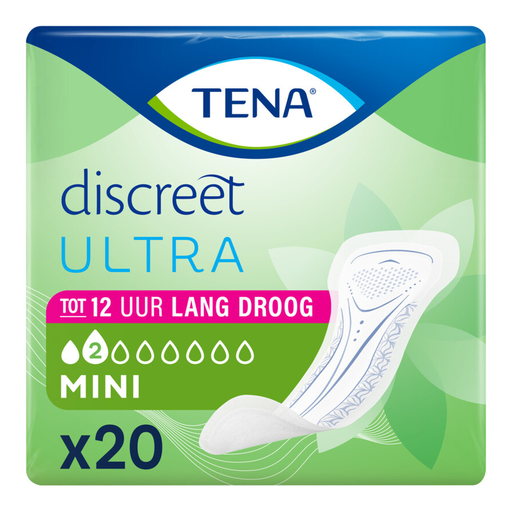
Why this fits the profile: This compact model is designed for light urine loss and everyday use. With 20 pads, it's a practical pack to try first and see if the fit works for you.
The product description mentions light urine loss and a quick-drying zone. This makes it clearer what it's intended for than a regular everyday panty liner.
20 pads; soft pad; according to the product description, protection against leaks, odour and a damp feeling.
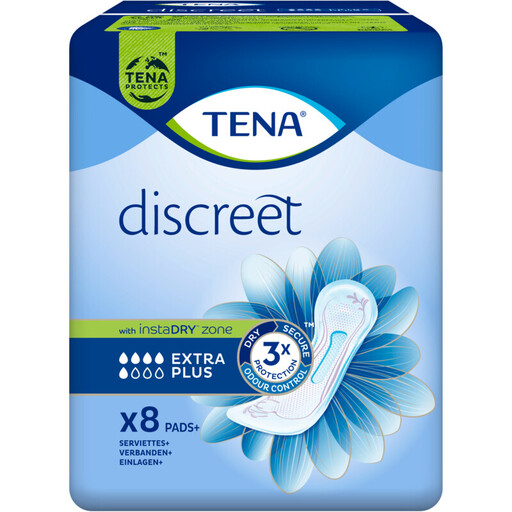
Why this fits the profile: The anatomical fit and Instadry zone are relevant specifications for anyone who values comfort, discretion and fast moisture absorption for light incontinence.
The product information explicitly states use for light incontinence, an anatomical shape and no added fragrances. This makes comparing easier.
12 pads; Instadry zone; dermatologically tested according to the product claim; no added fragrances.
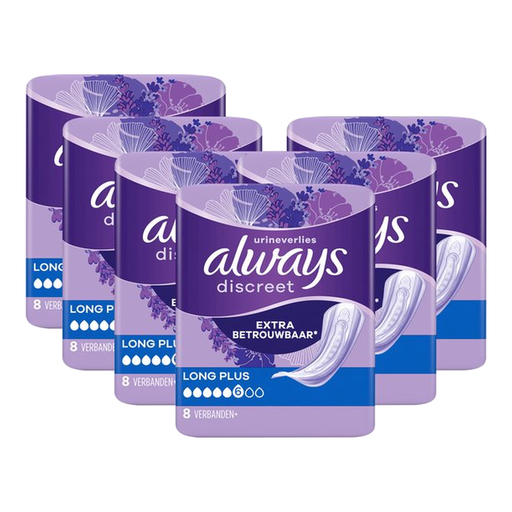
Why this fits the profile: The extra length and absorbency are, according to the product description, designed for heavier urine loss. The pack contains 6 x 8 pads, handy for regular use.
Instead of just emphasising a thin design, the product information mentions extra length, a two-layer core and use for heavier urine loss.
Extra length; 48 pads in total; ultra-thin core according to the product claim; classified as a medical device.
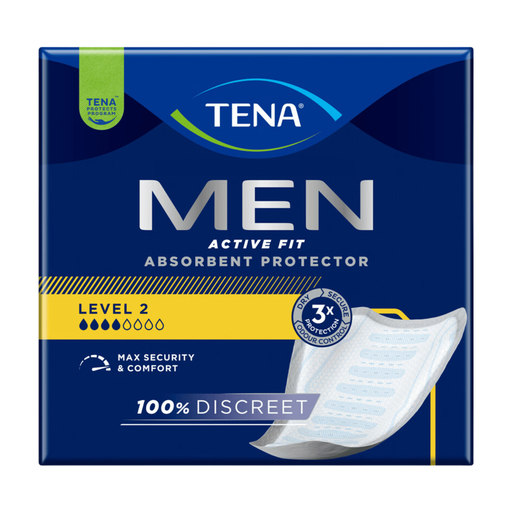
Why this fits the profile: This incontinence pad for men has, according to the product description, a male cup shape and is designed for moderate urine loss. The adhesive strip is designed for securing in close-fitting underwear.
The shape is specifically designed for the male body. This means you don't have to choose a universal model that may not fit as well.
10 pads; 0.4 cm thick according to the product information; male cup shape; designed for moderate incontinence.
If you're looking for panty liners for urine loss, choose a product that explicitly states this use. For vaginal discharge or light periods, regular everyday panty liners are more suitable. Libresse Dailies Fresh Extra Long Liners, for example, are extra long, fragrance-free and designed for daily use. Always Dailies Fresh 0% Perfume Panty Liners contain, according to the product description, no perfume and are designed for discharge or an irregular period.
If you wear thong underwear, you could look at Libresse Dailies Style String Liners. Always check the length, the shape and whether perfume is present before you order.
We've put together a full, up-to-date list of products that fully meet these strict selection criteria and comply with current European safety regulations.
Change a pad as soon as it feels damp, is saturated or no longer stays in place properly. The right frequency depends on urine loss, the absorbency level and your activities. Always follow the instructions on the packaging. Changing regularly helps to reduce discomfort and skin irritation.
No. Incontinence pads, panty liners and protective briefs belong in the bin. Wrap the used product in its packaging or toilet paper if possible. Flushing can cause blockages.
That depends on the number of changes per day, the pack size and the absorbency level. So don't just compare the price per pack, but also the price per pad. A larger pack can be more cost-effective for daily use, while a smaller pack is handy if you want to try a new fit first.
