
Livraison le jour même et le lendemain

Qualité garantie

Débloquez vos offres de bienvenue: Livraison GRATUITE | Jusqu'à -80 % | 30 jours d'essai gratuits à JoyPlus
Téléchargez l'application
Buying incontinence pads might seem straightforward, until you have to choose between incontinence pads, bladder leak pads, bed protectors and different absorbency levels. A pack can promise a lot about discretion, odour control or long-lasting protection, but not every product suits every situation.
The most common buying mistakes are:
Determine whether it’s light to heavy incontinence. If you only lose a few drops when sneezing, laughing or exercising, a thin pad may be enough. For more frequent or larger urine loss, a longer model, a product for men or a combination with incontinence bed pads is more practical.
Check the official product information. Brands use different levels and names, such as Normal, Extra, Long or Long Plus. So also look at the recommended use, dimensions and instructions on the packaging.
A women’s incontinence pad often has an anatomical shape that fits women’s underwear. A men’s incontinence pad may have a more forward-facing, cup-shaped or triangular absorption zone.
A good fit prevents the pad from shifting. So check:
With some products, the manufacturer mentions a specific shape or absorption zone. Treat this as the brand’s product information, not a guarantee that it will work the same for everyone.
A thin pad is not automatically more comfortable. Check the material of the top layer, whether it contains latex and any fragrances. If you have sensitive skin, a latex-free or fragrance-free product can be a practical choice. According to the product descriptions of various TENA and Always Discreet models, some variants are dermatologically tested; this does not mean that skin irritation is ruled out for every user.
Odour control is often mentioned as a benefit. According to their own product information, TENA and Always Discreet state that certain models have odour control or odour-neutralising technology. Treat this as a product specification and also make sure you change the pad regularly. Stop using it if irritation occurs and follow the instructions on the packaging.
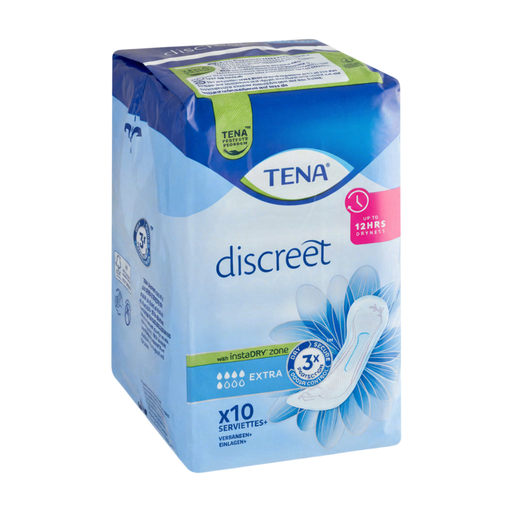
Why this suits the profile: A pack of 10 is ideal for trying out a new size first. According to the product description, this model is designed for light urine loss and has an anatomical fit.
The product name and description clearly state the usage level. So you don’t have to rely on a vague label like “extra” alone.
10 pads; Instadry zone according to the product description; odour control and an anatomical shape.
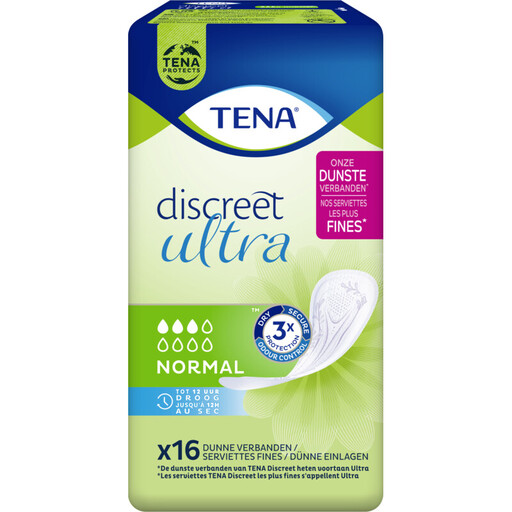
Why this suits the profile: This model combines an ultra-thin design with 16 individually wrapped pads. According to the product description, it is intended for light to moderate bladder weakness.
The product information mentions material, size and quantity. This means you can compare discretion and pack size concretely.
16 individually wrapped pads; bamboo fibre and cotton according to the product description; latex-free.
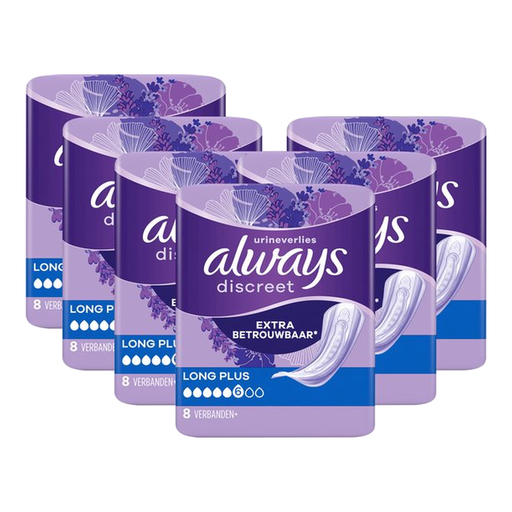
Why this suits the profile: The Long Plus variant is longer and contains 6 packs of 8 pads. According to the product information, this model is aimed at heavier urine loss.
The extra length is explicitly part of the variant name. Do check whether the dimensions suit your underwear and movement pattern.
48 pads in total; Long Plus size; two protective layers and a RapidAbsorb core according to the product description.
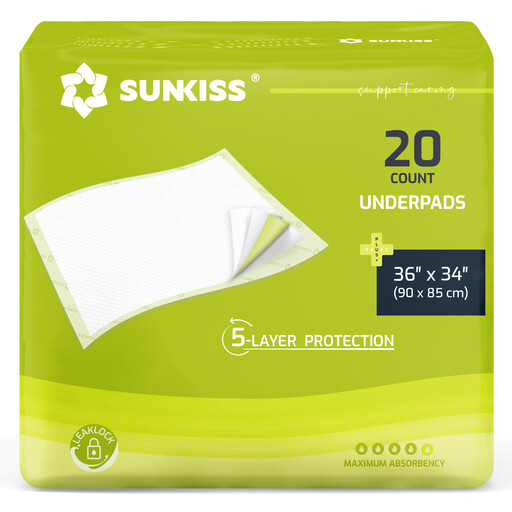
Why this suits the profile: These bed pads are designed for beds, sofas, chairs and car seats. The size is 36 x 34 inches and the pack contains 20 pads.
You use a bed pad as additional surface protection, rather than expecting a pad to have more absorbency than it was designed for.
Five layers according to the product description; SAP absorbent core; latex-free and for single use.
We’ve put together a full, up-to-date list of products that fully meet these strict selection criteria and comply with current European safety regulations.
Place a pad with the adhesive side onto clean, close-fitting underwear and press the strip down firmly. According to the product instructions, a men’s pad should be placed at the front of the underwear. Replace the product as soon as it is saturated, leaking or feels uncomfortable. Never reuse a pad.
Compare the price per pad, not just the price of the pack. A bulk pack can be better value, but only if the chosen size is right for you. For night-time use or situations with a higher risk of leakage, a longer pad or a bed pad can offer extra protection.
Dispose of used pads and bed pads in your general waste. Do not flush them down the toilet. Store unopened packs in a dry place and follow the expiry and safety information on the packaging.
Not always. Sanitary towels are developed for menstrual fluid and have a different shape and absorbent core. For urine loss, absorbent pads designed for bladder leaks are usually more targeted. Choose a product that explicitly states incontinence or bladder weakness as its intended use.
That depends on the amount of urine loss and the product. Follow the usage instructions on the packaging and replace the pad as soon as it feels damp, saturated or has shifted. Changing regularly helps to reduce discomfort and skin irritation. If irritation persists, stop using the product and consult a healthcare professional if necessary.
For heavy or frequent urine loss, a pad alone may not be sufficient. Look for a higher absorbency level, a longer model or a suitable pad specifically designed for that situation. A bed pad only protects the surface and does not replace an absorbent pad. If you are unsure about the right level or if your urine loss suddenly changes, it is wise to speak to a healthcare professional.
