Who are in-ear monitors for train journeys suited to?

Travellers who want to follow the dialogue

You want to catch the jokes and spoken passages despite the noise in the carriage, without constantly turning up the volume. The Consumers’ Association and the World Health Organization highlight the importance of a good fit when listening in a noisy environment.

Travellers who listen for long periods

You value a comfortable fit and enough listening time more than the maximum possible isolation on paper. The Consumers’ Association points out that you can’t use wireless earbuds while they’re charging in their case.

Travellers who want to hear announcements

You want to follow the comedy while still being able to notice relevant announcements at the station or on the train. The Consumers’ Association explains that in-ears with sealing silicone tips block the ear canal.

What should you look for in in-ears for radio comedy?

Wired in-ears with passive isolation

Choose these if: you want a seal against surrounding noise and don’t want to plan charging breaks while listening.

Trade-off: a good seal can make announcements harder to hear; also check that the connector is compatible with your playback device.

Wireless in-ears with ANC

Choose these if: you don’t want a cable and mainly want to reduce persistent low-frequency travel noise.

Trade-off: ANC uses battery power, and reducing bus or café noise doesn’t guarantee that radio comedy will be easier to follow on every train.

Listening with less isolation

Choose this if: being able to notice announcements matters more to you than maximum isolation.

Trade-off: spoken audio may be harder to follow in a noisy carriage; turning up the volume isn’t a good substitute for choosing the right option.

What to consider What should you check? Who should pay particular attention?
Following the dialogue Try ear tips that fit well and listen to spoken audio at a moderate volume. Assess passive isolation and ANC separately. If I want to follow the jokes and dialogue without constantly turning up the volume, I’m looking for a comfortable combination of a good seal and clear voices. Around 31% of consumers prioritise speech clarity.
Fit and comfort Check which tip sizes are included and follow the manufacturer’s fitting instructions. On a long journey, I want a fit that stays comfortable, not just a high noise-reduction rating on paper. Around 25% of consumers give fit and comfort top priority.
Hearing announcements Consider whether you need to be able to notice announcements regularly. For wireless models, check whether they have an ambient sound mode. If I don’t want to miss announcements at the station or on the train, awareness of my surroundings matters more than maximum isolation. Around 19% of consumers choose this as their main consideration.
Connector and listening time For wired models, compare the plug with your device. For wireless earbuds, check the listening time per charge, including with ANC on. When I’m travelling, I don’t want an incompatible plug or a flat battery halfway through the journey. Around 13% of consumers focus mainly on the connector and listening time.
Parts and aftercare Check which parts of the exact model can be replaced and who the seller is for warranty support. If I want to use my earbuds for a long time, replaceable parts and clear aftercare are important factors in my choice. Around 12% of consumers prioritise maintenance and aftercare.

Common mistakes when choosing in-ear monitors

  • Assuming a high isolation rating guarantees clear dialogue

    Published noise-reduction figures are product claims. Fit and the type of surrounding noise also make a difference; a number can’t predict how voices will sound on your train.

    Try the tips that fit you best with spoken audio at a moderate volume, and check whether you can still notice announcements.

  • Confusing battery life including the charging case with listening time per charge

    You can’t use wireless earbuds while they’re in the charging case.

    Compare the listening time of the earbuds themselves, ideally with the ANC setting you plan to use.

  • Buying a wired monitor without checking the connector

    A 3.5mm plug will only connect directly if your playback device has a compatible socket.

    Check the plug on the exact model and the socket on your phone or receiver before ordering.

  • Assuming you can always return in-ears after trying them

    The Netherlands Authority for Consumers and Markets (ACM) notes an exception to the cooling-off period for hygiene products that have been unsealed.

    Read the seller’s returns information before opening the packaging, and don’t confuse the returns policy with your legal rights if a product is faulty.

Brands to compare

Etymotic

The ER2SE is a wired monitor to consider if you want to compare passive isolation and what Etymotic describes as a flat sound signature. According to the manufacturer, the ER2XR is the version with more bass.

  • Etymotic states that the ER2SE provides 35–42 dB of passive noise reduction.
  • This is a manufacturer claim, not a measure of speech clarity or comfort on trains in the Netherlands. Fit still matters.

Shure

The SE215 is a wired in-ear model with a detachable cable and a choice of sleeves to compare.

  • Shure specifies a cable with a 3.5mm plug and claims up to 37 dB of isolation.
  • The stated maximum won’t apply to every fit; Shure stresses the importance of a good seal.

MOONDROP

The CHU II is a wired monitor worth comparing if you’re looking for ear tips in three sizes and a detachable cable.

  • For the version mentioned, MOONDROP specifies a 3.5mm plug and a 0.78mm-2pin cable connection.
  • These specifications don’t indicate ANC or measured speech clarity.

Sennheiser

The IE 100 PRO is a professional in-ear monitor to compare for fit and passive noise isolation.

  • Sennheiser lists silicone and foam tips, as well as a replaceable cable system.
  • The product information also covers a Wireless version; check which model and parts you’ll receive before buying.

Sony

The WF-1000XM5 is a wireless in-ear model with ANC that you can compare with wired monitors, not proof that wireless is better for radio comedy.

  • Sony lists noise cancelling and compatibility with Android and iOS.
  • Sony’s superiority claim is based on its own research, dated 1 September 2024, and isn’t an independent comparison with wired monitors.

Products at Joybuy for listening on the go

This selection includes wireless in-ears, including models with ANC, and wired earbuds for listening on the go.

Samsung Galaxy Buds4 Pro True Wireless, black

Samsung Galaxy Buds4 Pro True Wireless, black

A wireless option to compare with passive isolation if you listen to conversations while travelling.

The product name lists True Wireless and Active Noise Cancelling.

View at Joybuy
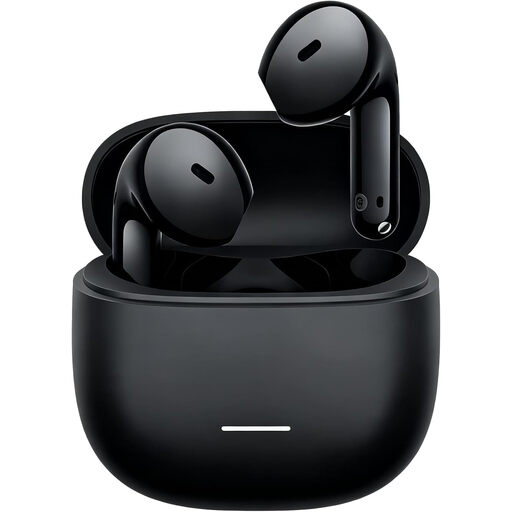
REDMI Buds 8 Active, black

REDMI Buds 8 Active, black

A wireless option to compare if you want to listen on your journey without a cable.

View at Joybuy
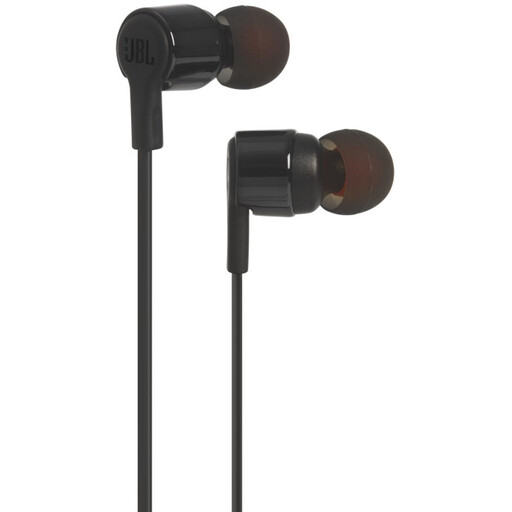
JBL Tune 210 wired in-ear earbuds, black

JBL Tune 210 wired in-ear earbuds, black

A wired option to compare if you don’t want to charge a battery while listening.

The product name lists a 3.5 mm connection.

View at Joybuy
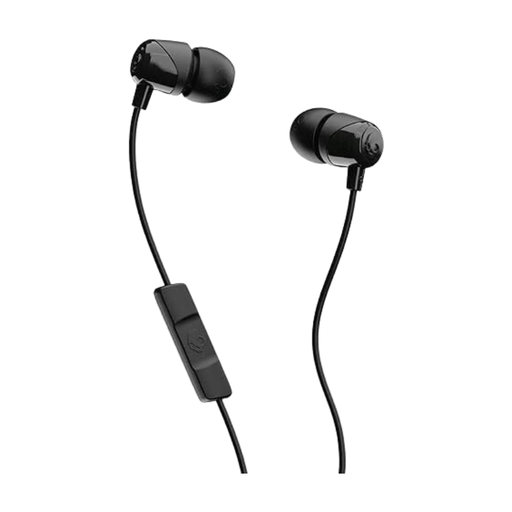
Skullcandy Jib In Ear W/Mic 1, black

Skullcandy Jib In Ear W/Mic 1, black

A wired in-ear option to compare if you’re looking for a microphone and on-earbud controls while listening.

The product information lists a 3.5mm connection.

View at Joybuy
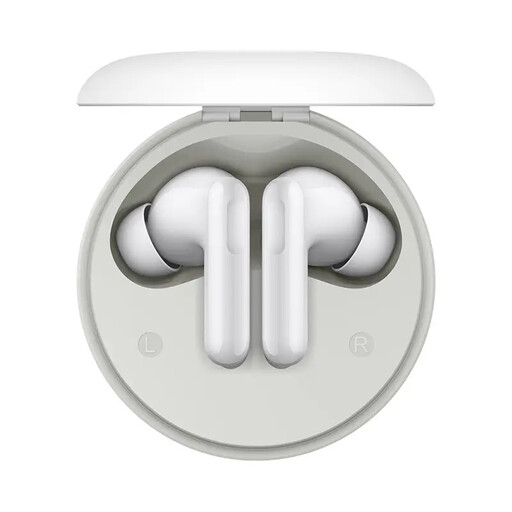
HONOR Earbuds A Pro with 12.4mm driver

HONOR Earbuds A Pro, 12.4mm driver

A wireless option to compare if you’re considering ANC and an ambient sound mode.

The product name lists a 12.4 mm driver; the product information mentions ANC and a transparency mode.

View at Joybuy

Frequently asked questions about in-ears on the train

Do I need ANC to understand radio comedy on the train?

No, ANC isn’t essential: well-fitting in-ears that create a good seal are another option. ANC can be useful for low, persistent noise, but research using bus and café noise doesn’t guarantee better speech clarity with every type of train noise or spoken recording.

How should I fit and look after an in-ear monitor?

Choose a tip that fits and don’t push the monitor hard into your ear. For the SE215, Shure says that a good seal affects the sound and that you shouldn’t push the tip past the opening of the ear canal. Disconnect the cable connector by pulling it straight out; don’t pull on the cable.

How can I listen without turning up the volume to drown out train noise?

Start with a good fit and keep the volume moderate. The World Health Organization gives an average of 80 dB for up to 40 hours a week as an example of a safe listening level for adults; at higher volumes, the safe listening time is shorter. This is listening guidance, not a product specification.

What are the rules on warranties and online returns in the Netherlands?

With normal use, you’re entitled to a legal warranty if a product doesn’t do what you could reasonably expect; the Netherlands Authority for Consumers and Markets (ACM) says the seller must then provide a solution. Online purchases generally come with a 14-day cooling-off period after delivery, but the ACM notes an exception for hygiene products that have been unsealed. So don’t assume you can return in-ears once you’ve opened the packaging, and check the terms before opening it.
