
Listeners who want to follow speech on a noisy train
You want to follow a lecture without turning up the volume to drown out the train. A comfortable fit and the seal created by the ear tips are important considerations.


For a history lecture on the train, a wired in-ear pair with comfortable, sealing ear tips is a sensible choice if you want to follow the speaker. Make sure the connector is compatible with your phone or player, too. The Dutch Consumers’ Association explains that in-ear headphones seal the ear canal, while the WHO recommends well-fitting earphones to help you avoid turning up the volume in noisy surroundings. If you need to hear announcements, prioritise being able to pause quickly or having a less complete seal over maximum passive isolation. Manufacturers’ figures can’t predict how clearly you’ll hear your recording on a particular train.
You want to follow a lecture without turning up the volume to drown out the train. A comfortable fit and the seal created by the ear tips are important considerations.
You’ll be wearing your earphones for a long time, so consider the tip material, the sizes available and whether a worn cable can be replaced.
You want to listen to spoken audio but still be able to respond to changes during your journey. Being able to pause easily and hear announcements may matter more than maximum isolation.
Choose these if: background noise is your main concern, you have a compatible connection and you want to try different ear tips. Etymotic quotes 35–42 dB of passive isolation for the ER2SE; Shure quotes up to 37 dB for the SE215. These are manufacturer figures, not measurements that can be directly compared during a train journey.
Keep in mind: the actual seal depends on the fit and may make announcements harder to hear. Check that the cable is compatible with your playback device, too.
Choose these if: long-wear comfort and maintenance matter more to you than the highest quoted isolation. Sennheiser says the IE 200 comes with silicone and foam tips in S, M and L, plus a detachable cable with a 3.5mm plug.
Keep in mind: the included sizes won’t guarantee a comfortable fit. Meze lists a USB-C adapter with the standard ALBA, but not with the ALBA S, so check the exact version.
Choose these if: listening without a cable or switching between reducing and letting in background noise is important to you. The Dutch Consumers’ Association describes noise cancelling as a way to reduce continuous vehicle noise, and ambient mode as a way to hear sounds around you.
Keep in mind: these are an alternative to wired in-ear monitors. Check the battery life of the earphones themselves, and don’t assume ambient mode will make every announcement easy to understand.
| Consideration | What should you check? | Who is this important for? |
|---|---|---|
| Following speech amid background noise | Check which tip sizes are available and whether the ear tips seal comfortably. Don’t assume quoted isolation guarantees that speech will be clear. | I want to follow the history lecture without constantly turning up the volume; around 33% of consumers prioritise speech intelligibility. |
| Comfort during longer listening sessions | Compare tip sizes and materials. Pain or persistent pressure shouldn’t be part of the fit. | If I wear my earphones for most of the journey, I want a comfortable fit; around 27% of consumers say long-term wearing comfort is their main concern. |
| Being able to hear travel updates | Check whether you can pause the audio quickly. NS app alerts can provide additional travel information, but they’re no substitute for paying attention to your surroundings. | I want to be able to respond to announcements or changes to my journey while listening; around 20% of consumers prioritise this. |
| Connection and maintenance | Check your phone or player’s connection, what’s included with the version you’ve chosen, and which replacement parts are compatible with the model. | If I want to use my earphones with my device and allow for possible cable wear, connection and maintenance matter; around 20% of consumers put these at the top of their list. |
Manufacturers’ isolation figures don’t tell you how clearly you’ll hear a history lecture on your train. The seal also depends on the ear tips and how they fit.
Don’t compare models by their quoted isolation alone. Check which tips fit you, and don’t automatically turn up the volume to drown out the train.
A 3.5mm plug won’t connect directly to every playback device. What’s in the box can also vary between versions: Meze, for example, says the USB-C adapter isn’t included with the ALBA S.
Before buying, check the full version name, connection and box contents.
In-ears that block out background noise may also make announcements harder to hear. NS app alerts can provide additional travel information, but they don’t remove the need to pay attention to your surroundings.
Pause at stops and when changing trains, and choose strong isolation only if it suits the way you travel.
The wired ER2SE is designed for listeners looking for passive isolation and a sound profile that Etymotic describes as flat.
The SE215 is a wired monitor worn over the ear, with several ear-tip options included and a detachable cable.
According to Sennheiser, the wired IE 200 gives you a choice of silicone and foam tips.
The ALBA is a wired 3.5mm monitor; according to Meze, the standard ALBA comes with a USB-C adapter.
The CHU II is a wired in-ear monitor with a 3.5mm plug and three sizes of ear tips.
This selection includes wired in-ear earphones and wireless models for listening to spoken audio on the go. Check that each model’s connection is compatible with your playback device.
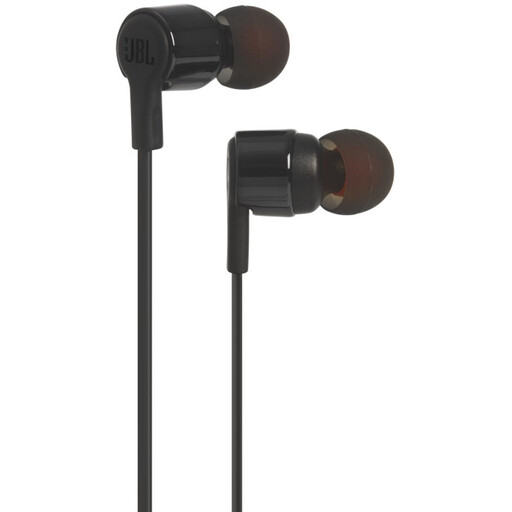 No image available
A wired option if you want to use a 3.5mm connection.
The product name mentions a microphone. You’ll need a playback device with a compatible 3.5mm port.
 No image available
A wired option if you’re looking for noise cancelling; bear in mind that it may make background sounds harder to hear.
The USB-C connection described requires a compatible playback device.
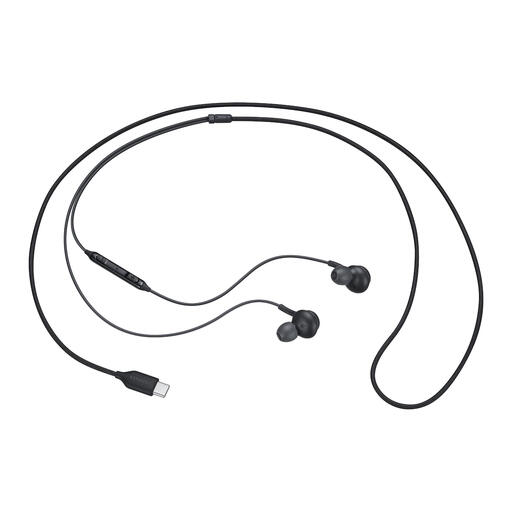 No image available
A wired option if you want to listen on a device with USB Type-C.
You’ll need a compatible playback device.
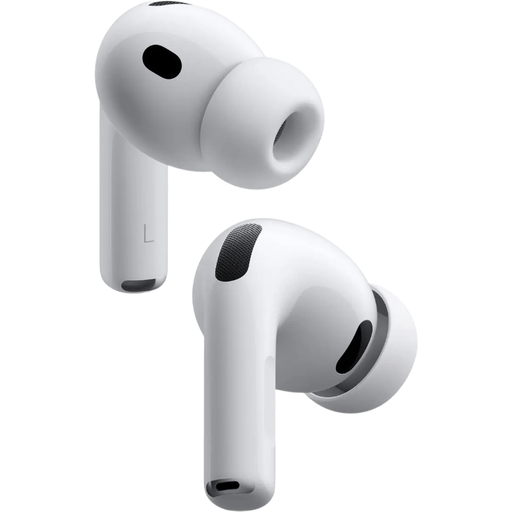 No image available
An option if you want to switch between reducing background noise and letting it in while listening.
The stated playback time is up to 8 hours with noise cancelling on and up to 10 hours in Transparency mode.
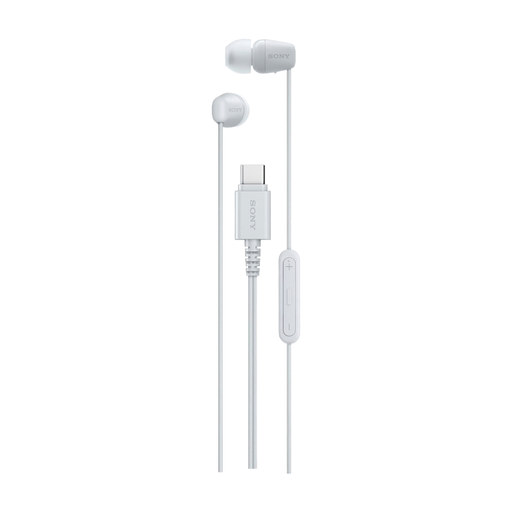 No image available
A wired option if you want to use a USB-C connection on your playback device.
You’ll need a compatible playback device. The passive isolation described may make background sounds harder to hear.
The WHO recommends wearing well-fitting earphones so you don’t have to turn up the volume to drown out noise. For adults, the WHO gives 80 dB for up to 40 hours per week as an example of safe listening exposure; your actual exposure also depends on volume and duration.
No, not necessarily. The actual seal depends on your ear tips and fit, while strong isolation can make background sounds harder to hear. Choose a comfortable fit and pause if you want to listen out for an announcement.
It depends on your phone’s connection and the version of earphones you have. Sennheiser lists a cable with a 3.5mm plug for the IE 200, as does Shure for the SE215. According to Meze, the standard ALBA comes with a USB-C adapter, but the ALBA S doesn’t, so check the box contents and your device.
NS’s house rules focus on keeping quiet in the quiet zone and not disturbing fellow passengers with loud music or conversations. These are NS rules for travelling with NS, not a general legal conclusion that applies to all operators.
If a product breaks during normal use sooner than you could reasonably expect, ACM ConsuWijzer says the seller must provide an appropriate solution free of charge, such as a repair or replacement. Whether a particular fault qualifies depends on the product and circumstances; the manufacturer’s warranty period alone doesn’t determine your statutory rights.