
Rhythm analyst
You play a recording repeatedly to follow individual percussion parts. A good seal and clearly audible detail are therefore important when choosing.


Start with an ear tip that seals well: the fit affects passive isolation and how well you can assess the bass. Then choose between strong passive isolation, a comfortable fit for repeated listening and a connection that suits your playback device. A stated attenuation rating cannot predict exactly what you’ll hear on the train, and a wired IEM does not automatically have active noise cancellation.
You play a recording repeatedly to follow individual percussion parts. A good seal and clearly audible detail are therefore important when choosing.
You practise on longer journeys and don’t want to keep turning up the volume to drown out the train. Fit, isolation and a sensible listening volume all matter.
You mainly listen on a phone, so you need to check how a wired IEM connects to it and which accessories are included with the version you choose.
Choose this option: if train noise is the biggest obstacle to analysing what you hear and your ear tips seal well.
Bear in mind: fit plays a part in isolation, and announcements may be harder to hear.
Choose this option: if you want to listen repeatedly and comfort matters more to you than the highest stated attenuation rating.
Bear in mind: comfort is personal, and you’ll need to take care of the cable when getting on and putting your IEM away.
Choose this option: if your phone doesn’t have a 3.5mm socket and the version you choose includes a compatible USB-C adapter.
Bear in mind: accessories can vary between versions, so check the variant and its compatibility with your device.
| What to consider | What should you check? | Who is this important for? |
|---|---|---|
| Percussion detail | Compare a recording you know well and see whether you can follow the kick, snare and hi-hat with your chosen tips. The manufacturer of the TRUTHEAR HEXA describes differences between foam and silicone tips; this doesn’t mean every listener will get the same result. | If your main aim is to follow the individual hits in a groove, detail matters a lot to you. Consumers with this as their main need account for around 26%. |
| Reducing train noise | Try different tip sizes and check the seal. Don’t automatically turn up the volume to drown out background noise: the WHO emphasises that both sound level and listening time matter. Remember to keep checking travel information, too. | If train noise is drowning out your analysis, you’re mainly looking for a well-sealing fit. Consumers who prioritise isolation account for around 26%. |
| Fit on longer journeys | Check which tip sizes and materials are included, and assess the fit with the exact model. Don’t judge comfort based on the shape in a product photo alone. | For repeated listening on longer journeys, you’ll want a tip that feels comfortable and seals well. Consumers who put comfort first account for around 21%. |
| Connection | Check that your device has a suitable connection and see which adapter is included with each version. Meze says the standard Meze ALBA and the ALBA S differ in this respect. | If your phone doesn’t have a suitable connection, you’ll need to know how to connect the IEM before you buy. Consumers who sort out connectivity first account for around 16%. |
| Cable and replacement tips | Check the exact cable type and which tips or replacement parts fit the model. Don’t assume that cables or tips are universally interchangeable. | If you carry your IEM with you every day, you’ll want to know which parts you can replace if needed. Consumers who prioritise maintenance and replaceable parts account for around 11%. |
Actual isolation depends partly on the shape of your ears, the tips and the fit. A stated maximum therefore won’t tell you exactly how much train noise you’ll hear.
Check the available tip sizes and fit before comparing models by their stated attenuation.
The standard Meze ALBA is listed as coming with a USB-C adapter with DAC; Meze says the adapter isn’t included with the ALBA S.
Check the full model name, your device’s connection and what’s included in the box.
If the version you choose doesn’t include a suitable adapter, you may need to buy one separately.
A sealing ear tip and active noise cancellation are different technologies. Don’t assume a wired IEM has ANC unless the model specifications say so.
If low, constant train noise is your main problem, check whether the model actually has ANC.
The SE215 is a wired option to consider if you’re looking for a close fit and passive isolation.
The ER2XR is a wired option to compare if a strong passive seal is important to you.
The IE 200 is a wired option to compare for tip materials, fit and a 3.5mm connection.
The standard ALBA is a wired option if the included USB-C adapter is also a factor in your choice.
The HEXA has a hybrid driver configuration that you can compare using a recording you know well.
This selection includes wired and wireless in-ear earphones for listening on the go. Check that each model’s connection, noise cancellation and included accessories suit the way you’ll use it.
 No image available
A wireless option if you want to adjust the sound while listening.
The product description mentions ANC, an adjustable 9-band equaliser and USB-C charging. These features aren’t an independent listening test.
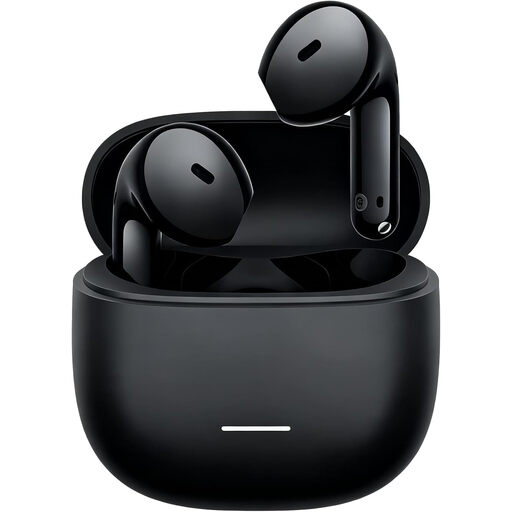 No image available
A wireless option for listening on the go without a cable.
The product description mentions Bluetooth 5.4, up to 7 hours of playback per charge, a charging case and USB-C charging.
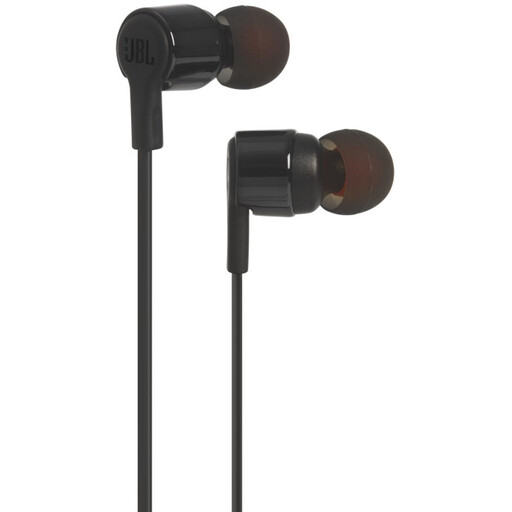 No image available
A wired option if your device has a suitable 3.5mm socket.
The product description mentions several sizes of ear tips and a built-in microphone; check the fit for longer listening sessions.
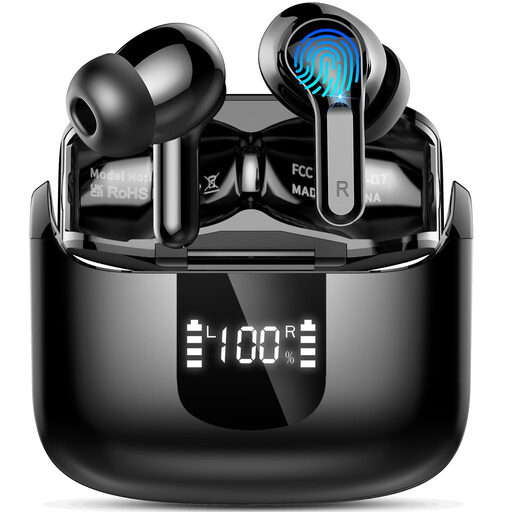 No image available
A wireless option to compare if you’re looking for a Bluetooth connection and USB-C.
The product name lists four ENC microphones, IPX7, USB-C and 48 hours of battery life. Check which features are relevant to the way you listen.
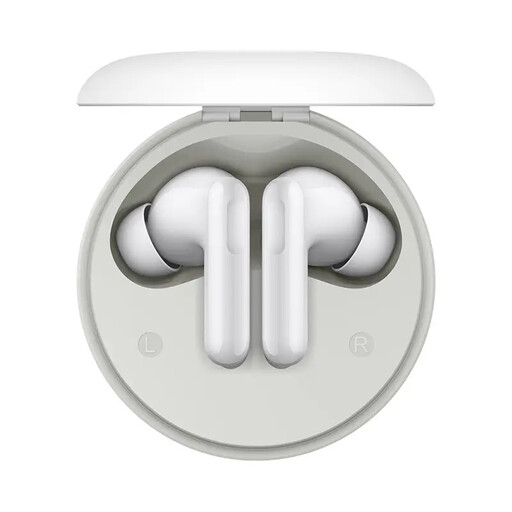 No image available
A wireless option if active noise cancellation and sound settings are relevant to how you listen.
The product name lists ANC with 49 dB, a 12.4mm driver and 42 hours of battery life. The stated features don’t measure how well you’ll hear a drum groove on the train.
No. The shape of your ears, the ear tips and the fit all affect actual isolation. Also consider whether you can follow the parts of a familiar groove at a sensible volume; stated model ratings aren’t measurements in your ears or on your train.
Choose a size that feels comfortable and seals well, and fit the tips according to the model’s instructions. Check regularly that they’re clean and still fit well; Shure says isolation depends partly on the tips and the fit.
First, check the seal and don’t automatically turn up the volume to drown out background noise. The World Health Organization gives an average of 80 dB for up to 40 hours a week as an example within its guideline; this isn’t a fixed volume-control setting or a guarantee of safety for every exposure.
According to ACM ConsuWijzer, online purchases generally come with a statutory cooling-off period of up to 14 days after delivery, with exceptions for certain products, including some unsealed hygiene products. So don’t assume you can return used in-ear earphones without checking the product terms. For faulty products, the Dutch government says the retailer is your point of contact for statutory protection; the Netherlands does not have a fixed general guarantee period.