
Listening with background noise
You want to follow spoken interviews while other people talk or move around in the same bedroom. A well-fitting ear tip that creates a good seal is a sensible place to start.


Start with in-ear headphones that seal well and stay comfortable; then compare how clearly you can follow voices and whether the connector is compatible with your playback device. Shure specifies up to 37 dB of isolation for the SE215, while Etymotic specifies 35–42 dB of attenuation for the ER2SE. These are manufacturer figures for specific models, not directly comparable measurements of conversations in your bedroom.
You want to follow spoken interviews while other people talk or move around in the same bedroom. A well-fitting ear tip that creates a good seal is a sensible place to start.
You listen to a whole interview in one sitting and want to compare ear tip sizes and the fit in your ears before putting too much weight on the stated isolation figures.
You want to listen without relying on a battery, so you need to check that your phone, computer or adapter is compatible with the earphones’ connector.
First assess the fit and seal, then compare how clearly voices come through, and finally check the connector and replaceable parts.
| Priority | What to look for | Who is this for? |
|---|---|---|
| Seal and room noise | Try the supplied ear tip sizes at a low, comfortable volume. Treat dB figures as manufacturer specifications for that particular model, not as a guarantee that the fit will work for you. | If I want fewer distractions without turning up the volume, I start by looking for a seal that stays comfortable; around 36% of consumers prioritise this. |
| Speech clarity | If possible, compare the same interview recording at a comfortable volume. A description of the sound is not a measure of how clearly you will hear your recordings. | I want to follow the words in a conversation, not just hear a particular sound profile; around 29% of consumers put clarity first. |
| Listening comfort | Check which sizes and ear tip materials are included, and how the cable sits around your ear. Fit is a personal matter. | If I want to listen to a whole interview without taking the earphones out early, I focus on the fit; around 21% of consumers choose comfort as their top priority. |
| Connector and cable | Check your device’s output and the exact plugs and connectors on the earphones and cable. | I want to connect straight away or replace the cable with a compatible one later; around 14% of consumers start with connectivity and maintenance. |
The figures Shure and Etymotic give for specific models do not tell you how well the ear tips will seal in your ears or how conversations will sound in your room.
Try different ear tip sizes and assess the seal and speech clarity at a low, comfortable volume. Don’t compare dB figures as though they were measured under the same conditions.
The ATH-E40 uses A2DC; the SE215 and IE 200 mentioned here use MMCX. A detachable cable doesn’t mean cables are interchangeable between these models.
Before buying, check both the connector on the earphones and the plug for your device. Find out whether you need a suitable adapter for your connection.
Online purchases often come with a cooling-off period, but exceptions may apply. This is separate from your rights if a product is faulty.
Before breaking any seal, check the terms that apply to the specific product. The Dutch government is the source for general information about cooling-off periods and product guarantees.
The wired SE215 is worth considering if you want to compare different ear tips and passive isolation.
The ER2SE is a wired option for anyone who wants to take the stated passive attenuation into account.
The IE 200 is a compact wired option for comparing fit and ear tip choices.
The ATH-E40 is a wired in-ear monitor to consider if several ear tip sizes and a detachable cable matter to you.
This Joybuy selection includes wired earphones with USB-C or 3.5 mm connections, as well as a wireless option with active noise cancellation. The features listed don’t prove that these products will block out speech in a shared bedroom.
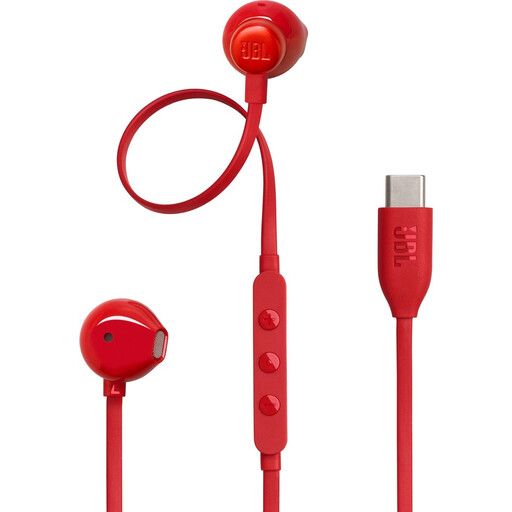 No image available
A wired option if your device supports USB-C audio; the product description lists a microphone and Vocal-EQ mode.
USB-C connection, in-line controls and flat cable.
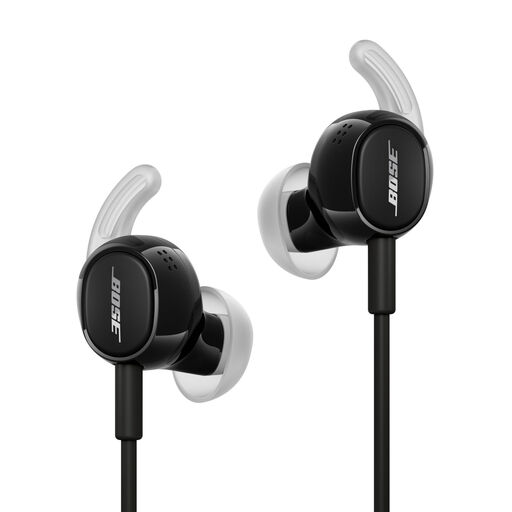 No image available
A wired option to compare if you want to adjust the fit using different ear tips and stability wings.
USB-C connection, active noise cancellation, three sizes of ear tips, two sizes of stability wings and an in-line microphone.
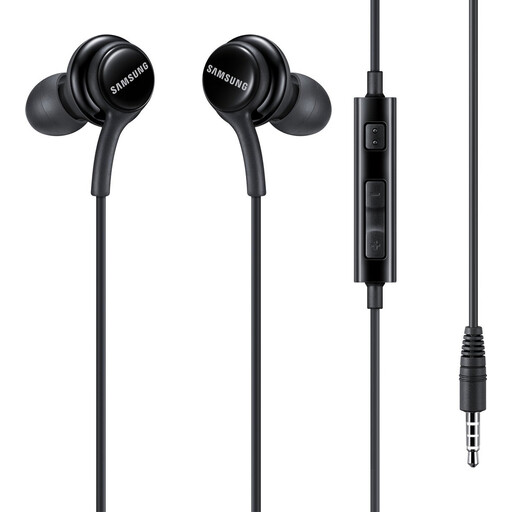 No image available
A wired option if your device has a compatible 3.5 mm connection.
3.5 mm plug.
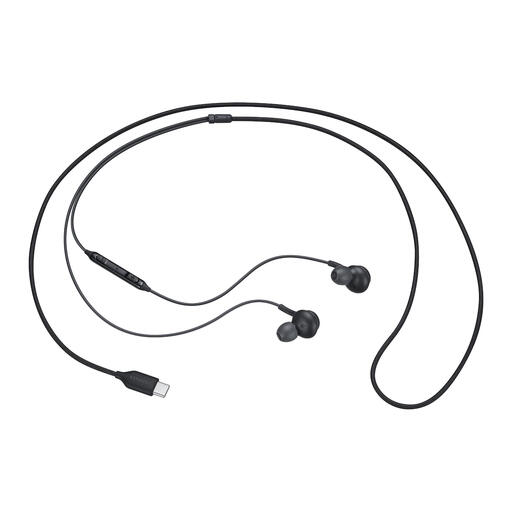 No image available
A wired option if your device supports USB Type-C audio; the product description lists several ear tip sizes.
USB Type-C, built-in DAC, in-line controls and two-way speakers.
 No image available
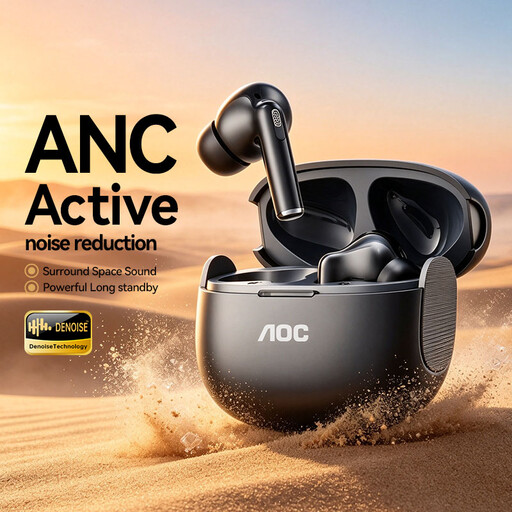
A wireless alternative if a cable would get in the way; it offers a different listening experience from wired in-ear headphones.
Bluetooth 6.0, active noise cancellation and charging case.
No. First, try adjusting the fit and seal, then listen at a comfortable, low volume. The World Health Organization points out that both volume and listening time affect exposure to loud sound.
Try the supplied sizes without forcing a fit that causes pain, and follow the cleaning instructions for the exact model. The stated ear tip sizes won’t tell you which size suits your ears.
No. Check the connector on the earphones and the plug for your playback device. The Shure SE215 and Sennheiser IE 200 use MMCX; the Audio-Technica ATH-E40 uses A2DC.
According to the Dutch government, there is no fixed statutory guarantee period in the Netherlands. What matters is what you can reasonably expect from the product, and the retailer is your point of contact if it is faulty. Online purchases often come with a 14-day cooling-off period, but exceptions may apply. Before breaking any seal, check the terms that apply to the specific product.
Not simply because the product is an in-ear monitor. According to the European Commission, CE marking is only required when the relevant harmonised EU rules say it is; check the conformity information for the exact model.