
Listener with a sleeping roommate
Wants to follow spoken explanations without disturbing the other person unnecessarily. Fit, a moderate listening volume and checking for sound leakage are all important.


Start with ear tips that create a comfortable seal, then check at your usual listening volume whether your podcast is audible to your roommate. For spoken explanations, compare the sound and fit of specific models, and check that the plug is compatible with your playback device. Strong passive isolation can reduce the noise you hear around you, but it can also make it harder to hear your roommate.
Wants to follow spoken explanations without disturbing the other person unnecessarily. Fit, a moderate listening volume and checking for sound leakage are all important.
Listens to several episodes and wants to try different tip sizes or materials. A good seal doesn’t automatically mean the earphones will stay comfortable.
Wants to follow names and explanations clearly, so compares the sound and fit of specific models as well as the seal.
First, check the fit and sound leakage at your usual listening volume. Then consider comfort during longer episodes, the sound you want for speech and the connection on your player.
| What to consider | What should you check? | Who is this important for? |
|---|---|---|
| Seal and sound leakage | Try tips that fit and check at your usual listening volume whether sound can be heard in the room. | I want to follow the podcast without disturbing my roommate unnecessarily. Around 36% of consumers in this situation prioritise seal and sound leakage above all else. |
| Comfort during long listening sessions | Check the included tip sizes and materials, and see how the earphones feel in your usual listening position. | If I listen to several episodes, I want tips that don’t press on my ears, even if they create a good seal. Around 29% of consumers prioritise long-wearing comfort. |
| Sound quality for spoken audio | Compare the tuning of specific models with spoken audio at your usual volume. | I want to follow names and technical terms comfortably, so I pay attention to how speech sounds. Around 21% of consumers put their preferred sound for speech first. |
| Connection and maintenance | Check your player’s connection and which connector a replacement cable needs. | I want to know whether the earphones connect directly to my player and which cable is compatible with the model. Around 14% of consumers prioritise connection and maintenance above all else. |
How well the earphones reduce the noise you hear from outside doesn’t tell you how much of your podcast your roommate will hear. These are two separate things to check.
Choose tips that fit and, in your shared room, check at your usual listening volume whether the other person can hear anything.
A secure seal can feel good, but the tips or housing may become uncomfortable during longer listening sessions.
Compare the included sizes and materials, and see how they feel in your ears. Don’t assume the tip that creates the strongest seal will be the most comfortable for you.
Models use different connectors, such as MMCX, A2DC and 0,78mm-2pin. So a detachable cable won’t necessarily be interchangeable with one from another model.
Check both the connection on the earphones and the plug for your player before choosing a spare cable or adapter.
Noise cancellation and sound leakage are separate considerations: check what your roommate can hear at your listening volume.
Choose a wireless model if freedom of movement matters to you, and remember to factor in charging for longer listening sessions.
The wired SE215 is worth comparing if a fit kit, detachable cable and the fit of the tips are important to you.
The IE 200 is worth comparing if you want to assess different tip materials and your preferred sound.
The ER2SE is worth comparing if you’re looking for a tuning Etymotic describes as flat, along with passive isolation.
The ATH-E40 is worth comparing if you want to look at several silicone tip sizes and a detachable cable.
The CHU II is a wired option worth comparing if the included tip sizes and replaceable parts are relevant to you.
This selection includes wired and wireless in-ear earphones to compare for podcast listening. When choosing, consider the fit, the connection to your playback device and whether charging suits the way you listen.
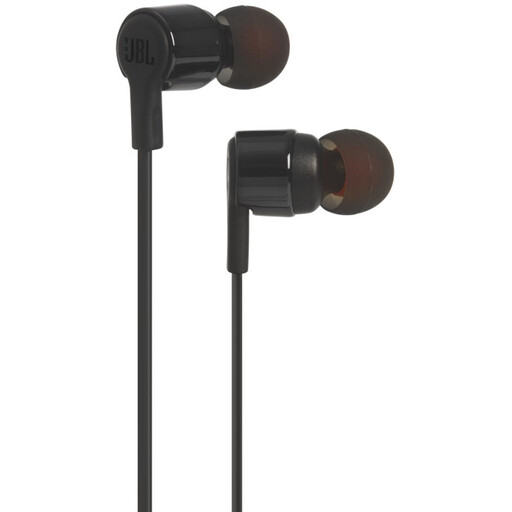 No image available
A wired option if your player has a compatible 3,5mm connection and you want to try different tip sizes.
3,5mm connection; built-in microphone; several tip sizes. Podcasts are listed as one of the product’s uses.
 No image available
A wired option if your device supports audio over USB-C; check that connection first.
USB-C connection; three tip sizes and two sizes of stability wing are listed.
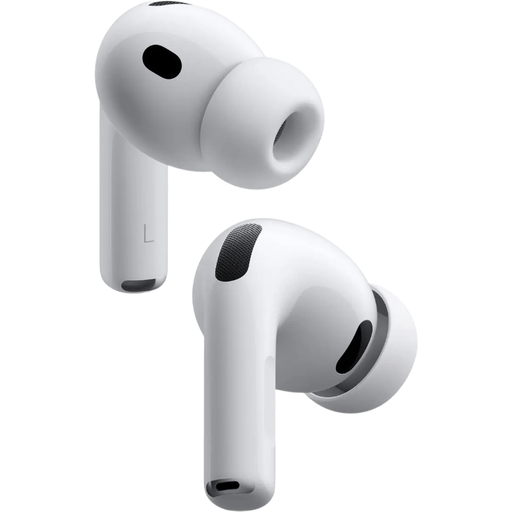 No image available
A wireless option if you want to listen without a cable; check that the controls and fit suit the way you use them.
Active noise cancellation and a charging case are listed; five sizes of silicone ear tip.
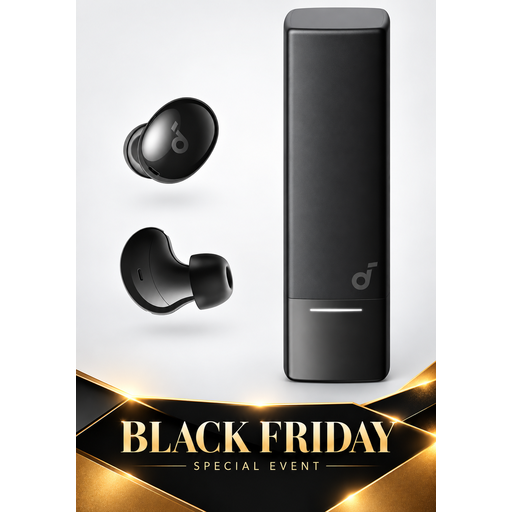 No image available
A wireless option if Bluetooth and connecting to more than one device are useful for the way you listen.
Bluetooth 5.4, multipoint and active noise cancellation are listed.
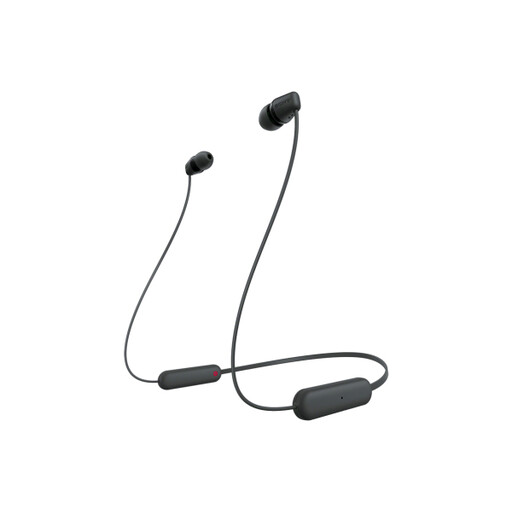 No image available
A wireless in-ear headset if you don’t want a cable between your earphones and playback device.
Bluetooth and a built-in remote control are listed. The product information recommends choosing a silicone tip size that creates a good seal.
Start low and don’t turn the volume up any higher than you need to follow the words. The World Health Organization gives an average of 80 dB for up to 40 hours a week as an example, and recommends well-fitting headphones and taking breaks; this isn’t a guaranteed safe volume setting for your device.
First check whether the tip and sound channel are clean. For Shure earphones, Shure recommends pointing the channel down while cleaning and not piercing the filter with a cleaning tool. For other models, follow the manufacturer’s care instructions.
That depends on your playback device. The manufacturers list a 3,5mm plug for the IE 200, SE215, ATH-E40 and CHU II. Check whether your phone or player has a suitable output before choosing an adapter.
For online purchases in the Netherlands, there is generally a statutory 14-day cooling-off period from delivery, according to ACM ConsuWijzer. Exceptions apply to certain hygiene products if their seal has been broken; before buying, check how the retailer applies this to the product in question.
According to the Dutch Government, if a product is faulty, you should contact the seller to assert your right to a product that meets the required standard. The Netherlands has no fixed statutory guarantee period for all products; normal wear and tear or damage caused by you doesn’t automatically entitle you to a free repair.