
Opera listener looking for some peace and quiet
You want to follow passages even when the office is noisy, without continually turning up the volume. The seal partly depends on the fit. VeiligheidNL recommends making sure your earphones fit well.


Start by choosing an in-ear monitor with eartips that feel comfortable and create a good seal. According to VeiligheidNL, a good fit can limit sound leakage and help you avoid continually turning up the volume. Then compare the sound using your own opera excerpts and check that the wired plug is compatible with your playback device. Manufacturers’ claims about isolation or sound are not comparative listening tests.
You want to follow passages even when the office is noisy, without continually turning up the volume. The seal partly depends on the fit. VeiligheidNL recommends making sure your earphones fit well.
You want to compare how an in-ear monitor reproduces voices and instruments. Treat descriptions such as ‘neutral’ as claims made by the manufacturer, not as independent listening tests. The Consumentenbond includes sound quality in its headphone tests.
You want the eartips and housings to feel comfortable during longer listening sessions. Fit and wearing comfort are separate considerations; the Consumentenbond assesses wearing comfort for headphones and earphones.
Start with fit and seal, then decide what kind of sound you prefer, and finally check the connection and cable. According to VeiligheidNL, a good seal can limit sound leakage, but the fit needs to suit your ears.
| What to consider | What to look for | Who should prioritise this? |
|---|---|---|
| Seal | Try eartips in different sizes to find the right fit; also consider whether you need to remain available to speak to colleagues. | If you want to follow opera passages in a noisy office without continually turning up the volume, make a good seal your priority; around 36% of consumers rank this as their main buying priority. |
| Sound of voices and orchestra | Compare the same opera excerpts at a similar volume; treat descriptions of the sound as manufacturers’ claims. | If you mainly want to assess the balance between voices and instruments, it’s best to listen for yourself; around 29% of consumers give sound reproduction top priority. |
| Wearing comfort and eartips | Check the sizes and materials of the supplied eartips; when wearing them for longer, pay attention to pressure and fit. | If you want to avoid pressure or discomfort during longer listening sessions, fit and eartip choice are crucial; around 21% of consumers prioritise comfort. |
| Connection and cable | Check whether your source uses 3,5 mm or USB-C, and which connector you’ll need for a replacement cable. | If you want to connect the earphones to a specific source or replace the cable later, check both connections; around 14% of consumers make this their main buying priority. |
Eartips that don’t fit properly can compromise the seal. A higher figure from a manufacturer doesn’t prove how much office noise will be blocked out for you.
Check the fit and keep the volume at a sensible level. Don’t compare isolation figures from different manufacturers as though they were measured under identical conditions.
A 3,5 mm plug won’t necessarily fit every playback source. The connector on the earphones also varies by model, so replacement cables aren’t always interchangeable.
Before buying, check the connection on your source and, if you need a replacement cable, the exact connector type on the earphones.
Online purchases generally come with a statutory cooling-off period, but there may be an exception for a hygiene product if an applicable seal has been broken.
Before opening the packaging, check the information about the seal and the returns policy. ACM ConsuWijzer explains the rules on the cooling-off period and the relevant exceptions.
The ER2SE is a wired option if you’re looking for a sound that Etymotic describes as flat.
The IE 200 is a wired option for comparing the balanced sound described by Sennheiser.
The SE215 is worth considering if you want to try different eartip materials and are looking for a detachable cable.
The ATH-E40 comes with several eartip sizes and a detachable cable, with an A2DC connector on the earphones.
These wired in-ear options are designed for listening via USB-C or a 3,5 mm connection, depending on the model you choose.
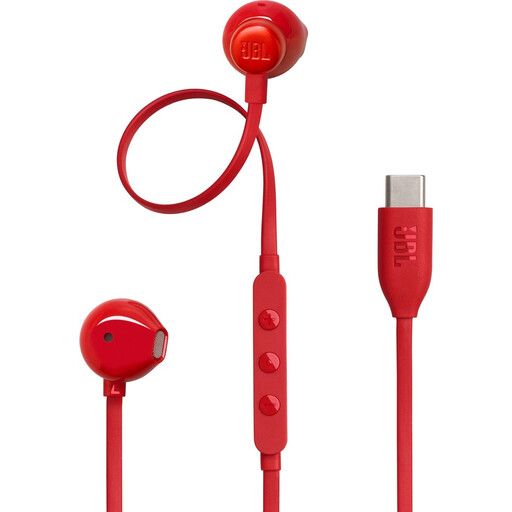 No image available
An option if you listen via USB-C and want to try a voice setting.
The product description lists in-line controls, three EQ presets and a built-in microphone.
 No image available
A wired option to consider if you’re looking for earphones with a USB-C connection.
The product description mentions QuietControl noise cancellation, three sizes of eartips and two sizes of stability wings.
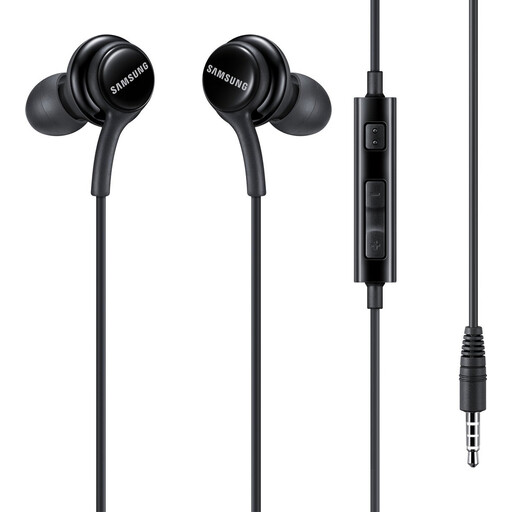 No image available
Suitable for a playback source with a 3,5 mm connection.
The product description mentions an ergonomic fit for longer listening sessions.
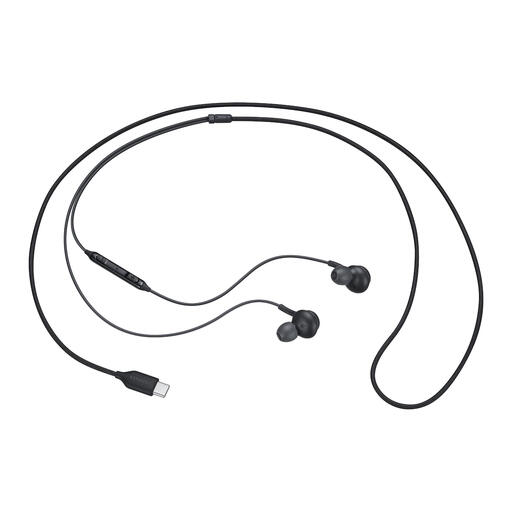 No image available
An option for listening from a compatible device with USB-C.
The product description lists 2-way speakers and balanced sound tuned by AKG.
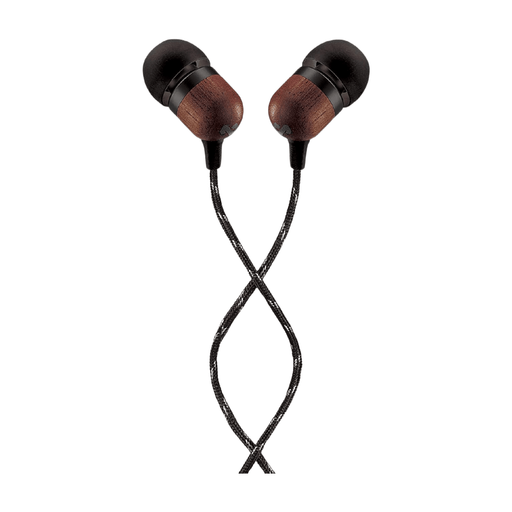 No image available
A wired option for a compatible USB-C connection.
The product name lists a 9,2 mm driver, a microphone and a tangle-resistant cable.
No. A stated figure alone doesn’t guarantee a good seal for you. Fit partly determines how much background noise you actually block out; the figures Etymotic and Shure give for their models aren’t directly comparable measurements taken in your office.
Try eartips that fit well and keep the volume at a sensible level. VeiligheidNL also recommends using a volume limiter on mobile devices and points out that both volume and listening time matter.
Check whether your playback source has a suitable connection or needs an adaptor. If you need a replacement cable, also check the connector on the earphones: Audio-Technica lists A2DC for the ATH-E40 and Shure lists MMCX for the SE215.
Online purchases in the Netherlands generally come with a statutory 14-day cooling-off period from delivery. ACM ConsuWijzer describes an exception for hygiene products if an applicable seal has been broken. So, before opening the packaging, check which terms apply to the product; don’t assume that you can return earphones once they’ve been worn.
No. Describing an office as ‘noisy’ doesn’t mean that music IEMs are suitable occupational hearing protection. Arboportaal explains the requirements when daily exposure above 80 dB(A) has been established, and the requirement to wear hearing protection above 85 dB(A). Without measuring exposure, you can’t apply those rules to a specific workplace.