
Mixer between office conversations
Wants to hear small changes without turning up the volume, so is mainly looking for ear tips that seal well and feel comfortable.


First, choose an in-ear monitor (IEM) that feels comfortable and seals consistently. Then compare its sound signature with the mix changes you want to assess. Etymotic describes the ER2SE as designed for a flat perceived frequency response, but this manufacturer description is no guarantee of how it will sound or fit you personally. Use an IEM as an additional reference, and check important decisions about bass and stereo imaging later against another familiar listening reference, such as loudspeakers.
Wants to hear small changes without turning up the volume, so is mainly looking for ear tips that seal well and feel comfortable.
Checks things such as vocals, EQ and bass, and wants to account for how the sound signature might affect these decisions.
Carries out repeated listening checks and needs a fit that remains comfortable during longer listening sessions.
The WHO recommends using well-fitting earphones to reduce the temptation to turn up the volume in noisy environments. Manufacturers’ attenuation figures are not personal measurements: your ear canal, the tip you choose and the fit all play a part too.
| What to consider | What should you check? | Who is this important for? |
|---|---|---|
| Sealing out office noise | Try different tip sizes and check that both ears have a similar seal; don’t treat dB figures as your personal attenuation level. | If conversations interrupt my quick checks, I want to be able to listen at a controlled volume. Around 36% of consumers rank isolation as their top buying priority. |
| Assessing tonal balance | Compare familiar reference mixes and check important decisions about bass and stereo imaging on a second listening setup. | When assessing small changes to vocals, EQ or bass, I want to know how the sound signature might influence my judgement. Around 29% of consumers give tonal balance their top priority. |
| Comfort | Check which sizes and materials the ear tips come in, and assess the fit before listening for an extended period. | If I wear the IEM often or for long periods, a tip that seals well also needs to feel comfortable. Around 21% of consumers put comfort ahead of other buying factors. |
| Connectivity and maintenance | Check the output on your laptop or audio interface, and whether suitable replacement tips are compatible with the connection and model. | If compatibility with my existing equipment or ease of maintenance comes first, I want to know in advance what the monitor requires. Around 14% of consumers give these practical considerations top priority. |
According to Shure, isolation depends in part on the shape of your ear canal, the tip you use and the fit. So a manufacturer’s figure cannot predict exactly how much background noise you will hear.
First check that the tips seal well, then assess the sound at a controlled volume.
Bass and stereo imaging can sound different through earphones than through loudspeakers. So checking on an IEM alone is no substitute for a second, familiar listening reference.
Use the IEM for checks at the office, then review important decisions later on another familiar listening setup.
Shure says the SE215 has a 3.5mm connection. Your listening source needs to have a matching connection.
Before buying, check your device’s output and the connection required by the specific model.
The ER2SE is a wired option to consider if you’re looking for a reference tuned for neutral reproduction and strong passive isolation.
The SE215 is a wired option with interchangeable tips and a detachable cable for checks at the office.
The IE 100 PRO is a compact wired stage IEM that you could also consider as an additional mix reference.
The Pro X10 is a compact stage IEM to consider if a choice of tips and a low-profile fit matter to you.
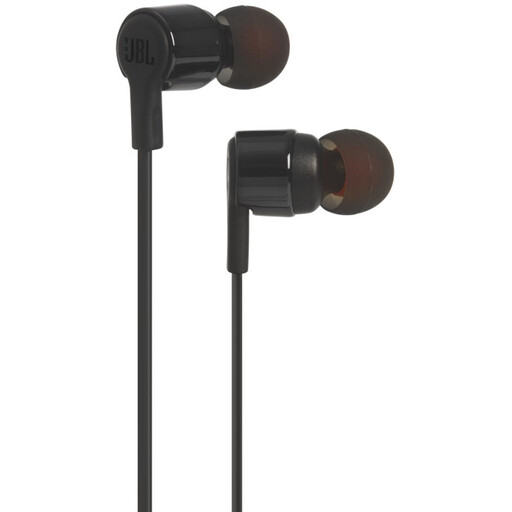
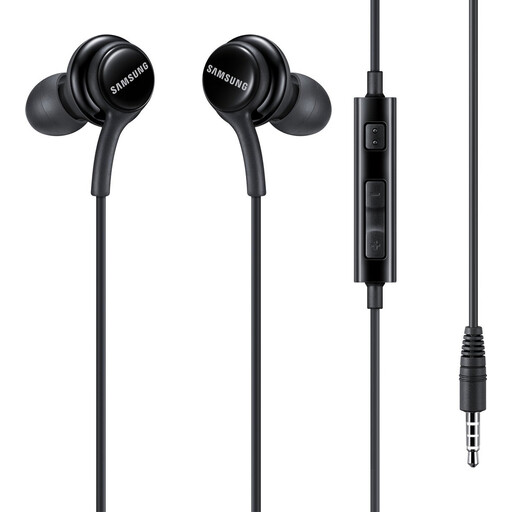
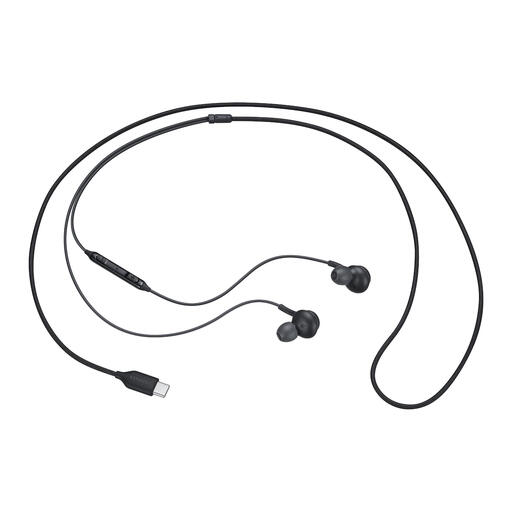
These Joybuy products are wired in-ear earphones for additional listening checks at the office; check the connection and fit of each model.
 No image available
The wired in-ear design and several tip sizes give you a starting point for assessing the fit for office checks; on their own, they say nothing about mix accuracy.
The product description lists a 3.5mm connection, an in-line microphone and several tip sizes.
The connection needs to match the output on your listening source.
 No image available
The stated fit options are worth considering if you wear earphones repeatedly; check for yourself whether they seal comfortably during a listening check.
The product description lists a USB-C connection, active noise cancellation, three sizes of ear tips and two sizes of stability wings.
Check that your device supports audio through the required USB-C connection.
 No image available
The wired in-ear design could suit additional checks at your desk; make sure the connection fits your device and that the earphones feel comfortable.
The product description lists a 3.5mm connection and an ergonomic design.
 No image available
The stated tip sizes give you options for adjusting the fit for repeated listening; they don’t prove that the sound is suitable for making a final judgement on a mix.
The product description lists a USB-C connection, a built-in DAC and several sizes of ear tips.
Check that your device supports audio through the required USB-C connection.
It’s better to use well-fitting ear tips and keep playback at a controlled volume. The WHO points out that both sound level and listening time affect the risk to your hearing; an attenuation claim doesn’t tell you what listening volume is safe for you.
Choose a suitable tip that seals without pushing it past the opening of your ear canal. If the bass is lacking, Shure recommends checking the seal first; a dirty tip or nozzle could also be the reason if one side sounds quieter. Follow the cleaning instructions for your chosen model.
For eligible online consumer purchases in the Netherlands, there is generally a statutory 14-day cooling-off period, as explained by the Dutch government. Before ordering, check the terms for the specific product and any return costs; made-to-measure products may not be covered by the cooling-off period. Replacement tips or a connection adapter may need to be bought separately.
Not simply because it is an IEM: according to the European Commission, CE marking is only required for product categories covered by applicable harmonised EU rules. The rules that apply depend on the specific model, for example whether it has electronic or wireless functions. Don’t assume a product complies based on its name alone.