Which purchasing considerations matter most?
First compare the fit and how much of your surroundings you want to hear. Then test speech clarity with your own lesson materials and check your device’s connection.
| What to consider |
What should you check? |
Who does this matter to? |
| Hearing speech clearly at a low volume |
Test short words and differences in pronunciation using your own lesson materials; a description of the sound doesn’t prove that speech will be clearer. |
If I want to follow spoken lessons at a low volume, I’ll compare them using my own lesson materials; around 31% of consumers prioritise speech clarity. |
| Fit during long sessions |
Check which sizes and materials are included, and whether the ear tips feel comfortable and are easy to remove. |
For a long study session, I want to try ear tips that stay comfortable; around 25% of consumers give comfort the highest priority. |
| Seal and awareness of your surroundings |
Consider how often you need to respond to people or announcements; noise-isolation ratings for different models aren’t necessarily directly comparable. |
If I want to remain reachable while listening, I’ll weigh the seal against how much of my surroundings I can hear; around 19% of consumers prioritise staying aware of others. |
| Connection to your lesson device |
Check the audio output on your phone, laptop or player, and whether you might need a suitable adapter. |
For use with my own lesson device, I want to know in advance whether the connection will fit; around 13% of consumers consider compatibility the most important factor. |
| Maintenance and replaceable parts |
Check which ear tips, cables or filters fit the exact model and whether the parts are available. |
If I want to keep track of replaceable parts and maintenance costs, I’ll check what fits the model; around 12% of consumers make this their top priority. |
Joybuy products for language lessons
This selection includes wired USB-C earphones and wireless in-ears. Check which connection works with your lesson device, and test speech clarity for yourself.
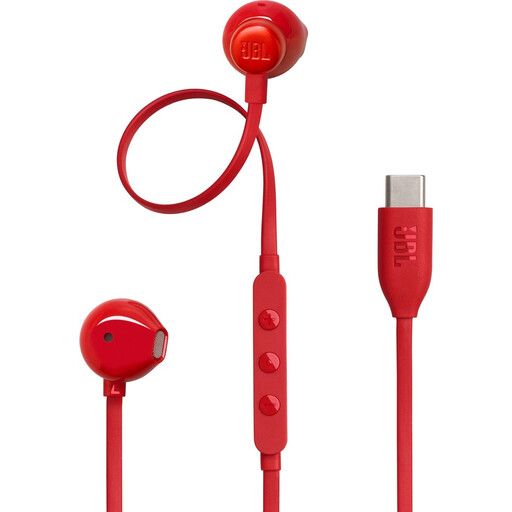 Image unavailable
JBL Tune 305C wired USB-C earphones, red
A wired option if you’re looking for USB-C earphones; check that your lesson device supports audio over USB-C.
The product information lists a Vocal-EQ preset and three sizes of ear tips. The preset is a setting to try, not proof of improved speech clarity.
View at Joybuy
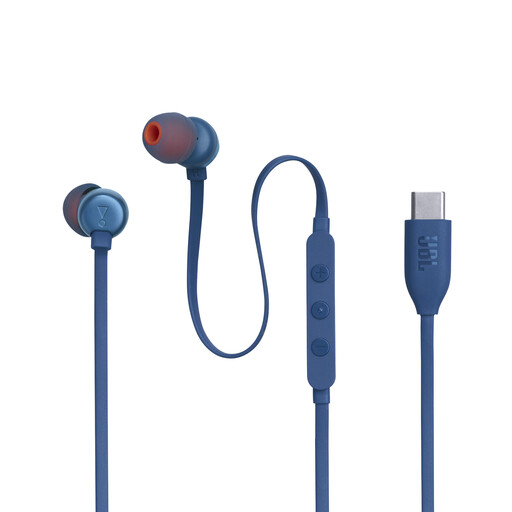 Image unavailable
JBL Tune 310C wired in-ear earphones, blue
A wired option if you want to compare USB-C earphones with the supplied ear tips; check your device’s connection beforehand.
The product information lists a Vocal-EQ preset and three sizes of silicone ear tips. The preset doesn’t prove that every listener will hear words more clearly.
View at Joybuy
 Image unavailable
Acer OHR548 wireless in-ear earphones
A wireless option if your lesson device supports Bluetooth; check compatibility before choosing.
The product name lists Bluetooth 5.4 and a Type-C charging case.
View at Joybuy
 Image unavailable
Samsung Galaxy Buds4 Pro True Wireless, black
A wireless option if you listen using a Bluetooth device; try them with your lesson materials to see if the sound works for you.
The product information lists ANC, an adjustable 9-band equaliser and Bluetooth 6.1. An equaliser setting isn’t a speech clarity test.
View at Joybuy
 Image unavailable
Bose wired earphones, black
A wired option if you’re looking for USB-C and a choice of fit options; check that your lesson device supports the connection.
The product information lists three sizes of ear tips and two sizes of stability bands.
View at Joybuy
Frequently asked questions
Should I choose an in-ear monitor with the highest stated noise-isolation rating?
No, not based solely on the highest rating from the manufacturer. A comfortable seal and clear speech with your own lesson materials at a low volume matter; a stronger seal could also make it harder to hear people around you.
How should you fit and maintain the ear tips?
Choose ear tips that fit snugly and are easy to put in and take out. Shure recommends holding the housing and gently twisting the earpiece to remove it, rather than pulling on the cable. Follow the instructions for the exact model when cleaning it or replacing filters.
How can you keep your listening volume at a safe level?
Keep the volume low, and pay attention to how long you listen for as well. The World Health Organization explains that volume and listening time both contribute to exposure to loud sound; general guidance can’t guarantee safety for a particular IEM or listening situation.
Who can help if your earphones develop a fault?
When you buy as a consumer in the Netherlands, the seller must provide a product that meets the required standard. If there’s a valid fault, the seller must provide a solution. According to the Dutch government, there’s no fixed statutory warranty period. Any manufacturer’s warranty is in addition to your legal rights.
Can you always return in-ears bought online after trying them on?
According to the Dutch government, online purchases from a business often come with a 14-day cooling-off period. Check the terms for the specific offer before opening the product; whether an exception applies can depend on the circumstances and the rules in force.


