
Jazz listener on a noisy coach
Wants to follow a solo without constantly turning up the volume. The World Health Organization emphasises the importance of a good seal; Etymotic lists model-specific attenuation figures for the ER2 models.


Start with in-ear monitors that create a good seal: according to the World Health Organization, a good fit can help reduce the need to turn up the volume in noisy environments. Choose a more neutral-sounding model if you want to study the balance between instruments, or one with more bass if you want the lower notes to stand out. Manufacturers’ attenuation figures don’t guarantee how much sound your ears will block out during your journey; fit and seal still matter.
Wants to follow a solo without constantly turning up the volume. The World Health Organization emphasises the importance of a good seal; Etymotic lists model-specific attenuation figures for the ER2 models.
Pays attention to phrasing and the balance between instruments, and wants to understand the difference between a more neutral-sounding and a bassier monitor. Etymotic describes the ER2SE as having a flatter tuning and the ER2XR as having more bass.
Wants to be able to change the ear tips and checks comfort, cable and connection before setting off. Shure and Audio-Technica describe different ear tip sizes and detachable cables for their models.
Choose this if: you prioritise phrasing and the balance between instruments. Etymotic describes the ER2SE as having a flat tuning.
Bear in mind: a good seal depends on how you position the ear tips and how well they fit your ears.
Choose this if: you want lower notes, such as those of a double bass, to stand out more. According to Etymotic, the ER2XR has more bass than the ER2SE.
Bear in mind: extra bass may not be the best choice if you’re looking for the most neutral bass response possible as a reference.
Choose this if: you want to try different ear tips or be able to replace the cable. Shure and Audio-Technica offer models with their own cable connectors.
Bear in mind: connectors aren’t necessarily interchangeable; also check that your playback device has a compatible output.
| What to consider | What to look for | Who is this important to? |
|---|---|---|
| Blocking out travel noise | Try different ear tip sizes and check the seal; a manufacturer’s stated figure isn’t a personal measurement. | If I want to follow the solo on the coach without automatically turning up the volume, I prioritise a good fit. Around 36% of consumers put reducing travel noise first. |
| Sound balance | Decide whether you want to assess the balance between instruments or prefer more emphasis on the lower notes. | If I want to study phrasing and the balance between instruments, I look for a different tuning than I would if I wanted more bass. Around 29% of consumers put sound balance first. |
| Comfort on the journey | Try different ear tip sizes and wearing styles; a description of an ergonomic design can’t predict how a model will fit your ears. | If I’m listening for a long time, I want to know first whether the ear tips will stay comfortable. Around 21% of consumers make long-wearing comfort their top priority. |
| Connection and cable | Check your device’s output and the connector on the earphones; cable types can vary between models. | If I want to connect a wired monitor or be able to replace a cable, I check both connections first. Around 14% of consumers put connectivity and replaceability first. |
Manufacturers’ figures are specific to each model. The actual seal also depends on positioning and fit; figures from different brands haven’t been compared on the same measurement basis here.
First, choose an ear tip that seals well, and don’t automatically turn up the volume to drown out travel noise.
Etymotic describes the ER2XR as bassier than the more neutrally tuned ER2SE. That doesn’t automatically make the ER2XR better for assessing the balance between instruments neutrally.
Decide whether you want to study the balance between instruments or make the lower notes stand out more.
The Shure SE215 uses an MMCX connection, while the Audio-Technica ATH-E40 has A2DC connectors on the earphones. A compatible replacement cable or adapter may therefore depend on the specific model.
Check both the connector on the monitor and the connection on your playback device.
According to Business.gov.nl, the right to cancel may no longer apply to certain sealed hygiene products once the seal has been broken.
Check the product information and applicable returns policy before opening the product.
The ER2SE and ER2XR are wired options for anyone looking for passive isolation and a choice between a more neutrally tuned and a bassier sound.
The SE215 is worth considering if you want to try different ear tips and have a detachable cable.
The IE 100 PRO is a monitor option with a slim earpiece and a choice of ear tips.
The ATH-E40 is an alternative supplied with multiple sizes of silicone ear tips and a detachable cable.
This selection includes wired and wireless in-ear earphones. Check that each model’s connection and listening style suit your playback device.
 No image available
A wireless option for listening to music over Bluetooth.
Bluetooth 5.4; charging case with Type-C connection.
 No image available
A wireless option if you want to adjust settings in an app while listening.
True wireless; active noise cancellation and an adjustable 9-band equaliser, according to the product description.
 No image available
A wired option if your device has a compatible USB-C connection.
USB-C connection; three sizes of ear tips and two sizes of stability bands, according to the product description.
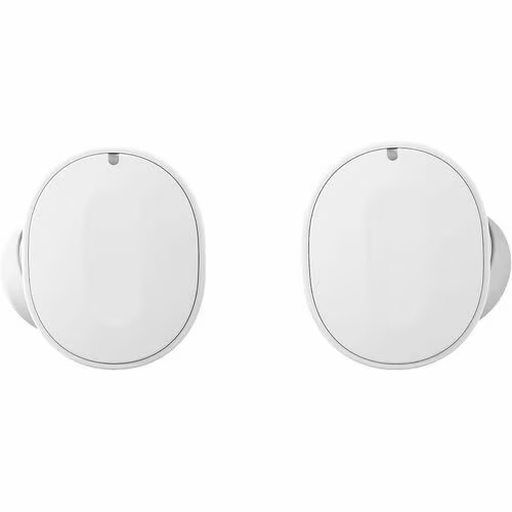 No image available
A wireless option if you want to adjust sound settings in an app.
Hybrid active noise cancellation and an equaliser in the app, according to the product description.
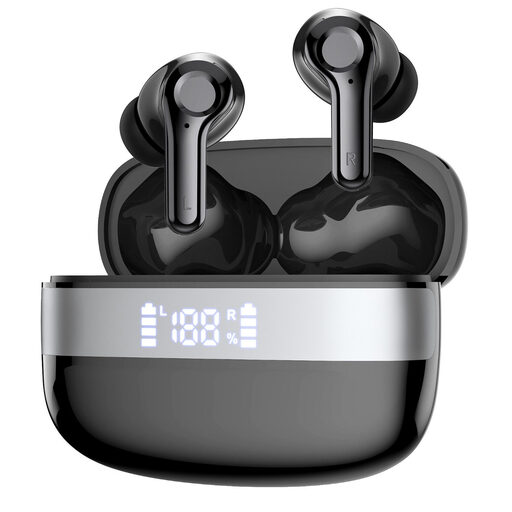 No image available
A wireless option for playing music without a cable connection.
Bluetooth 5.4; USB-C; stated playback time of 6–8 hours.
A well-fitting in-ear monitor can help reduce the need to turn up the volume in noisy environments. The World Health Organization points out that actual attenuation during a journey depends on factors including fit; a manufacturer’s figure doesn’t tell you the sound level reaching your ears.
Choose a size that seals well without feeling uncomfortable, and follow the instructions for your specific model on fitting, removing and cleaning the tips. For example, Shure’s manual explains how to change and clean the ear tips on the SE215.
Yes. When you buy as a consumer in the Netherlands, you’re entitled to a product that meets the required standards. Business.gov.nl describes this as statutory conformity; it’s separate from any additional manufacturer’s warranty. The appropriate remedy depends on the problem and how it’s handled.
No, don’t assume you can try them without limits. According to the Dutch government, online consumer purchases often come with a 14-day cooling-off period, but Business.gov.nl notes an exception for certain sealed hygiene products if the seal has been broken. Before buying, check whether this exception applies to the product.