For listening to chords in a busy office, a well-fitting in-ear pair with a sound signature you can comfortably assess is a sensible starting point. A particular tuning does not, by itself, prove better chord recognition. Then weigh up passive isolation, how easily you can hear your colleagues and the connection type. Don’t simply turn up the volume on an earphone that doesn’t fit well.
Who is this buying guide for?
Picking out chords alongside colleagues who are talking
You want to follow the recording without drowning out voices by turning up the volume. Fit and isolation both matter, but stronger isolation can also make it harder to hear when someone speaks to you.
Attentive listener to multi-part music
You want to assess the sound balance using a familiar track. A manufacturer’s description such as ‘flat’ is a point of comparison, not proof of better chord recognition.
Listener who needs to stay approachable
You listen at your desk but still want to notice when someone interrupts you. In that case, complete isolation isn’t automatically the right trade-off.
What should you look for?
Start with fit and volume, then decide how much isolation you want compared with being able to hear your colleagues. Also check that the connection is compatible with your playback device.
| What to consider |
What to look for when buying |
Who might care most? |
| Isolation from office noise |
Try eartips that fit and, at a comfortable volume, check whether voices are still distracting. Don’t compare noise-reduction figures as if they were measured under the same conditions. |
If conversations distract me from the recording, I want a comfortable seal without turning up the volume. Around 36% of consumers put isolation first when buying. |
| Sound balance for attentive listening |
If possible, compare the same familiar track at a similar volume. Treat a manufacturer’s description separately from an independent listening test. |
When I want to follow chord notes and musical parts, I want a sound I can comfortably assess. Around 29% of consumers give sound balance top priority. |
| Comfort and staying approachable |
Check the eartip sizes available and consider whether you need to hear your colleagues straight away. Don’t choose solely on the basis of an isolation figure. |
If I need to respond to colleagues regularly, I take comfort and awareness of my surroundings into account. Around 21% of consumers put comfort and staying approachable first. |
| Connection and maintenance |
Check your device’s output and the plug. If the cable is detachable, also check the exact connector and find a suitable replacement. |
For anyone mainly looking for a practical connection and a replaceable cable, the connection type and model matter. Around 14% of consumers name these as their top buying priorities. |
Buying pitfalls
-
Assuming the highest isolation figure guarantees the best result
Actual isolation depends on factors including your ears, the eartips and the fit. Figures for different models are not the result of a single, standardised office test.
First check that the eartips fit well and feel comfortable. If it’s more important to hear your surroundings, choose an option that lets more sound through.
-
Choosing wired in-ears without checking the connections
The wired models mentioned have a 3.5mm plug, while detachable cables can use different connectors. Check that your device’s connection and the cable connector are compatible.
Before buying, check your laptop or phone’s output and the exact connector used by the model.
Depending on your device and the model you choose, you may also need a suitable adapter or a model-specific replacement cable.
-
Ordering custom-made in-ears assuming you can always return them on trial
According to EU consumer rights information, specially made or personalised goods may be exempt from the usual cooling-off period.
Before placing a custom order, check the fit arrangements and the returns policy for that specific version.
Brands to compare
Etymotic
The ER2SE is a wired option to compare if you’re looking for a flat tuning and passive isolation.
- Etymotic quotes 35–42 dB of passive noise reduction for the ER2SE and says it has a replaceable cable.
- That figure doesn’t predict how well they’ll isolate for you or give them an advantage for chord recognition; check that the fit feels comfortable.
Shure
The SE215 Special Edition UNI offers a wired option with interchangeable eartips and a detachable cable.
- Shure quotes up to 37 dB of isolation for this version.
- Shure says actual isolation depends partly on your ears and the eartip you choose. It also states that these earphones are not intended as hearing protection.
Sennheiser
The wired IE 200 is an option if you want to assess the sound balance alongside different eartips.
- Sennheiser describes an adjustable bass response through the eartips and an MMCX cable.
- This product description is not independent proof that the IE 200 helps you recognise more chord notes than other models.
Audio-Technica
The ATH-E40 may be worth considering if you want to try different sizes of silicone eartip.
- Audio-Technica lists four sizes of silicone eartip and a detachable A2DC cable with a 3.5mm plug.
- If you replace the cable, check that it’s compatible with the ATH-E40; the product specifications don’t quantify its level of office noise isolation.
Westone Audio
The Pro X10 and AM Pro X10 are different models for those weighing up isolation or the ability to hear ambient sound, respectively.
- Westone quotes an average 25 dB reduction in ambient noise for the Pro X10. For the separate AM Pro X10, the brand describes a filter that lets ambient sound through.
- These brand descriptions aren’t an independent office test. Don’t treat the two models as the same version.
Joybuy products
This selection is mainly made up of wireless in-ear earphones, plus one wired model. Check the connection type and consider whether you need to hear your colleagues straight away.
 No image available
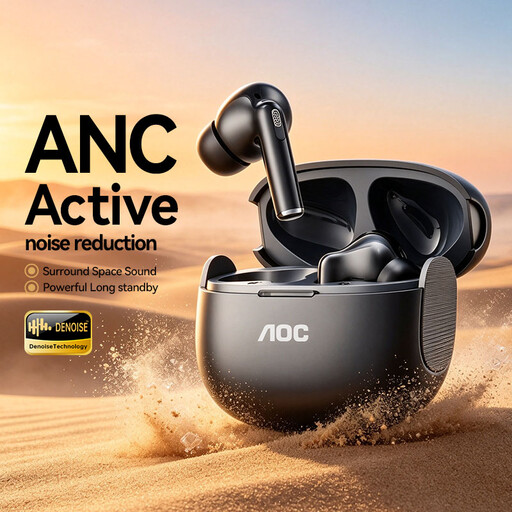
AOC ACT2615 ANC wireless earbuds
A wireless option if you don’t want to use a wired connection while listening.
Bluetooth 5.4, ANC, HIFI decoding and 3D surround sound are listed as features; these features don’t prove better chord recognition.
View at Joybuy
 No image available
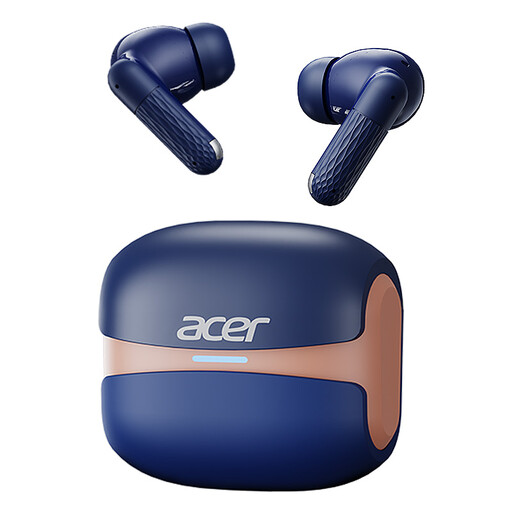
Acer OHR548 wireless earphones
A wireless option if you’d rather not use a wired connection.
Bluetooth 5.4, HIFI high-definition decoding and 3D surround sound are listed as features.
View at Joybuy
 No image available
Samsung Galaxy Buds4 Pro True Wireless, black
A wireless in-ear option if you want to avoid a wired connection while listening.
The product name mentions True Wireless and Active Noise Cancelling; this isn’t proof of better chord recognition.
View at Joybuy
 No image available
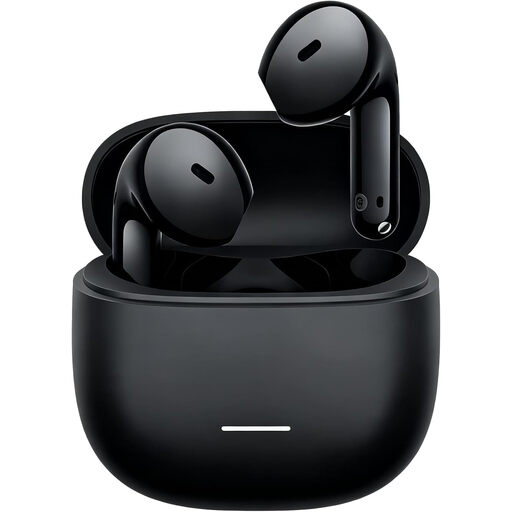
Xiaomi REDMI Buds 8 Active, black
A pair of in-ears to include in your comparison if you want to listen wirelessly.
View at Joybuy
 No image available
Bose Noise Cancelling Wired Earbuds, black
A wired option to consider if you don’t want to use a wireless connection.
The product name mentions noise cancelling. If you need to hear your colleagues straight away, take this feature into account and check that the connection is compatible with your device.
View at Joybuy
Frequently asked questions
Can I use in-ear monitors as mandatory hearing protection in a noisy workplace?
Don’t assume so. Arboportaal explains that requirements depend on daily exposure to workplace noise; being in a busy office doesn’t mean an exposure limit has been reached. Shure states that its earphones aren’t intended as hearing protection. If a noise risk has been identified, discuss it through your employer’s risk assessment and don’t treat an isolation figure as a protection certificate.
How should I fit and care for the eartips?
Make sure the eartip fits securely according to the instructions for your chosen model, and replace it if it’s worn or doesn’t stay in place. For the SE215, Shure warns against pushing the sleeve past the entrance to the ear canal and advises against using pliers when replacing the cable. Follow the relevant manual for other models.
Should I turn up the volume to drown out conversations?
No. Try a better fit or a quieter place to listen first. The World Health Organization recommends keeping the volume low and taking listening time into account too. The stated limit of 80 dB for up to 40 hours a week is an example of an exposure level, not a recommended setting you can read directly from a volume slider.
What returns rules apply to an online purchase?
For an applicable online consumer purchase, you generally have a 14-day withdrawal period from the date of delivery. According to EU information, you may have to pay return postage if the seller told you this in advance; the information lists an exception for specially made or personalised in-ears. Check the terms for the specific seller and version.


