Start by choosing eartips that create a comfortable seal, then see if you can follow spoken audio at a comfortable, low volume. A stated isolation rating won’t tell you exactly what you’ll hear at your desk. A more secure seal may suit uninterrupted listening, while a fit that’s easy to remove could be more practical if colleagues often need your attention. For wired models, also check your audio source’s connection and the type of replacement cable you need.
Who is this for?
Listeners who want to follow speech
You want to follow long stretches of spoken audio despite background conversations, without turning up the volume, and are looking for a comfortable seal. The WHO recommends well-fitting earphones to reduce the need to increase the volume in noisy situations.
People who listen at their desk for long periods
You wear your earphones for extended periods and are particularly interested in eartip sizes, pressure and replaceable parts. The Sennheiser IE 200 comes with silicone and foam eartips in three sizes; the Audio-Technica ATH-E40 has silicone eartips in four sizes.
Colleagues who need to stay approachable
You often pause your listening to respond to colleagues, so you need to balance isolation with the ease of pausing or removing an earphone. RTINGS describes passive isolation on both the Shure SE215 and the Sennheiser IE 200; bear in mind that a good seal can muffle voices around you.
What should you look for?
For listening in a busy office, fit and the balance between isolation and staying in touch with colleagues matter more than an isolation rating on its own.
Wired in-ear monitor with a secure seal
A good fit if: you mainly listen for long stretches and office noise makes spoken passages hard to follow; check which eartips give you a comfortable seal.
Trade-off: a strong seal can make colleagues harder to hear, so you may need to pause or remove the monitor.
Wired monitor with multiple eartip sizes and a replaceable cable
A good fit if: comfort during long listening sessions and easy maintenance are priorities; for example, compare the eartips supplied with the Shure SE215, Sennheiser IE 200 and Audio-Technica ATH-E40.
Trade-off: cables aren’t automatically interchangeable: the ATH-E40 uses A2DC, while the Shure and Sennheiser models mentioned use MMCX.
| Concern |
What to look for |
Who is this relevant to? |
| Following spoken audio |
Check the eartip sizes and materials; see if speech is clear at a comfortable volume. |
If I can hear conversations around me and want to follow spoken passages without turning up the volume, I look for a comfortable seal. Around 36% of consumers prioritise speech clarity and isolation. |
| Comfort during long listening sessions |
Compare eartip sizes and materials; check the returns policy for tried-on earphones before buying. |
When listening to long documentaries, I want eartips that don’t press uncomfortably, even if they create a good seal. Around 29% of consumers prioritise comfort over extended wear. |
| Staying approachable |
Consider how often you need to respond and whether pausing or removing an earphone is practical; don’t assume there’s an ambient mode. |
If colleagues often need me, I want to be able to pause quickly or remove an earphone. Around 21% of consumers prioritise staying approachable. |
| Connection and maintenance |
Check your device’s connection and the exact connector type of any replacement cable. |
I want to know in advance whether my audio source is compatible and which cable fits my model. Around 14% of consumers prioritise connection and maintenance. |
Common buying mistakes
-
Assuming a stated dB rating guarantees clear speech
Fit affects the seal. A manufacturer’s rating doesn’t tell you how much office noise will be muffled for you or how clearly you’ll hear speech.
Choose eartips that feel comfortable and check speech clarity at a comfortable volume. Make sure you can still be reached when your work requires it.
-
Assuming detachable cables are interchangeable
The ATH-E40 uses A2DC; the Shure SE215 and Sennheiser IE 200 models mentioned use MMCX. A cable for one model may not fit another.
Before buying, check both the connection on the earphones and the one on your audio source.
You may need a model-specific replacement cable or a compatible adapter.
-
Assuming in-ear earphones can always be returned without conditions
ACM ConsuWijzer lists exceptions for hygiene products. Whether one applies depends on the product and the circumstances.
Read the retailer’s returns policy before opening the packaging. Keep your statutory rights if the product is faulty separate from returning it because the fit isn’t right.
Brands to compare
Shure
The SE215 is a wired, passively isolating monitor with a detachable MMCX cable and interchangeable sleeves.
- Shure states that it offers up to 37 dB of isolation; this is a manufacturer rating, not a measurement of office conversations.
- RTINGS describes effective passive isolation, but also a prominent bass and more restrained treble. This means the sound won’t suit every listener in the same way.
Sennheiser
The IE 200 is a wired in-ear monitor with silicone and foam eartips in three sizes and a detachable MMCX cable.
- The manufacturer describes two eartip positions that let you adjust the bass response.
- RTINGS rates the fit as comfortable and notes that the cable can snag; there are no on-earphone controls or ANC.
Etymotic
The ER2XR is a wired option for anyone comparing passive isolation.
- Etymotic states that it offers 35–42 dB of attenuation.
- That figure doesn’t predict a fixed level of attenuation or speech clarity in your office. Also check that the required eartip position feels comfortable.
Audio-Technica
The ATH-E40 comes with silicone eartips in four sizes and a detachable cable.
- The manufacturer specifies a 3.5 mm plug and A2DC connectors on the earphones.
- Choose a compatible A2DC cable when replacing it. The description of its isolation isn’t based on an independent office test.
Joybuy product picks
The Joybuy picks below are wireless in-ear earphones for listening in the office, with features for noise cancelling or hearing the sounds around you.
 No image available
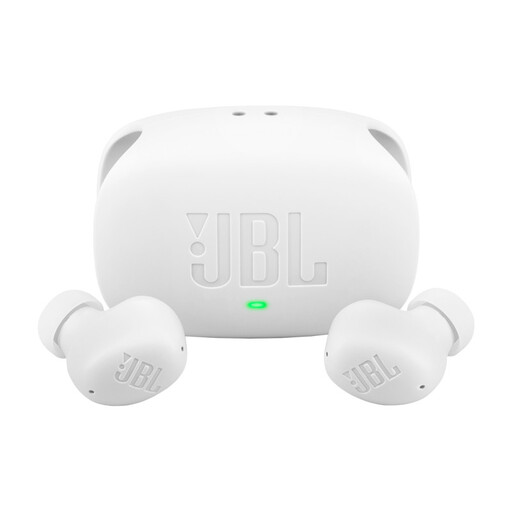
JBL Wave Buds 2, white
ANC and Smart Ambient are listed as features for switching between noise cancelling and ambient sound.
Controls are on the earbuds. Multipoint supports connection to two Bluetooth devices; the stated playback time is up to 40 hours with ANC off.
View at Joybuy
 No image available
Samsung Galaxy Buds4 Pro, black
ANC is listed for listening in busy environments; the controls described work through touch and gestures.
The product description mentions a 2-way speaker system, 24-bit/96 kHz audio and an adjustable 9-band equaliser.
View at Joybuy
 No image available
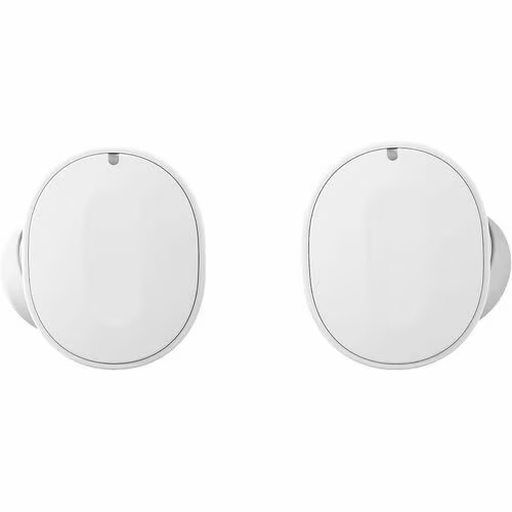
Fairphone Fairbuds, white
Hybrid ANC is listed for listening in a busy office.
The product description mentions seven replaceable parts, including the earbud batteries and charging case. Multipoint and up to 40 hours of playback with the charging case are also listed.
View at Joybuy
 No image available
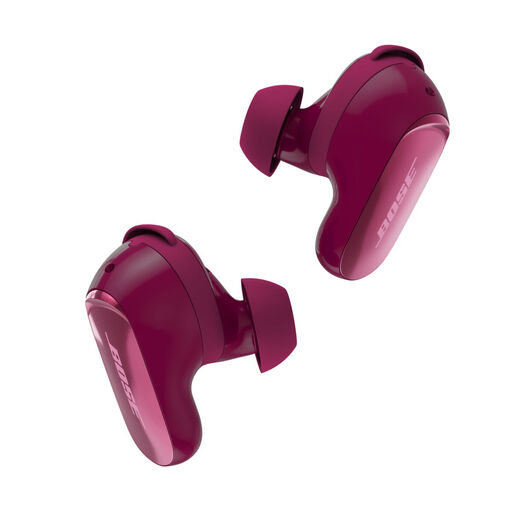
Bose QuietComfort Ultra Earbuds (2nd Gen), Deep Plum
The description mentions noise cancelling and an Aware mode that lets ambient sound through.
Nine options for eartips and stability bands are listed, so you can try different combinations.
View at Joybuy
 No image available
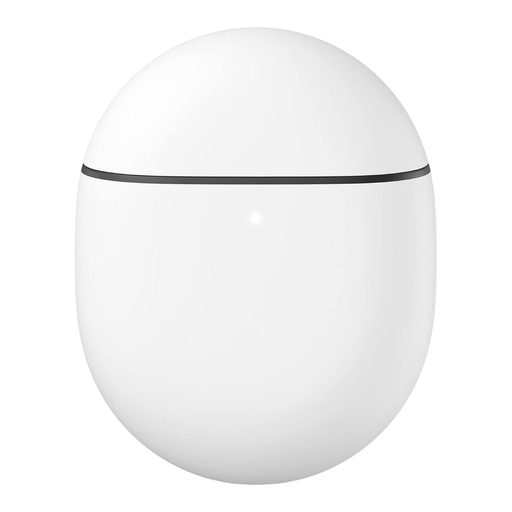
Google Pixel Buds Pro, Carbon
The description mentions ANC and an ambient sound mode for switching between noise cancelling and ambient sound.
Flexible tips, multipoint, wireless charging and a 5-band equaliser are also listed.
View at Joybuy
Frequently asked questions
Should you turn up the volume if you can’t hear the documentary clearly?
Check the fit and seal first; turning it up isn’t the only solution. The WHO recommends well-fitting earphones to reduce the need to increase the volume in noisy situations.
How do you fit and care for the eartips on a Shure SE215?
Shure says the sleeve should fit comfortably and create a good seal; don’t push it past the opening of your ear canal. Replace any sleeve that doesn’t stay securely on the nozzle, and follow the model-specific instructions for cleaning and changing the cable.
Might you need an adapter or a special replacement cable?
That depends on your audio source and the model you choose. Check that your device has a compatible 3.5 mm output, and check the connector type if replacing the cable: the ATH-E40 uses A2DC, while the SE215 and IE 200 models mentioned use MMCX.
Can you use an in-ear monitor as hearing protection at work?
Don’t assume it offers protection based solely on a stated attenuation rating. Arboportaal says that employers must make hearing protectors available when daily exposure exceeds 80 dB(A); this isn’t a general recommendation to use a specific in-ear model as hearing protection.
Can you return in-ear earphones after opening them if the fit isn’t right?
This may depend on the product and the terms that apply. ACM ConsuWijzer lists exceptions for hygiene products, so check the returns information for the product you’ve chosen before opening it. Your statutory rights if the product is faulty are separate from returning it because of the fit.


