
Bedtime listener who quickly feels pressure
If you listen for long periods while lying down, consider how the housing, ear tip and cable feel. Comfort varies from ear to ear. The Consumentenbond explains how in-ear tips seal the ear canal.


Start with an ear tip that fits snugly and feels comfortable. A good seal can help reduce background noise and sound leakage, but it won’t guarantee that you can hear voices clearly in every bedroom. Then consider the fit, cable and connection. Manufacturer claims about noise reduction don’t guarantee silence or comfort when you’re lying down.
If you listen for long periods while lying down, consider how the housing, ear tip and cable feel. Comfort varies from ear to ear. The Consumentenbond explains how in-ear tips seal the ear canal.
A well-fitting tip that seals the ear can help reduce background noise and sound leakage, so you may not need to turn up spoken audio straight away. The Consumentenbond explains how in-ear tips create a seal.
If you’d rather not have a battery in your earphones, check the connection on your player, how the cable sits and whether a replacement cable fits the exact model. The models mentioned use connections including MMCX and A2DC.
When listening in a shared bedroom, your choice comes down to a combination of fit, seal, clear speech and a connection that works with your playback device.
| What to consider | What to look for | Who should pay extra attention? |
|---|---|---|
| Comfort | Try the different tips supplied and assess the fit in your usual listening position, too. | When I listen lying down, I don’t want the housing or tip to press against my ear; around 29% of consumers prioritise a comfortable fit. |
| Seal | Check that both tips seal properly. Treat any stated noise-reduction level as a manufacturer claim that depends partly on the fit. | If noise from the same room drowns out my audiobook, I want a good seal without expecting guaranteed silence; around 29% of consumers prioritise reducing room noise. |
| Spoken audio | If possible, listen to a familiar spoken-word clip at a comfortable volume and judge the sound for yourself. | When I’m following a story, I want to hear the narrator and dialogue clearly without turning the volume up unnecessarily; around 24% of consumers prioritise being able to follow speech. |
| Connection and cable | Check your player’s connection, whether you need an adapter and whether a replacement cable fits the exact model. | When I listen using a cable, I want to know whether the plug fits my device and the cable stays out of the way; around 18% of consumers prioritise connection and cable routing. |
Shure and Etymotic make manufacturer claims about their own models. The seal you experience also depends on the tip and the fit. The stated figures aren’t a comparison based on your bedroom.
Consider the seal alongside comfort, and don’t choose based solely on the highest dB figure.
The ATH-E40 uses an A2DC connection; the Shure and Sennheiser models mentioned use MMCX. The connection on your player needs to fit, too.
Before buying, check both ends of the connection and look for replacement parts made for the exact model.
You may need a compatible replacement cable or adapter.
The World Health Organization warns that the recommended listening time decreases as the sound level increases.
Start with a well-fitting tip, and don’t turn up spoken audio unnecessarily to drown out noise in the room.
The SE215 is a wired in-ear monitor supplied with silicone and foam tips, plus a detachable MMCX cable.
The IE 200 is a wired option supplied with silicone and foam tips, adjustable ear hooks and a 3.5 mm plug.
The ER2XR is designed for listeners who value strong passive noise isolation and find the fit comfortable.
The ATH-E40 is a wired in-ear monitor supplied with four sizes of silicone tips and a detachable A2DC cable.
This selection includes wireless in-ear earphones with ANC and a wired USB-C option. Check that the connection, choice of tips and controls suit your listening environment and playback device.
 Image unavailable
The product title mentions ANC, but this isn’t a measure of how well voices are blocked out in a bedroom.
Bluetooth 6.0 and touch controls.
Charging case with digital battery display.
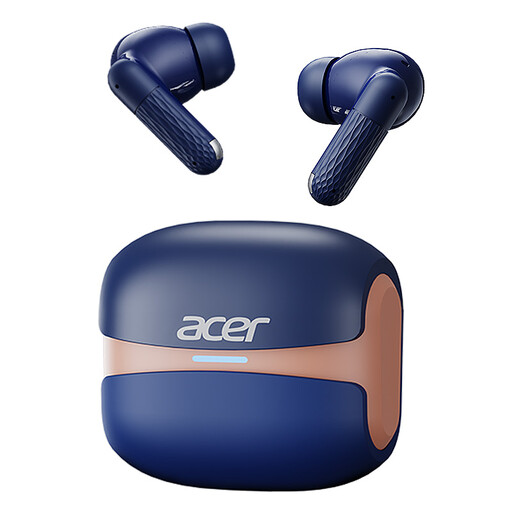 Image unavailable
A wireless option for listening over Bluetooth. Check that the fit feels comfortable and provides enough of a seal for your listening environment.
Bluetooth 5.4 and touch controls.
The stated noise reduction is for phone calls; the case charges via Type-C.
 Image unavailable
The product title mentions active noise cancellation. Check for yourself whether the fit works for your audiobook and listening environment.
True wireless with active noise cancellation.
The product description mentions multiple ear tip sizes, an equaliser and app controls.
 Image unavailable
A wired option to consider if you’d rather not have a battery in your earphones. Your playback device needs a compatible USB-C connection.
USB-C connection; no batteries or charging needed.
The product description mentions three sizes of ear tips, two sizes of stability wings and an in-line remote.
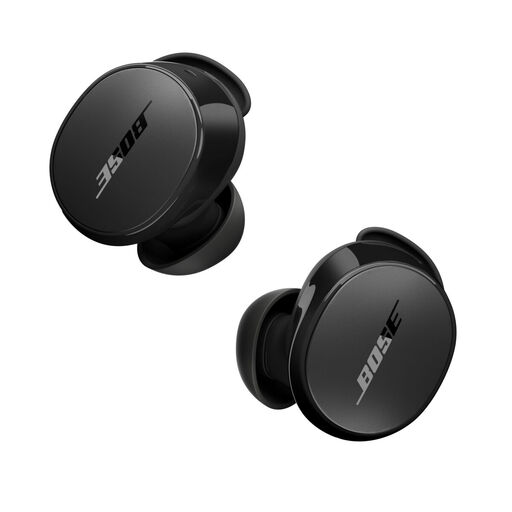 Image unavailable
These in-ear earphones are wireless. Check how the fit feels before wearing them for long periods while lying down.
The product description mentions Bluetooth, active noise cancellation and an Aware mode.
Ear tips in small, medium and large; up to 8.5 hours of battery life per charge according to the product description.
Not necessarily. Start with a well-fitting tip that creates a good seal. The Consumentenbond says active noise cancellation is particularly effective against low, continuous sounds; that doesn’t mean it will make voices in a bedroom disappear.
Keep the volume as low as is comfortable for you, and limit prolonged exposure. The World Health Organization gives the example of a maximum of 40 hours a week at an average of 80 dB and four hours a week at 90 dB. The volume setting on your phone doesn’t automatically measure the sound level in your ear.
Choose a tip that fits without forcing it, and follow the instructions for your model. In the SE215 user guide, Shure warns against pushing the sleeve past the entrance to the ear canal and advises replacing any loose-fitting sleeve.
First, check whether there’s a compatible replacement cable or tip for the exact model. For a consumer purchase in the Netherlands, the seller must supply a product that meets what you could reasonably expect; the statutory guarantee doesn’t have a fixed term of exactly two years. Online purchases generally come with a 14-day cooling-off period. ACM ConsuWijzer lists an exception for hygiene products whose seal has been broken; ask the seller how this applies to the specific earphones.