
Listeners who want to follow spoken explanations
If you mainly listen to spoken explanations, you’ll want to hear the words at a modest volume. You can check this using your own playback device.


Start with in-ear headphones that fit well, then check whether you can follow a spoken lecture at a modest volume without others being able to hear it. Wired headphones are a sensible choice if the connection is compatible and you don’t want to charge the earbuds; wireless models are particularly convenient if freedom of movement matters. Fit and sound leakage vary from ear to ear, and active noise cancelling isn’t necessarily a deciding factor in a quiet space.
If you mainly listen to spoken explanations, you’ll want to hear the words at a modest volume. You can check this using your own playback device.
For longer listening sessions, consider whether the earbuds cause pressure and whether a wireless model will need charging while you listen.
In a quiet space, you’ll want to minimise sound leakage. The main thing to consider is how well the earbuds seal in your own ears.
Choose this option if: your playback device has a compatible connection and you want to listen without relying on an earbud battery.
The trade-off: you’ll need a cable, and a deeper seal may feel uncomfortable for some ears or make surrounding sounds less audible.
Choose this option if: wireless convenience matters or you also use the earbuds in noisier places.
The trade-off: you’ll need to charge the battery. If you want to listen without a break, the earbuds’ own battery life is what matters. Noise cancelling isn’t automatically a major advantage in a quiet library.
| What to consider | What to look for when buying | Who it’s for |
|---|---|---|
| Hearing speech clearly | Try a spoken recording on your own device. Start quietly, and don’t turn the volume up to compensate for a poor fit. | I want to follow the lecture at a modest volume without constantly turning it up. Around 33% of consumers put speech clarity first. |
| Sound leakage and seal | Try different ear tip sizes and, at your usual listening volume, check whether someone sitting nearby can hear the sound. | I want to listen in a quiet library without disturbing others. Around 25% of consumers give reducing sound leakage top priority. |
| Comfort during the lecture | Check which ear tip sizes are available and see whether the in-ear headphones remain comfortable. Fit varies from ear to ear. | I want to follow a longer lecture without discomfort from pressure in my ears. Around 25% of consumers prioritise long-wearing comfort. |
| Connection or battery life | Check that the connection is compatible with your device and whether you’ll need an adapter. For wireless models, compare the earbuds’ battery life per charge. | I want a compatible connection and to listen without stopping to recharge. Around 17% of consumers prioritise connection or uninterrupted use. |
A charging case extends the total battery life because you can recharge the earbuds between listening sessions. The Consumentenbond says that batteries in wireless earbuds are almost never replaceable.
Compare the stated battery life of the earbuds per charge with the length of your own lecture.
If battery life declines, you may need to replace the set sooner.
Manufacturer claims about noise cancelling or noise reduction don’t tell you how the ear tips will fit your ears or how much sound others will hear.
Check the available ear tip sizes, wearing comfort and any sound leakage at your usual listening volume.
The Shure SE215 has a 3.5 mm cable, which needs to fit the output on your phone or laptop.
Check your device’s connection and whether you’ll need a suitable adapter for the in-ear headphones you choose.
The wired SE215 is an option if you’re looking for passive isolation and a detachable cable.
The ER2SE offers a wired listening option with passive isolation.
The WF-C710N offers wireless listening with noise cancelling and a mode that lets you hear surrounding sounds.
The Tune Buds 2 are wireless in-ear headphones with active noise cancelling and Smart Ambient.
This product selection includes both wired in-ear headphones and wireless models with active noise cancelling for listening to spoken explanations.
 No image available
A wireless in-ear option if you want to use noise cancelling while listening.
The stated playback time is up to 6 hours per charge with ANC enabled.
Control via the Galaxy Wearable app is listed. Check that it suits your device and how you plan to use it.
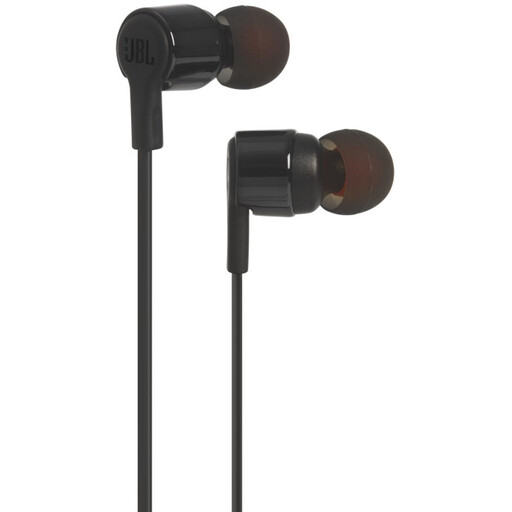 No image available
A wired option if you don’t want to charge earbuds and your device has a compatible connection.
These in-ear headphones have a 3.5 mm connection and are described as coming with several ear tip sizes.
Check whether your device has a 3.5 mm audio output or whether you’ll need a suitable adapter.
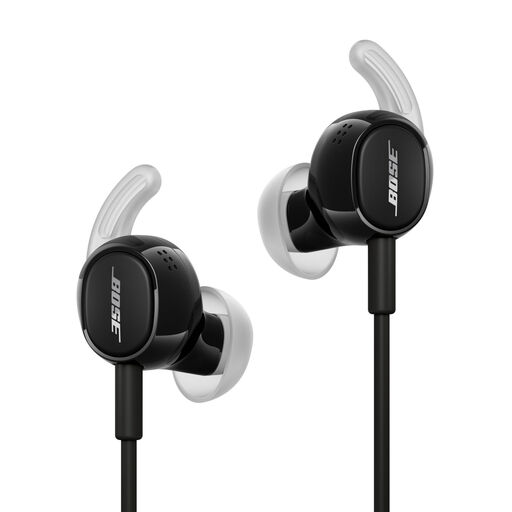 No image available
A wired option with active noise cancelling if you don’t want to charge a wireless earbud battery.
The connection is USB-C, so your playback device needs a compatible USB-C port.
The product description lists three ear tip sizes and two sizes of stability bands.
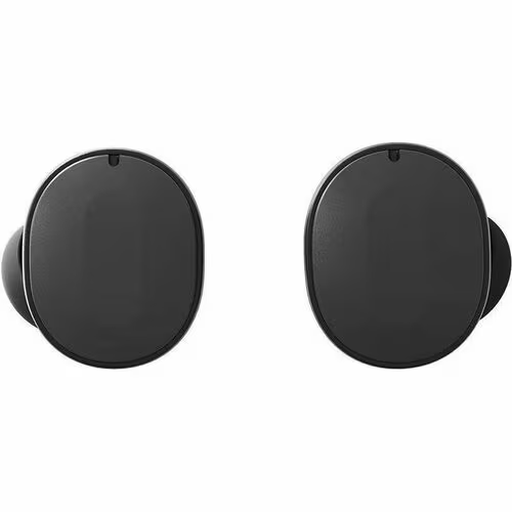 No image available
A wireless in-ear option if you want noise cancelling and value replaceable parts.
The stated playback time is up to 8 hours per charge with ANC off; up to 40 hours is listed including the charging case.
The product description lists replaceable parts, including the earbud batteries.
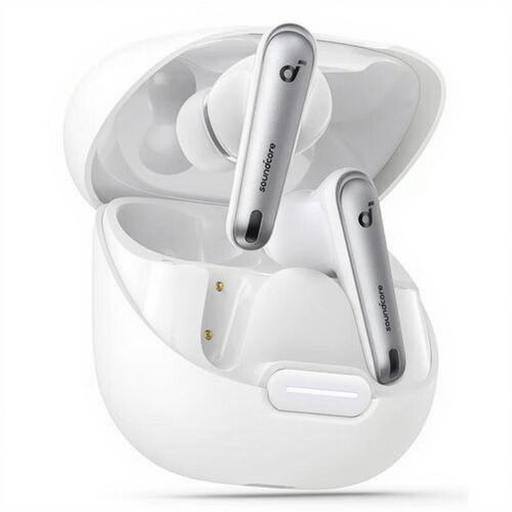 No image available
A wireless in-ear option if active noise cancelling and listening without a charging break matter to you.
The stated playback time is up to 10 hours per charge.
Additional ear tips are included. Check which size gives you a comfortable fit and seal.
Not necessarily. Start with in-ear headphones that fit well and check whether you can follow the lecture at a modest volume. Active noise cancelling may be useful if you also use the earbuds in noisier places, but a good fit remains important.
No, not necessarily. Manufacturers may include charging sessions using the case in their figures. For a lecture, check the stated battery life of the earbuds themselves and the conditions under which it applies.
Choose ear tips that seal comfortably and start at a low volume. The World Health Organization emphasises that both sound level and listening time matter. Follow the instructions for your chosen model when cleaning and replacing the ear tips.
In the Netherlands, if a product doesn’t meet reasonable expectations during normal use, you can contact the retailer for an appropriate solution. ACM ConsuWijzer lists free repair, replacement or a refund as possible solutions; a manufacturer’s warranty does not replace your statutory rights.
Bluetooth earbuds are covered by European rules for radio equipment. The European Commission explains that the relevant requirements must be met before products are placed on the EU market. Once conformity has been demonstrated, the manufacturer draws up an EU declaration of conformity and affixes the CE marking. This is a product rule, not a separate registration requirement for someone listening in a library.