
Listeners who want to catch every word
You listen to recorded museum commentary and want to follow the spoken audio without turning the volume up unnecessarily. VeiligheidNL recommends a good fit to help reduce sound leakage.


For recorded museum commentary in a quiet library, a comfortable-fitting pair of in-ear headphones that provides enough—but not necessarily maximum—isolation is a sensible place to start. VeiligheidNL points out that a good fit lets less sound leak out and may reduce the need to turn up the volume. Choose more isolation if background noise interferes with the recording, but less isolation or a fit that is easy to remove if you want to remain approachable. Also check the connection and whether you need an adapter for your playback device.
You listen to recorded museum commentary and want to follow the spoken audio without turning the volume up unnecessarily. VeiligheidNL recommends a good fit to help reduce sound leakage.
You listen for extended periods and want to be able to try different tip sizes and materials. The World Health Organization notes that both volume and listening time matter when it comes to exposure to loud sound.
You want to be able to respond if someone speaks to you, or you listen on different devices. Choose the level of isolation that suits the space and check that the plug or adapter works with your player.
Start with fit and the volume at which speech is easy to follow. Then consider how much background noise you want to hear and which connection you need.
| What to consider | What should you check? | Who should pay particular attention? |
|---|---|---|
| Speech clarity | Compare tip sizes and listen to a spoken clip at a comfortably low volume. | I want to follow the commentary without turning up the volume. Around 30% of consumers say clear speech is their top priority. |
| Comfort | Check which tip sizes and materials are included with the exact version, and don’t force a fit that feels uncomfortable. | For a longer talk, I want tips that stay comfortable, not just maximum isolation. Around 23% of consumers put comfort first. |
| Staying approachable | Consider whether you need to respond straight away while listening and how easily you can remove an earpiece. | If someone speaks to me, I want to notice without having to take my earphones out for long. Around 18% of consumers name staying approachable as their top priority. |
| Connection | Check the output on your phone, computer or player, and whether the exact product version includes a suitable adapter. | I want to know in advance whether the earphones will work with my player and whether I’ll need an adapter. Around 18% of consumers prioritise device compatibility. |
| Maintenance | Check which parts of the exact version can be replaced and which replacement parts you’ll need. | I want to know what can be replaced and what I can do if a part breaks. Around 11% of consumers say maintenance and lifespan are their top priority. |
A manufacturer’s figure describes a model specification, not what you’ll experience personally. Strong isolation can also make conversations and other sounds around you harder to hear.
Match the level of isolation to how quiet the library is, try the tips supplied with the model and listen at a comfortably low volume.
A wired pair of in-ear headphones with a 3.5 mm plug only connects directly to a compatible output. Some versions also differ in whether an adapter is included.
Check your device’s output and the contents of the exact product version before choosing.
The ACM lists an exception to the cooling-off period for hygiene products whose packaging has been opened. Whether this exception applies to a particular purchase depends on the circumstances and terms.
Check the returns terms for your purchase before opening the packaging, especially if it is sealed.
The IE 200 is a wired pair of in-ear headphones with a 3.5 mm plug and several sets of included ear tips.
The SE215 is a wired pair of in-ear headphones with a 3.5 mm connection and several ear tips.
The ER2SE is designed for listeners looking for a close-fitting seal and the flat frequency response described by Etymotic.
The CHU II is a wired pair of in-ear headphones with a 3.5 mm plug and three sizes of ear tips.
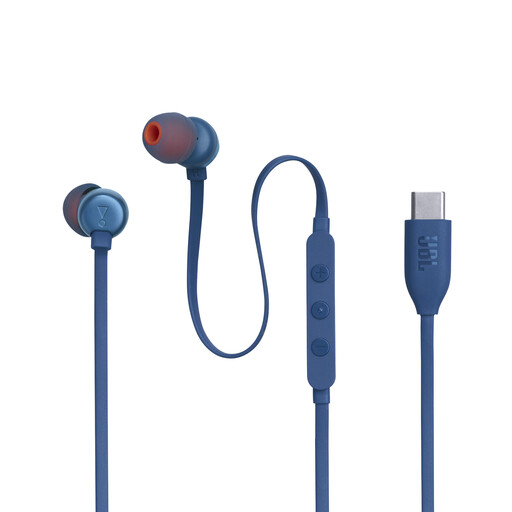
The ALBA is worth considering if you want to listen through a compatible USB-C device.
This selection includes wired in-ear headphones with USB-C or 3.5 mm connections, as well as wireless Bluetooth earphones for recorded museum audio. Check which connection works with your playback device.
 No image available
An option if your player is compatible with USB-C audio; check compatibility before you buy.
The product information lists an in-line microphone and controls, plus three sizes of silicone ear tips.
A Vocal EQ preset is also mentioned; this isn’t an independent test of speech clarity.
 No image available
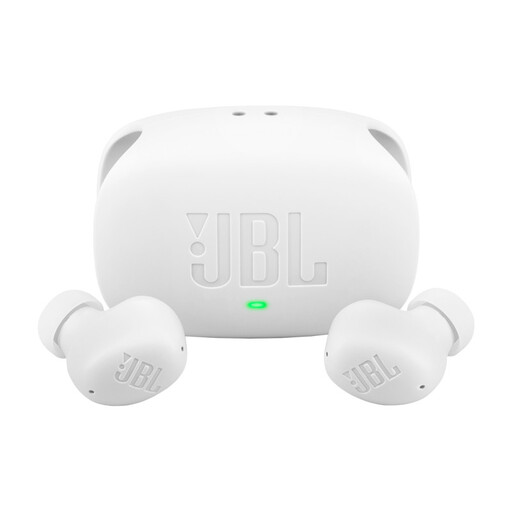
This wireless option is worth considering if your player supports Bluetooth and you want to let in some background noise using the stated Smart Ambient feature.
The product information lists Bluetooth, multipoint and up to 40 hours of total playback with ANC off.
 No image available
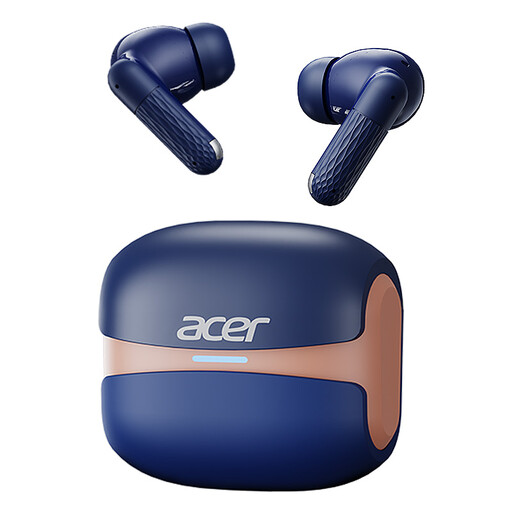
A wireless option if your playback device supports Bluetooth; this model requires a Bluetooth connection.
The product information lists touch controls for music and calls, plus a USB-C charging case.
 No image available
These wireless earphones are only an option if your player supports Bluetooth; the listed features alone don’t prove that museum commentary will be easier to understand.
The product information lists Bluetooth 6.1, a 9-band equaliser, ANC and an ambient mode.
 No image available
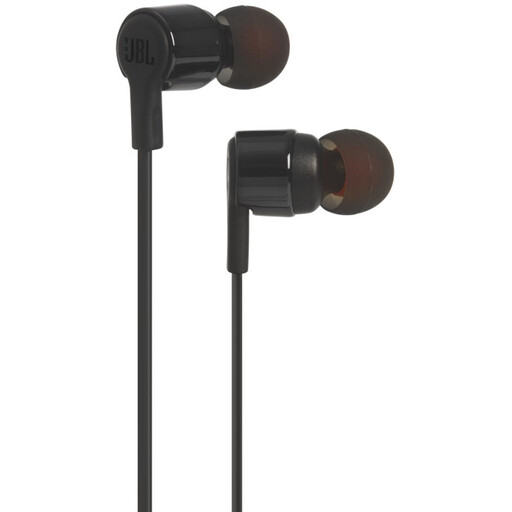
A wired option if your player has a compatible 3.5 mm connection.
The product information lists a built-in microphone and several sizes of ear tips. The description mentions podcasts and video, but doesn’t include an independent assessment of speech reproduction.
Not necessarily. Start with a comfortable-fitting pair of in-ear headphones and a low listening volume. More isolation may help if background noise interferes with the recording, but it can also make it harder to hear people around you. Manufacturers’ noise-isolation figures don’t predict your personal experience.
Try the included sizes without forcing a fit that feels uncomfortable, and follow the care instructions for the exact model. Shure lists replaceable sleeves and a detachable cable for the SE215; for other models, check which parts can be replaced.
A detachable cable can be replaced if a compatible part is available. The Dutch government states that there’s no fixed statutory guarantee period in the Netherlands and that the seller must provide a solution if there’s a problem with a product. Online purchases generally come with a 14-day cooling-off period after delivery; the ACM lists an exception for hygiene products whose packaging has been opened. Check the terms for your purchase before breaking a seal.
No, not automatically. According to the European Commission, CE marking is only required when applicable harmonised EU rules specify it for the product in question. This doesn’t lead to a general conclusion about any particular wired pair of in-ear headphones; don’t judge a specific version based only on whether it has a logo.