What should you look for when choosing?
Start by deciding whether you mainly need a seal to block out household noise or want to hear your surroundings regularly. Then compare the fit, the connection to your player and the sound of a familiar spoken-word recording.
Wired with passive isolation
Choose this if: you mainly listen with concentration, don’t want to charge your earphones and your playback device has a compatible connection.
Trade-off: the cable can be inconvenient when you move around; the seal depends on your ears, the ear tips and how you position them.
Wireless with ANC and ambient sound
Choose this if: you want to listen without a cable and regularly switch to ambient sound at home.
Trade-off: you’ll need to charge them. Check how you switch between listening modes on the exact model and what battery life to expect with ANC enabled.
| What to consider |
What should you look for? |
Who is this important to? |
| Blocking out household noise |
Fit and the sizes supplied; assess the seal at a comfortable volume. |
If background noise drowns out my interview, I want to try a good seal first rather than turn up the volume. Around 36% of consumers put noise isolation first. |
| Speech reproduction |
Listen to the same recording and pay attention to voices and spoken details; a description of the sound is not a speech intelligibility test. |
If I want to follow spoken details clearly, I compare the sound with a clip from my own interview. Around 29% of consumers give speech reproduction top priority. |
| Comfort |
Compare the ear tips and, during longer listening sessions, check for pressure, fit and cable noise when moving. |
If I listen to long conversations all the way through, I want earphones that stay comfortable and don’t feel irritating. Around 21% of consumers prioritise a comfortable fit for extended wear. |
| Staying available |
Check the controls for ambient sound mode or pausing; for wireless models, compare battery life per charge with ANC on. |
If I need to be able to respond at home, I want to be able to pause or switch modes quickly. Around 14% of consumers prioritise staying available and connectivity. |
Joybuy product picks
These picks focus on wireless in-ear headphones with listed ANC features for listening in a noisy home. Check whether and how you can switch to ambient sound on each model.
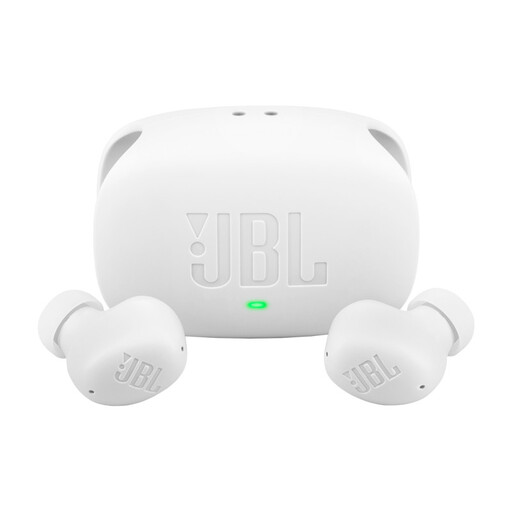 Image unavailable
JBL Wave Buds 2, white
Suited to listening with background noise when you also want to be able to switch to ambient sound.
ANC and Smart Ambient are listed for this model.
Joybuy
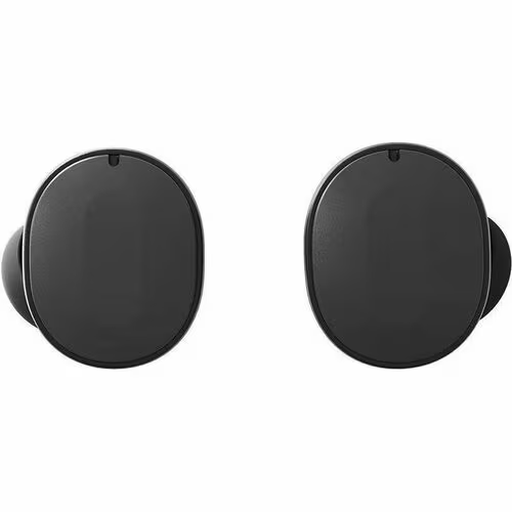 Image unavailable
Fairphone Fairbuds, black
A relevant choice if wireless listening with noise cancelling suits the way you listen.
The product description lists hybrid ANC, replaceable parts and replaceable batteries.
Joybuy
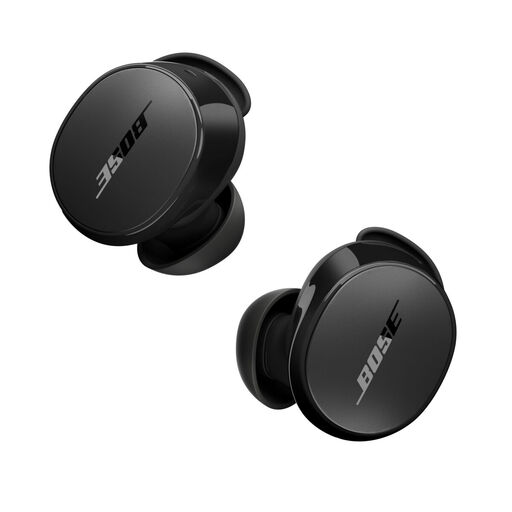 Image unavailable
Bose QuietComfort Earbuds, black
Suited to anyone who wants to be able to switch to ambient sound while listening at home.
Noise cancelling, an Aware mode and controls for switching between modes are listed.
Joybuy
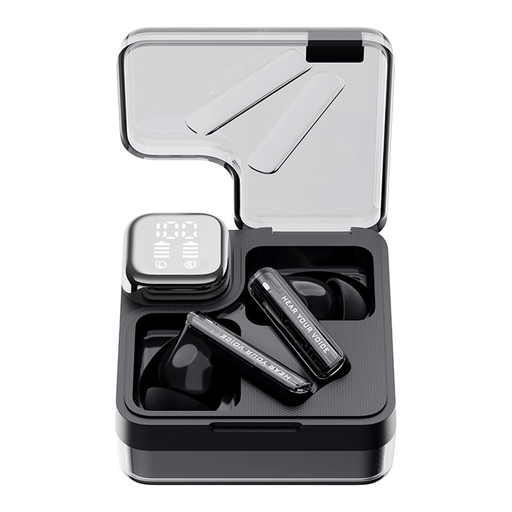 Image unavailable
QCY Melobuds Neo, black
An option if you want to switch between noise cancelling and ambient sound while listening.
ANC, Transparency Mode and app-customisable controls are listed.
Joybuy
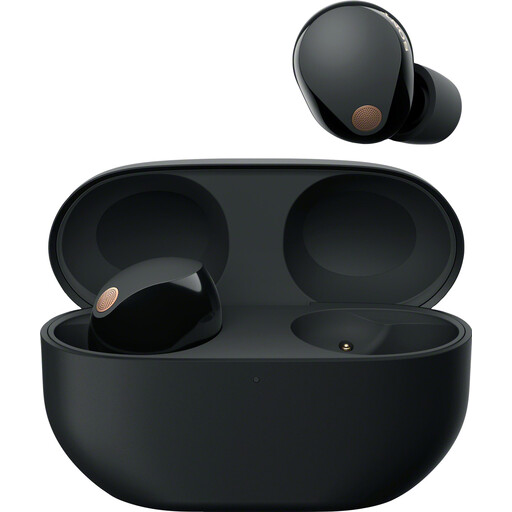 Image unavailable
Sony WF-1000XM5, black
Suited to anyone who wants to listen wirelessly and switch between noise cancelling and ambient sound at home.
Sony lists up to 8 hours of continuous music playback with noise cancelling on; this is not a measured battery life for listening to interviews.
Joybuy
Frequently asked questions
How can you try ear tips without continually turning up the volume?
Try the supplied sizes with a familiar interview clip at a comfortable volume. A good seal can reduce the need to listen louder. The World Health Organization gives 80 dB for 40 hours a week as an example of safe listening; without measuring the sound, you can’t read this value directly from a volume slider.
What should you check before connecting a wired IEM?
Check that the plug fits the output on your phone or player. Shure lists a 3.5 mm plug for the SE215, as does Sennheiser for the IE 200. If your source doesn’t have this connection, you’ll need a suitable solution for that device. If you’re buying a replacement cable, check the connection on the exact model too.
What should you look for if you’ll be using them for longer periods?
Check whether suitable replacement ear tips are available and, for a wired model, whether you can get a compatible cable. For wireless earbuds, compare battery life per charge with ANC on, rather than relying only on a total that includes the charging case. According to the Government of the Netherlands, if a product is faulty, the retailer is your point of contact for the statutory guarantee; a manufacturer’s warranty is in addition to this.
What product rules apply to wireless earbuds in the Netherlands?
The Netherlands’ Ondernemersplein business portal states that the Radio Equipment Directive applies to equipment with Bluetooth. For products that meet the relevant EU requirements, the portal describes the CE marking and EU declaration of conformity. This general regulatory framework does not confirm that an individual listing meets the requirements; check the product information for the exact variant.
Can you always try in-ear headphones after buying them online and send them back?
For online purchases in the Netherlands, there is generally a statutory 14-day cooling-off period after receipt, but exceptions apply. The Consumentenbond describes this period. The Court of Justice of the European Union has considered an exception for certain sealed goods that cannot be returned for health or hygiene reasons if the seal is broken after delivery. The fact that a product is in the in-ear headphone category alone does not mean this exception applies to your purchase: check the specific seal and the seller’s terms before opening it.


