Start by choosing earbuds you can wear comfortably for extended periods and use to listen to your recording at a moderate volume. Wired in-ears are a good fit if your player has a compatible socket and you’d rather not manage an earbud battery. Wireless earbuds with active noise cancellation are worth considering if cable-free listening and reducing cabin noise are your priorities. Neither option will automatically make a hard-to-hear harmony part clearer, so check that your practice recording brings it out well enough, too.
Who are these in-ears for?
Singers looking for vocal detail
You want to follow a harmony part in an existing recording, so you compare the vocals with the backing. Etymotic describes the ER2SE as having a flat response. Compare its sound with your own practice recording, without expecting a particular tuning to bring out individual voices by itself.
Travellers looking to reduce cabin noise
You don’t want to keep turning the volume up while practising, so you’re comparing a well-sealing monitor with wireless earbuds that have active noise cancellation. Shure claims up to 37 dB of passive noise isolation for the SE215, while Sony lists aircraft as a use case for the WF-1000XM5’s noise cancellation. A good seal and fit still matter.
Those who listen for long periods and value convenience
You’re expecting longer practice sessions and want a comfortable fit and a connection that works with your player. Audio-Technica lists four sizes of silicone ear tips for the ATH-E40; the Dutch Consumers’ Association points out that you can’t use wireless earbuds while they’re charging in their case.
What should you look for when buying?
Compare how your own recording sounds, the fit, cabin noise and how long you want to practise without a break. Keep the volume moderate: turning it up isn’t a reliable fix if the harmony part gets lost in the recording.
Wired in-ear monitor
Choose this option: if your player has a compatible socket and you’d rather not manage an earbud battery.
Bear in mind: the cable can be awkward in an aeroplane seat, and the seal and sound reproduction depend in part on the fit.
Wireless in-ears with active noise cancellation
Choose this option: if cable-free listening and reducing background noise matter more to you.
Bear in mind: check the battery life of the earbuds themselves and the rules for using devices on board. Sony lists aircraft noise as a use case for the WF-1000XM5; that doesn’t prove it will help you distinguish harmony parts more clearly.
| What to consider |
What to look for |
Who will value this? |
| Following a harmony part |
Compare the vocals and backing using the same recording at a moderate volume. Assess specific models rather than looking only at the number of drivers. |
When I practise a harmony part, I want to follow the vocals in my recording without turning the volume up. Around 33% of consumers prioritise following the harmony part. |
| Reducing cabin noise |
Try different ear tip sizes and, with wireless earbuds, check which noise-cancelling settings you want to use. |
If aircraft noise disrupts my practice, I don’t want to keep turning the volume up. Around 27% of consumers give reducing cabin noise their highest priority. |
| Comfort |
Try the supplied ear tip sizes before you travel and look out for pressure or irritation during a longer listening session. |
On a long flight, I want to wear earbuds without the fit interrupting my practice session; around 20% of consumers put comfort first. |
| Practising without interruptions |
Check your player’s connection and whether you need an adapter. For wireless earbuds, compare their battery life per charge. |
When I plan a long practice session, I want to keep playing my recording without having to stop halfway through. Around 20% of consumers prioritise uninterrupted listening. |
Pitfalls to avoid when choosing
-
Taking noise-isolation claims as a guaranteed result
The stated level of noise isolation is a manufacturer’s claim for specific models. Shure emphasises that positioning and the seal affect sound reproduction.
Try the supplied ear tip sizes with your own recording before travelling. Don’t turn up the volume to compensate for a poor seal.
-
Confusing battery life including the case with continuous listening time
The Dutch Consumers’ Association explains that a stated total battery life may include charging with the case. You can’t use the earbuds while they’re charging.
Compare the stated battery life of the earbuds themselves with your planned practice session, using the settings you intend to use.
-
Assuming every detachable monitor cable will fit
According to Audio-Technica, the ATH-E40 uses an A2DC connection at the earbuds and a 3.5mm plug for the player. Detachable doesn’t mean every monitor cable is interchangeable.
Check both ends of the cable and the connection on your playback device.
If the connection is different, you may need to arrange a suitable cable or adapter before you travel.
Brands to compare
Etymotic
Etymotic describes the ER2SE as having a flat response and the ER2XR as a version with extra bass. These are the manufacturer’s descriptions of specific models.
- Etymotic claims 35–42 dB of passive noise isolation for the ER2SE and lists a replaceable cable.
- The level of isolation you get depends in part on the fit; compare the sound with your own recording.
Shure
The SE215 is a wired, passively isolating monitor with interchangeable sleeves and a detachable 3.5mm cable.
- Shure claims up to 37 dB of noise isolation for the SE215 and describes its sound as bass-rich.
- According to the Dutch-language manual, the seal affects sound quality. Try different ear tip sizes and assess the model with your own vocal recording.
Audio-Technica
The ATH-E40 is a wired monitor supplied with four sizes of silicone ear tips and a detachable A2DC cable.
- Audio-Technica describes powerful bass alongside balanced mid and high frequencies.
- A replacement cable must fit the A2DC connection; don’t assume it will be interchangeable with other monitor cables.
Sennheiser
The IE 100 PRO is a wired monitor range. When buying, check which version and cable are included in the box.
- Sennheiser lists a 10 mm dynamic transducer and silicone and foam ear tips for the IE 100 PRO.
- The product information also covers a Wireless version. Don’t attribute its features to the standard IE 100 PRO.
Sony
The WF-1000XM5 is a wireless alternative with active noise cancellation for anyone who wants to listen without cables.
- Sony lists aircraft as a use case for this model’s noise cancellation.
- That manufacturer’s claim isn’t an independent comparison with wired monitors and doesn’t prove you’ll recognise harmonies more clearly.
Joybuy picks for listening on the go
These picks include wireless in-ears and wired earbuds for practising on the go. Check that each model’s features, connection and battery life suit your recording and planned listening session.
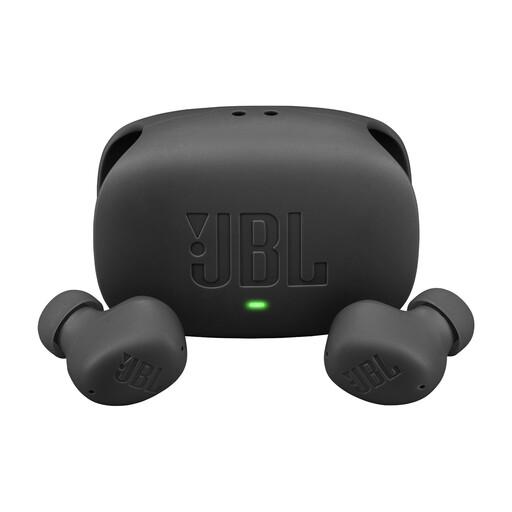 Image unavailable
JBL Wave Buds 2, Black
A wireless option to compare if you want to reduce cabin noise while practising. Check which noise-cancelling settings and battery life suit your listening session.
Joybuy
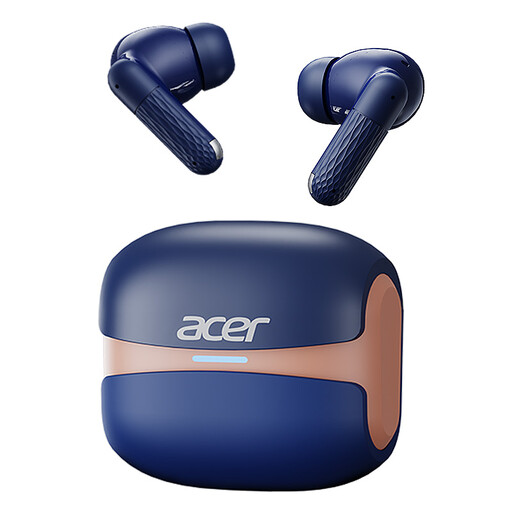 Image unavailable
Acer OHR548 Wireless Earphones, Bluetooth 5.4
A wireless option for listening on the go; Bluetooth 5.4 is listed in the model name. Before travelling, check that the battery life suits your planned practice session.
Joybuy
 Image unavailable
Samsung Galaxy Buds4 Pro, True Wireless
True wireless in-ears with active noise cancellation, worth comparing if you want to reduce background noise during a flight. Check the battery life with noise cancellation switched on.
Joybuy
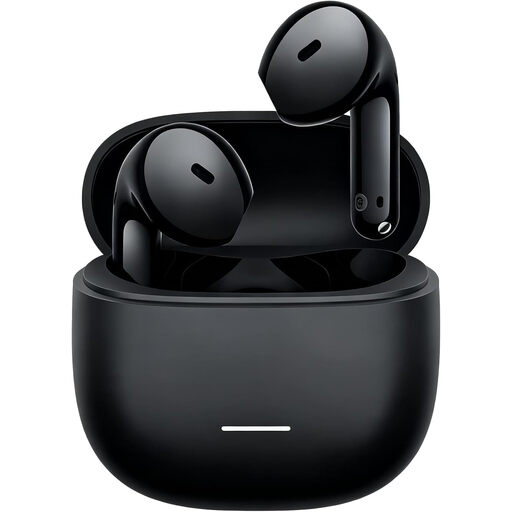 Image unavailable
Xiaomi Redmi Buds 8 Active, Black
A wireless in-ear option for listening to a practice recording without a cable. Compare the stated battery life per charge with your planned practice session.
Joybuy
 Image unavailable
Bose Noise Cancelling Wired Earbuds, Black
Wired earbuds with noise cancellation for anyone who’d rather not manage an earbud battery. Check that your playback device has a compatible USB-C socket.
Joybuy
Frequently asked questions
Can I connect an in-ear monitor directly to my phone?
Only if the plug fits your phone’s socket, or if you use a suitable adapter. The ATH-E40 and SE215 versions described have a 3.5mm connection; check the version and your device before buying.
What can I do if the bass or noise isolation isn’t as good as expected?
First, try a different sleeve size and check that the earbud forms a good seal. Shure notes that a poor seal can reduce the bass response of the SE215; follow your model’s instructions for fitting and cleaning.
How can I avoid listening too loudly during a flight?
Choose a well-fitting ear tip, keep the volume moderate and take listening breaks. The World Health Organization explains that the safe listening time decreases as the sound level rises; the volume setting on your phone doesn’t, by itself, measure the sound level in your ear.
Can I use my playback device and wireless earbuds throughout the flight?
Not without checking first. According to the European Union Aviation Safety Agency, the airline decides which portable electronic devices may be used and when, following an assessment; the crew may restrict their use. Check the guidance for your flight and follow the crew’s instructions. The European Union Aviation Safety Agency also states that spare batteries and power banks must be carried in hand luggage.
Does a two-year manufacturer’s warranty mean I have no rights after that?
No. In the Netherlands, your statutory rights exist alongside any manufacturer’s warranty. ACM ConsuWijzer explains that there is no fixed statutory warranty period: what you can expect depends, among other things, on the product and normal use. The retailer is your point of contact.


