
Listeners who want to block out household noise
You want to follow spoken passages without continually turning up the volume. So, start by considering how well the ear tips seal, but bear in mind that the fit varies from person to person.


Start with a tip that gives you a good seal: it can help reduce background noise without you having to keep turning up the volume. Then choose based on comfort during long listening sessions and compatibility with your audio source. Manufacturers’ noise-reduction figures can’t predict how much noise you’ll actually hear at home.
You want to follow spoken passages without continually turning up the volume. So, start by considering how well the ear tips seal, but bear in mind that the fit varies from person to person.
You listen for extended periods and want to know whether the housing and ear tips will remain comfortable. You can’t tell that from a list of specifications alone.
You might use a radio or another playback device and want to check in advance that the connection is compatible. The wired models discussed here are available with different connectors, so check the specific version.
Best for: blocking out household noise, if you can find a tip that fits well.
Bear in mind: the stated noise reduction depends on the fit and doesn’t tell you how much noise will be blocked out in your home.
Best for: trying different ear tip sizes and having a replaceable cable.
Bear in mind: Shure’s maximum isolation figure isn’t a guarantee of your personal results; size and placement still matter.
Best for: those who value a compact housing and a choice of ear tip materials.
Bear in mind: Sennheiser’s description of the sound doesn’t prove that spoken documentaries will be easier to understand.
| What to consider | What should you check? | Who should pay particular attention? |
|---|---|---|
| Blocking out household noise | Try the available ear tip sizes and see whether you can follow speech at a modest volume. Also consider which background sounds you need to remain aware of. | If household noise drowns out voices, I want to follow the documentary without continually turning up the volume; around 36% of consumers therefore prioritise a good seal. |
| Comfort during long listening sessions | Compare the supplied ear tip sizes and materials, and check whether the housing or cable routing feels intrusive. | For a long listening session, I want ear tips and a housing that remain comfortable; around 29% of consumers give long-term comfort top priority. |
| Compatibility with your audio source | Check the connector on your radio, phone or other audio source, and the connector on the exact version you’re considering. | If I want to use my existing listening device, the plug needs to fit; around 21% of consumers prioritise device compatibility. |
| Replaceable parts | Check the model’s connector and whether compatible ear tips or cables are available; don’t assume parts are interchangeable between brands. | If you want to replace parts, check the cable and connector on the specific model; around 14% of consumers make replaceability their top priority when choosing. |
The seal affects how much background noise gets in and how the sound comes across. A manufacturer’s maximum figure doesn’t account for your ears or the background noise in your home.
First, check the ear tip size and fit, then see whether you can follow speech at a modest listening volume.
A wired model will only work directly if its plug fits the connector on your audio source.
Before ordering, compare the connection on your device with that on the exact version you’re considering.
If the connections don’t match, you may need a suitable adapter.
Blocking out noise can be inconvenient if you need to hear other people in your household or important alerts.
Before you start listening, think about which sounds you still need to be aware of.
The ER2SE is a wired option for those looking for passive isolation and a flat sound profile; within the ER2 range, the ER2XR has a stronger bass emphasis.
The SE215 is a wired option supplied with multiple ear tips and designed to be worn with the cable over the ear.
The IE 200 is a compact wired model with a choice of ear tips, adjustable ear hooks and a 3.5 mm plug.
This selection includes wired and wireless in-ear headphones for listening at home. Some product descriptions mention noise cancellation or an ambient sound mode; also check that the connection is compatible with your audio source.
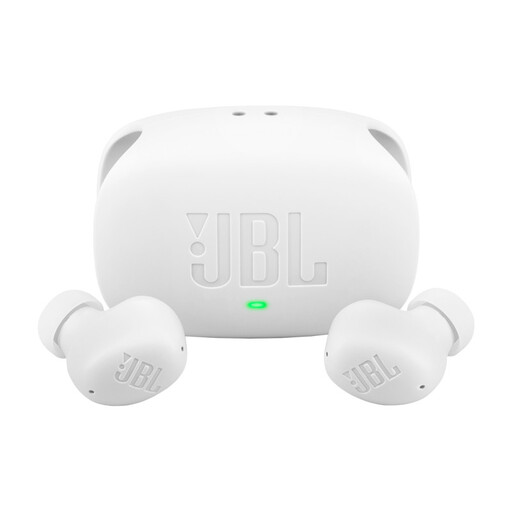 No image available
An option if you want to reduce background noise while still being able to hear the sounds around you.
The product description mentions Active Noise Cancelling and Smart Ambient. Wireless use requires a compatible Bluetooth audio source.
 No image available
A wireless option if you want to reduce background noise while listening.
The product description mentions Active Noise Cancelling and an adjustable 9-band equaliser. Wireless use requires a compatible Bluetooth audio source.
 No image available
A wired option if you’re looking for noise cancellation and a choice of fit accessories.
The product description mentions QuietControl noise-cancelling technology, three ear tip sizes and two sizes of stability wings. The USB-C connection requires a compatible USB-C audio source.
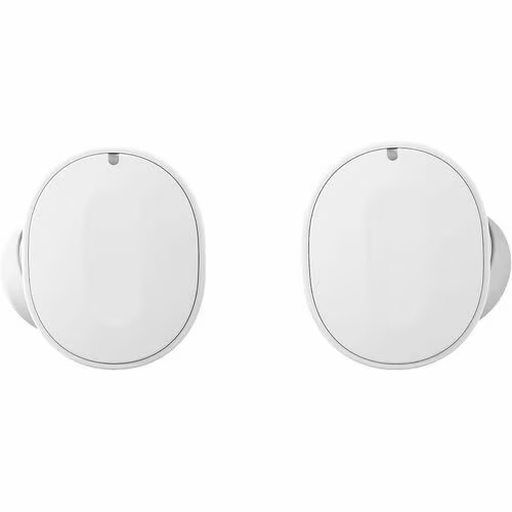 No image available
A wireless option if you want to reduce background noise.
The product description mentions hybrid ANC and replaceable parts. Wireless use requires a compatible Bluetooth audio source.
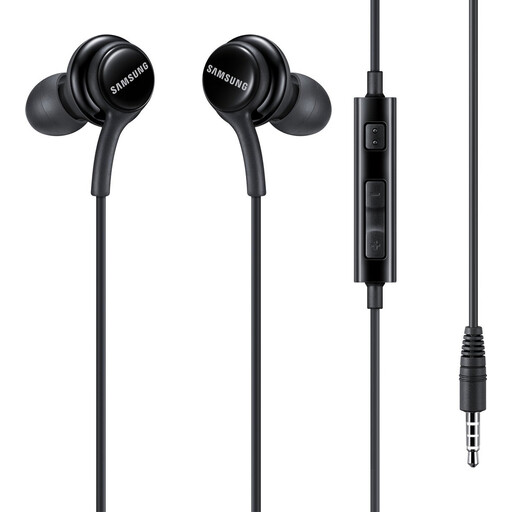 No image available
A wired option if your audio source has a suitable 3.5 mm connection.
The product description lists a 3.5 mm mini-jack. Check that your audio source supports this connection.
First, try an ear tip that fits better and keep the volume modest. The World Health Organization warns that the risk to hearing depends on both sound level and listening time. Its example of 80 dB for up to 40 hours a week is safety guidance, not a buying criterion or a guarantee that a particular setting is safe.
According to the Shure manual, the ear tip should create a good seal; a lack of bass may indicate a poor seal. Fit a replacement tip so that it completely covers the nozzle, and don’t push it past the opening of the ear canal.
First, check whether the cable on your specific model is detachable and which replacement part is compatible. If it’s faulty, contact the seller about your statutory guarantee rights; the Dutch Government states that there is no fixed statutory guarantee period that applies to all products.
No, it isn’t automatically required for every version. According to the European Commission, CE marking is mandatory only when specific applicable harmonised EU rules require it; the relevant rules must be determined for each product.