Who is this for?

Listener practising a vocal part

You want to follow a specific harmony part repeatedly, paying attention to both the sound of the voices and the rehearsal recording available. Etymotic describes different sound signatures, while Moises Help Center explains features for separating tracks. The playback source determines which parts are available separately.

Traveller on a noisy bus

You want to reduce traffic and passenger noise without constantly turning up the volume. Fit and the right ear tips matter too: Shure notes that isolation depends, among other things, on the shape of your ear canal and the seal.

Traveller who practises on the go

You wear your in-ear headphones for longer periods and weigh up comfort, a replaceable cable or wireless use against charging and being able to hear announcements. Shure describes the SE215’s detachable cable, while Sennheiser also offers the IE 100 PRO as a separate Wireless model.

What should you look for when choosing?

What to consider What to look for when buying Who is this important to?
Following the harmony part Check whether the rehearsal recording includes a separate vocal part or whether your playback method can provide one. If my main aim is to follow the right voice in my practice material, I’ll check the recording and playback features first. Around 38% of consumers say following the part is their top priority.
Managing bus noise Look for well-fitting ear tips and a good seal, and bear in mind that you may need to hear announcements during the journey. If I want to hear the recording without constantly turning up the volume, I’ll focus on the fit and what I still need to hear while travelling. Around 25% of consumers prioritise reducing ambient noise.
Comfort and convenience on the go Check which ear tip sizes are available and choose between a wired and wireless model. If you go wireless, check the charging options. If I want to listen comfortably throughout a long journey without a cable getting in the way, I’ll weigh comfort against my preference for wired or wireless. Around 25% of consumers prioritise comfort or convenience while travelling.
Connection and maintenance Check the connection on your playback device and make sure any replacement cable has the right connector. If I want to connect my in-ear headphones to a specific device or replace parts, I’ll check the plug and model connector. Around 12% of consumers prioritise connection or maintenance.

Common mistakes

  • Assuming a noise-isolation figure guarantees a particular result

    According to Shure, actual isolation depends, among other things, on your ear shape, the ear tip used and the seal. Shure also states that its earphones are not classified as hearing protection.

    Choose ear tips that fit well and listen at a comfortably low volume. Bear in mind that a strong seal may make announcements harder to hear.

  • Expecting a different sound signature to isolate a voice from a recording

    Sound tuning and track separation are different features. An in-ear monitor won’t automatically isolate one vocal from a mixed recording.

    First check whether your practice material includes a separate part or whether your playback method can provide the track you want. Only then compare whether the in-ear headphones’ sound suits your recording.

    You may need separate practice material or a suitable playback feature to listen to a part on its own.

  • Assuming cables and models are interchangeable

    A detachable cable doesn’t mean that every replacement cable will fit. A product range may also include separate wired and wireless models.

    Before buying, check the full model name, the connection on your source device and the connector type. For example, Sennheiser distinguishes between the wired IE 100 PRO and the IE 100 PRO Wireless.

Brands to compare

Shure

The SE215 is a wired option with a replaceable cable and several ear tip sizes included.

  • Shure lists a detachable MMCX cable and up to 37 dB of isolation for the SE215.
  • The manufacturer says isolation depends on the fit; the earphones are not classified as hearing protection. Also check that the connection is compatible with your playback source.

Sennheiser

The IE 100 PRO is available as a wired model and as a separate Wireless model for those who want to use Bluetooth.

  • Sennheiser lists less than 26 dB of noise attenuation for the wired IE 100 PRO and offers the Wireless model with Bluetooth.
  • Check which model you’re choosing. The manufacturer’s claims about monitoring aren’t an independent test of how well you can learn to recognise harmony parts.

Etymotic

According to Etymotic, the ER2SE has a flat tuning, while the ER2XR has more emphasis on bass within the range.

  • Etymotic lists 35–42 dB of passive noise reduction for the ER2SE and a user-replaceable cable.
  • These are manufacturer specifications, not a guaranteed result for your ears or proof that you’ll recognise a harmony part more easily.

Audio-Technica

The ATH-E40 is a wired monitor option with four sizes of silicone ear tips and a detachable cable.

  • Audio-Technica lists a 3.5mm plug and its own A2DC cable connector.
  • Check that the plug fits your playback source and that you can find the right replacement part. A wider choice of ear tip sizes doesn’t guarantee a personal fit.

Mackie

The MP-120 is a wired monitor with several types of ear tips; a separate version with a Bluetooth adapter is also available.

  • Mackie lists a detachable MMCX cable and up to 40 dB of isolation for the MP-120.
  • The noise-reduction figure is a manufacturer claim, not a comparison under identical conditions or a guarantee of fit for your ears.

Joybuy products

These Joybuy products include wired and wireless in-ear headphones for personal listening. Check that the connection and features suit your practice source; none of these headphones can isolate a separate harmony part from a mixed recording on their own.
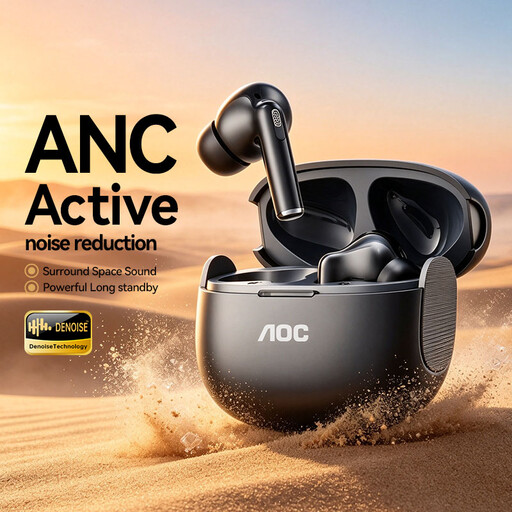
AOC ACT2615 wireless earbuds

AOC ACT2615 wireless earbuds

An option to compare if you’re looking for wireless Bluetooth earbuds; check that the features suit your playback source.

The product name lists Bluetooth 6.0 and ANC noise cancellation. It also mentions a charging case.

Joybuy
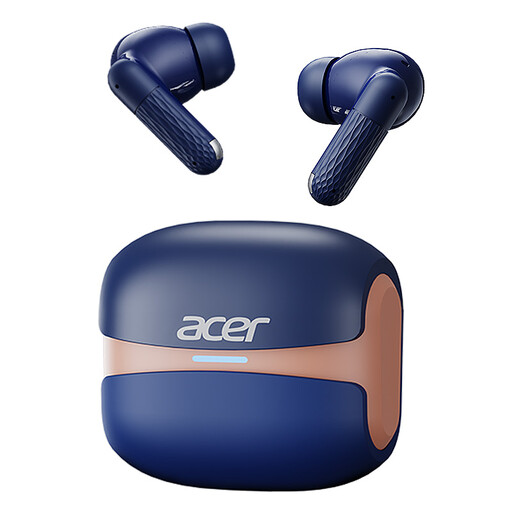
Acer OHR548 wireless in-ear headphones

Acer OHR548 wireless in-ear headphones

Worth considering if you want to listen wirelessly while travelling; check in advance that they work with your playback source.

The product name lists Bluetooth 5.4 and a Type-C charging case.

Joybuy

Samsung Galaxy Buds4 Pro True Wireless, black

Samsung Galaxy Buds4 Pro True Wireless, black

A wireless option to compare if you want to listen without a cable; check compatibility with your playback source.

The product name lists active noise cancellation. The product description mentions an adjustable 9-band equaliser.

Joybuy
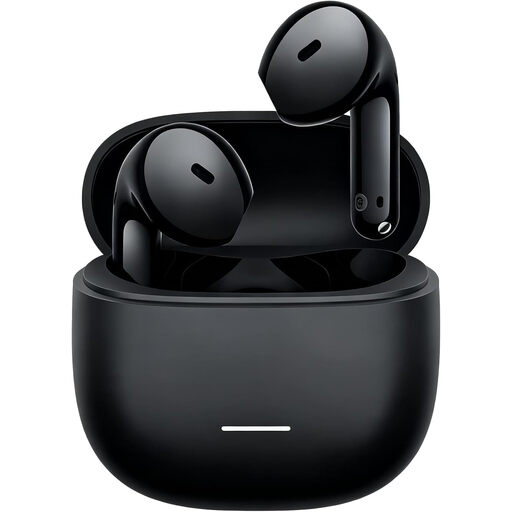
Xiaomi Redmi Buds 8 Active, black

Xiaomi Redmi Buds 8 Active, black

A wireless option if you want to listen to practice material without a cable; check that the connection and features suit your playback source.

The product description lists Bluetooth 5.4, adaptive noise cancellation, a weight of 3.8 g per earbud and a charging case.

Joybuy

Bose Noise Cancelling Wired Earbuds, black

Bose Noise Cancelling Wired Earbuds, black

A wired option to compare if you don’t want to worry about battery life; check that your playback source supports USB-C audio.

The product description lists a USB-C connection, in-line controls, QuietControl noise cancellation and several sizes of ear tips with stability wings.

Joybuy

Frequently asked questions

Can in-ear headphones automatically isolate my harmony part from a recording?

No. In-ear headphones can’t automatically isolate one vocal part from a mixed recording. Check whether your recording includes a separate part or whether your playback service can provide the tracks you want; which parts are available depends on the recording or software.

How do I clean the ear tips?

Follow the instructions for your specific model and material. For the Shure tips in question, Shure recommends cleaning them carefully and letting them dry completely before using them again. Don’t apply those instructions to tips from other brands without checking first.

How can I listen more mindfully at a sensible volume on a long coach journey?

Start at a low volume and pay attention to both the sound level and how long you listen: the World Health Organization lists both as factors in exposure to loud noise. A good fit can help you follow the recording without turning up the volume. Make sure you can also hear important announcements.

What warranty rights do I have when buying in the Netherlands?

You’re entitled to expect a product to do what you can reasonably expect it to do; if a product is faulty, the retailer is your point of contact. According to the Dutch government, there is no fixed two-year statutory warranty period for every product in the Netherlands. Any manufacturer’s warranty is separate from these rights.

Can I always return in-ear headphones bought online within 14 days?

No, don’t assume you have an unconditional right to return them. According to the Dutch government, distance purchases are often covered by a 14-day cooling-off period, but there are exceptions. Check the terms that apply to your purchase and the packaging before assuming that opened in-ear headphones can be returned.
