Who are these in-ear headphones for?

Picking out the bass line

You replay passages to distinguish individual bass notes and want to choose deliberately between a more neutral sound and extra bass. Etymotic describes the ER2SE as having a flatter tuning and the ER2XR as a model with boosted bass.

Listening on a noisy train

Background noise is getting in the way, so a good fit or noise cancellation may matter more than a particular monitor sound. Sony says that noise cancellation doesn’t completely eliminate background noise.

Listening on the move regularly

You want a comfortable fit and a connection that works with your playback device. Shure lists a detachable 3.5mm cable for the SE215; check that your device has a compatible socket.

What should you look for?

Wired with a more neutral tuning

Choose this if: you want to assess bass notes without a deliberate bass boost.

Bear in mind: cable compatibility and a comfortable, secure fit for your ears.

Wired with a bass boost

Choose this if: extra emphasis on low frequencies helps you follow the bass line.

Bear in mind: a bass boost changes the tonal balance and doesn’t prove that the transcription will be more accurate.

Wireless with noise cancellation

Choose this if: you mainly want to reduce the steady rumble of the train and listen without an audio cable.

Bear in mind: Sony says noise cancellation doesn’t eliminate all background noise; this isn’t automatically a more neutral alternative to a wired monitor.

Concern What to check before buying Who considers this more important
Bass notes and tonal balance Compare a familiar passage at the same, comfortable volume. Etymotic describes the ER2SE as having a flat tuning and the ER2XR as a model with boosted bass. If I want to follow individual notes without extra bass colouring the rest of the recording, tonal balance comes first; around 36% of consumers put this concern first.
Train noise Try the supplied ear tips and assess the seal at a normal listening volume. Sony says noise cancellation works particularly well against constant background noise, but doesn’t eliminate it completely. When train noise makes it hard to listen, I first want to know how well the ear tips seal and what noise cancellation can do; around 29% of consumers give noise reduction top priority.
Fit and listening volume Check which sizes and materials of ear tips are included. The WHO recommends well-fitting earphones so you’re less likely to turn up the volume in a noisy environment. When listening repeatedly, I want comfortable ear tips that don’t tempt me to turn the music up; around 21% of consumers put fit and a manageable volume first.
Connection and controls Check your device’s audio output and whether you need a suitable adapter. For wireless models, also consider the connection, settings and battery use. If I don’t want to struggle with cables or connections while travelling, I focus on how the headphones connect to my device and how they’re controlled; around 14% of consumers consider this their main buying concern.

Common mistakes

  • Assuming a quoted noise-reduction figure guarantees results on the train

    A quoted figure doesn’t tell you how much noise the headphones will block for your ears with a particular fit. The type of background noise also matters.

    Check the supplied ear tips and assess the seal at a low, normal listening volume rather than turning the music up.

  • Assuming more bass means a more accurate transcription

    A bass boost changes the balance of the recording. It doesn’t prove that individual notes will be easier to distinguish accurately.

    Choose extra bass only if it helps you follow the notes, and pay attention to the clarity of the other instruments too.

  • Waiting until you’ve unpacked them to check whether the connection fits

    A wired pair of in-ear headphones with a 3.5mm connection, such as the Shure SE215, needs a compatible socket or adapter. The returns policy may also be important.

    Before buying, check your device’s connection, what’s included in the box and the seller’s returns information.

Brands to compare

Etymotic

The ER2SE and ER2XR offer a clear comparison between what Etymotic describes as a flat tuning and boosted bass.

  • Etymotic quotes passive noise reduction of 35–42 dB for both models.
  • This is a manufacturer’s figure, not a measurement of how well they fit your ears or how they perform on a train. The ER2XR is deliberately tuned to deliver a different bass response from the ER2SE.

Shure

The wired SE215 is worth comparing if you’re looking for a detachable cable and a choice of supplied ear tips.

  • Shure lists a 3.5mm cable, several ear tips and up to 37 dB of sound isolation.
  • The descriptions of deep bass and the noise-reduction figure are manufacturer claims; they don’t show how accurately you’ll be able to transcribe bass notes.

Sennheiser

The wired IE 100 PRO is a monitoring alternative that, according to Sennheiser, has a 10 mm dynamic driver.

  • Sennheiser lists silicone and foam tips as options.
  • Check that you’re looking at the wired version and that the tips fit comfortably; the product information also covers a wireless version.

Sony

The WF-1000XM5 is a wireless ANC option to compare if train noise and listening without an audio cable matter to you.

  • Sony describes noise cancellation and adjustable ambient sound features for this model.
  • Sony says that background noise isn’t completely eliminated. This doesn’t automatically make the model a more accurate monitor for transcribing bass.

Joybuy products

This selection includes wireless in-ear headphones for listening on the move and a wired option with a bass boost. The models and features vary, so check which ones suit your listening needs.

AOC ACT2615 wireless ANC in-ear headphones

AOC ACT2615 wireless ANC in-ear headphones

An option to compare if you want to listen wirelessly and are looking for noise cancellation on the move.

The product name lists Bluetooth 5.4, ANC, HiFi decoding and touch controls.

Joybuy

Acer OHR548 wireless in-ear headphones

Acer OHR548 wireless in-ear headphones

A model to compare if you want to listen on the move without an audio cable.

The product name lists Bluetooth 5.4, HiFi decoding and touch controls.

Joybuy

Samsung Galaxy Buds4 Pro, black

Samsung Galaxy Buds4 Pro, black

A wireless option to compare if you’re looking for ANC and want to listen without an audio cable.

The product name lists true wireless and active noise cancellation.

Joybuy
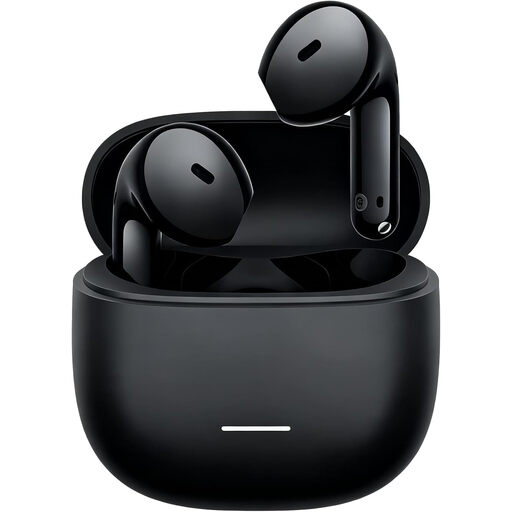
REDMI Buds 8 Active, black

REDMI Buds 8 Active, black

A model to compare if you want to follow bass notes on the move; the product name identifies this version as the REDMI Buds 8 Active.

Joybuy
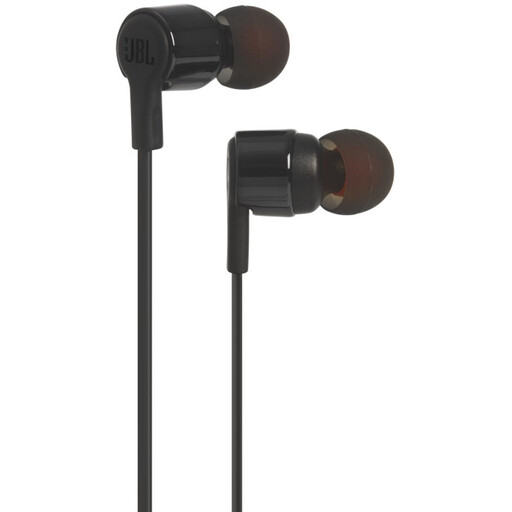
JBL Tune 210 wired in-ear headphones

JBL Tune 210 wired in-ear headphones

A wired option to compare if you’re looking for a bass-focused listening experience.

The product name lists a 3.5mm connection and Pure Bass Sound.

Joybuy

Frequently asked questions

Does noise cancellation help you distinguish bass notes more clearly?

Noise cancellation can reduce steady, low background rumble, but it doesn’t remove all sound. Sony describes this feature for the WF-1000XM5; that doesn’t prove that ANC earbuds reproduce bass notes more accurately than a well-fitting wired monitor.

How can I listen on a long train journey without constantly turning the volume up?

Start at a low volume, try well-fitting ear tips and take listening breaks. The World Health Organization recommends well-fitting, noise-cancelling headphones to reduce the need to turn up the volume in noisy conditions; listening duration matters too.

Can I always return in-ear headphones bought online after unpacking them?

No, not always. ACM ConsuWijzer says you generally have 14 days from delivery to change your mind about online purchases, and explains that an exception applies to certain hygiene products that have been taken out of their packaging. Before unpacking the headphones, ask the seller how this exception applies to the specific product.

What if the cable or an ear tip develops a fault during normal use?

In the Netherlands, you have a legal guarantee that a product must meet reasonable expectations; there is no fixed statutory guarantee period for all products. According to the Dutch government, the seller is your point of contact if a product is faulty. Normal wear and tear or damage you cause yourself isn’t automatically covered.

Can I listen to a recording using in-ear headphones on a Dutch train?

The NS house rules consulted don’t prohibit listening with in-ear headphones, but ask passengers not to disturb others with loud music; the quiet zone must be kept quiet. This is an NS rule, not a general statement about every transport operator or situation.
