
Listeners who want to block out household noise
You want to follow spoken passages without constantly turning up the volume. The Dutch Consumers’ Association explains that in-ear headphones seal the ear canal, so finding the right fit is important.


Start with the fit: well-sealing in-ear headphones can reduce background noise, but the results vary depending on your ears and how you position them, as Shure and the Dutch Consumers’ Association also point out. A wired in-ear monitor can suit listening in one place if the connection is compatible and you don’t want to charge a battery. If you move around the house or want to let in some background noise, you could compare wireless models with active noise cancellation. With either option, check that the eartips stay comfortable, and bear in mind that a tight seal can make it harder to hear other people in your home.
You want to follow spoken passages without constantly turning up the volume. The Dutch Consumers’ Association explains that in-ear headphones seal the ear canal, so finding the right fit is important.
You listen to several chapters in a row and value a comfortable, secure fit more than a high stated noise-reduction figure. Compare the eartips and comfort for extended use.
You switch between listening and household tasks, and weigh up a cable-free-of-charging option against the freedom of wireless movement. For wireless earbuds, battery life per charge is worth considering.
A good fit if: you usually listen in one place, the connection is compatible with your playback device and you don’t want to charge a battery.
Bear in mind: a cable can get in the way during household tasks, and a tight seal can make it harder to hear other people at home.
A good fit if: you move around while listening or regularly want to let in some background noise; check whether the model has an ambient sound mode for this.
Bear in mind: you’ll still need to charge them, and active noise cancellation doesn’t work equally well on every type of household noise. The Dutch Consumers’ Association says it mainly tackles low, continuous humming.
| What to consider | What to look for when buying | Who it’s for |
|---|---|---|
| Blocking out household noise | Compare the sizes and materials of the included eartips; treat any stated noise reduction as a model claim, not a guaranteed personal result. | If I want to follow the story without constantly turning up the volume, I mainly look for a good seal. Around 33% of consumers put noise isolation first. |
| Comfort during long listening sessions | Check which sizes and materials are included, and read the returns policy before buying. | When listening to several chapters in a row, I want eartips that stay comfortable, even when they seal well. Around 27% of consumers put wearing comfort first. |
| Narrator’s voice and sound | Compare the tuning of the exact model and, if possible, try it with spoken-word content at a safe volume. | If I mainly listen to spoken-word content, I want a sound that I find pleasant and clear; a manufacturer’s description doesn’t prove that a model will sound better to everyone. Around 20% of consumers prioritise the narrator’s voice and sound. |
| Connection and maintenance | Check the plug on the version you’ve chosen and the connection on your player; for wireless models, compare battery life per charge. | I want to know whether a cable will suit where I listen or whether I’d rather move around freely, and I’ll factor in charging if I choose wireless. Around 20% of consumers prioritise ease of use and maintenance. |
According to Shure, isolation depends on factors including your ear canal, the eartip and the fit. Shure also states that its in-ear headphones are not hearing protection products with an NRR rating.
Choose eartips that fit well, and consider which signals or people at home you still need to hear while listening.
The battery life of the earbuds themselves differs from the total time when the charging case is included, as the Dutch Consumers’ Association explains.
Compare battery life per charge with the length of your listening sessions, and check whether the stated time applies with noise cancellation switched on or off.
A wired model with a 3.5 mm plug won’t necessarily be compatible with every playback device.
Before buying, check the connection on both the version you’ve chosen and the device you use to play audiobooks.
According to Etymotic, the wired ER2SE and ER2XR differ mainly in their sound tuning: the ER2SE is flatter, while the ER2XR puts more emphasis on bass.
The wired SE215 is an option for comparing different eartips and a detachable cable.
The wired IE 200 is an option if you’re looking for a compact monitor with different eartips and a 3.5 mm cable.
The wired CHU II has a detachable 2-pin cable and replaceable acoustic filters.
The WF-1000XM5 is an example of wireless in-ear headphones with active noise cancellation, rather than a wired in-ear monitor.
This selection mainly includes wireless in-ear headphones with active noise cancellation, as well as a wired USB-C model with noise cancellation.
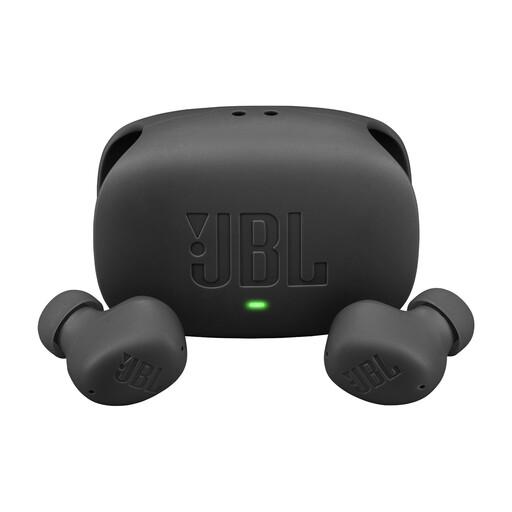 Image unavailable
A good fit if you want to listen to an audiobook wirelessly and hear your surroundings using Smart Ambient.
The product description mentions active noise cancellation and Smart Ambient; check which listening mode suits the way you use them.
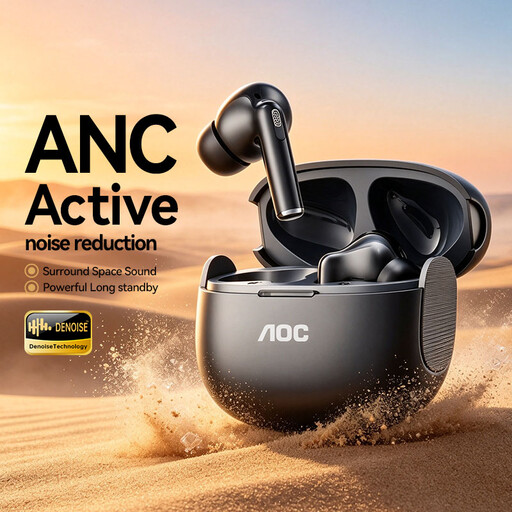 Image unavailable
An option if you want to compare wireless earbuds with active noise cancellation for listening to audiobooks at home.
Before buying, check that the features and controls suit your playback device and listening habits.
 Image unavailable
A good fit if you want to compare true wireless in-ear headphones with active noise cancellation for listening in a noisy home.
Check that the features of this version work with your playback device and preferred listening mode.
 Image unavailable
A wired option if you want to compare noise cancellation without having to charge a battery.
The connection is USB-C; check that your playback device supports audio over USB-C.
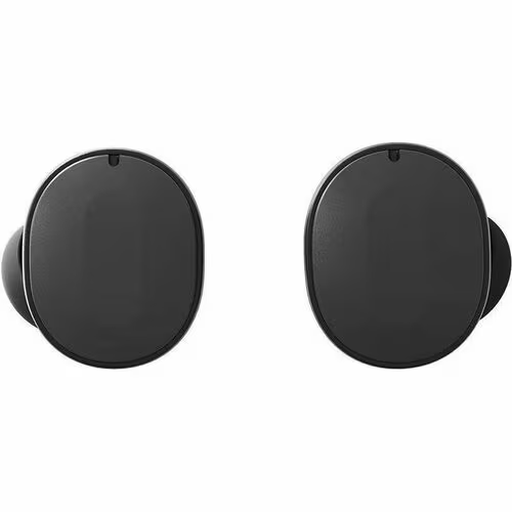 Image unavailable
A good fit if you’re looking for wireless in-ear headphones with active noise cancellation for listening to audiobooks at home.
If replaceable parts matter to you, check which parts of this version you can replace yourself.
No. First, try a good fit and keep the volume at a safe level. The World Health Organization points out that well-fitting, noise-cancelling earbuds can help you listen at a lower volume, but they don’t guarantee that background noise will disappear.
Follow the instructions for the specific model. For the SE215, Shure says the eartip should seal well without being pushed past the entrance to the ear canal; the instructions also explain how to change the eartips and carefully disconnect the cable.
No, not always. For online purchases, ACM ConsuWijzer generally allows a 14-day cooling-off period after delivery, but there’s also an exception for hygiene products that have been removed from their packaging. Before buying, check with the seller whether this exception applies to the in-ear headphones and packaging you’ve chosen.
No. Statutory consumer rights apply as well as any manufacturer’s warranty. If a product doesn’t meet reasonable expectations under normal use, ACM ConsuWijzer says the seller must provide an appropriate solution; there isn’t automatically one fixed warranty period for all in-ear headphones.
A stated isolation rating isn’t a hearing protection rating. Shure explicitly states that its in-ear headphones don’t have an NRR rating and aren’t intended as hearing protection.