What should you look for in in-ear earphones for a busy office?
For spoken radio at work, your choice comes down to speech clarity, isolation, staying reachable, comfort and compatibility with your playback device.
Strongly isolating wired IEM
Suitable when: conversations around you are disrupting the programme and you don’t need to be available to respond all the time.
Bear in mind: you may find it harder to hear spontaneous questions and other sounds around you; the level of isolation depends on the fit.
Wired IEM with fit options
Suitable when: you listen at your desk for long periods and want a choice of ear tip sizes or a detachable cable. According to their manufacturers, the Sennheiser IE 200 and Audio-Technica ATH-E40 offer several ear tip options and a detachable cable.
Bear in mind: a cable can get in the way at your desk; also check that the connector is compatible with your playback device.
IEM that lets in ambient sound
Suitable when: colleagues often need to speak to you while you’re listening. Westone describes the AM Pro X10’s passive StageSense system as a way of letting in ambient sound.
Bear in mind: office conversations coming through may still mask the spoken comedy; there’s no guarantee you’ll hear specific sounds clearly.
| What to consider |
What should you check? |
Who is this important for? |
| Understanding spoken jokes |
Listen to familiar speech clips at a comfortable, low volume and, where possible, compare assessments of speech reproduction. |
If I want to follow the jokes without continually turning up the volume, I’ll focus on speech reproduction and a good fit. Around 29% of consumers put speech clarity first. |
| Blocking out conversations |
Compare the ear tips and fit options available; treat stated noise-reduction figures as manufacturer claims, not a prediction of how well the earphones will block out sound for you. |
When conversations drown out the programme, I want to know whether the earphones fit comfortably and seal well in my ears. Around 24% of consumers say blocking out noise is their main priority. |
| Staying approachable |
Decide whether you need to be able to respond straight away while listening and, if necessary, compare a model that lets in ambient sound with an isolating IEM. |
If colleagues often need to ask me something, I don’t want to block out my surroundings completely. Around 18% of consumers prioritise staying reachable. |
| Comfort during long listening sessions |
Check the ear tip sizes available, and pay attention to pressure in your ears and how the cable sits at your desk. |
For longer listening sessions, I want ear tips that feel comfortable, without assuming that a good seal will automatically be comfortable. Around 17% of consumers put wearing comfort first. |
| Connection to your playback device |
Check your device’s audio output, the model’s plug and whether you need a microphone for work calls. |
If I play the radio from my own phone or computer, the connection needs to be compatible with that device. Around 12% of consumers give device compatibility top priority. |
Joybuy products for wired listening
These wired in-ear earphones are designed for listening to the radio through a compatible playback device. Before buying, check which connection your device has and what fit options are available for the model.
 No image available
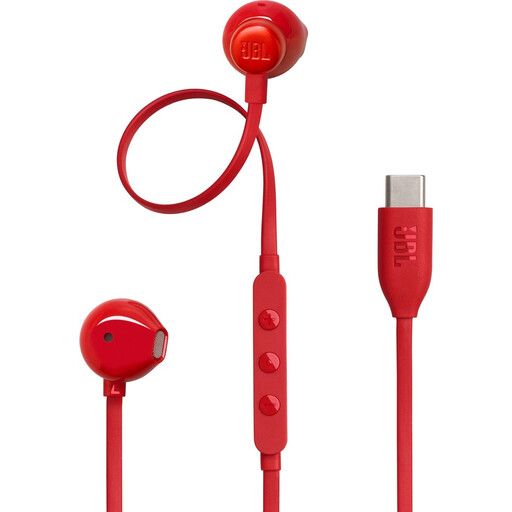
JBL Tune 305C USB-C, red
A wired option for a playback device with a compatible USB-C connection.
View at Joybuy
 No image available
Bose Noise Cancelling Wired Earbuds, black
A wired model to compare if you want noise cancellation; check that its connection is compatible with your playback device.
View at Joybuy
 No image available
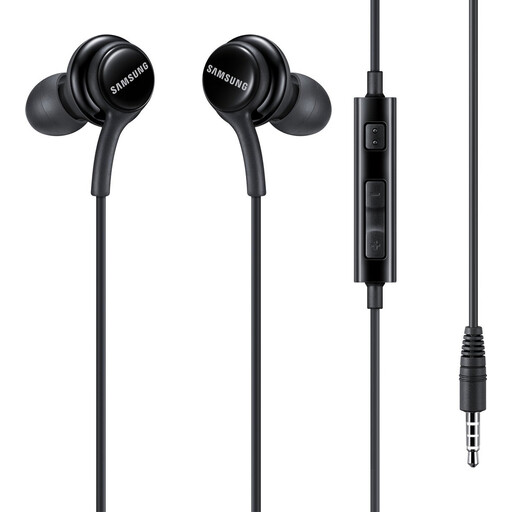
Samsung EO-IA500 wired in-ear headset, black
A wired headset with an aux connection; check that your playback device has a compatible audio output.
View at Joybuy
 No image available
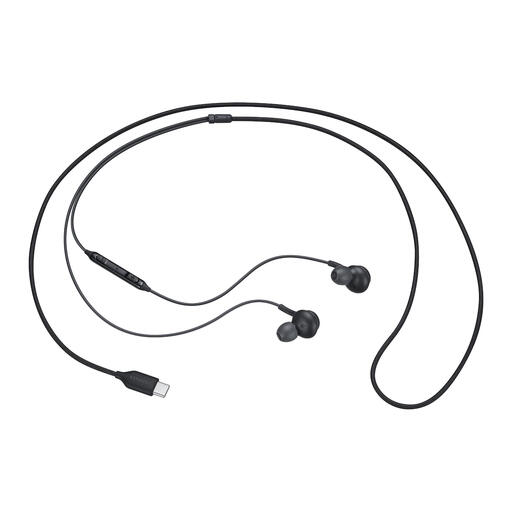
Samsung EO-IC100 USB-C, black
A wired headset for a playback device with a compatible USB-C connection.
View at Joybuy
 No image available
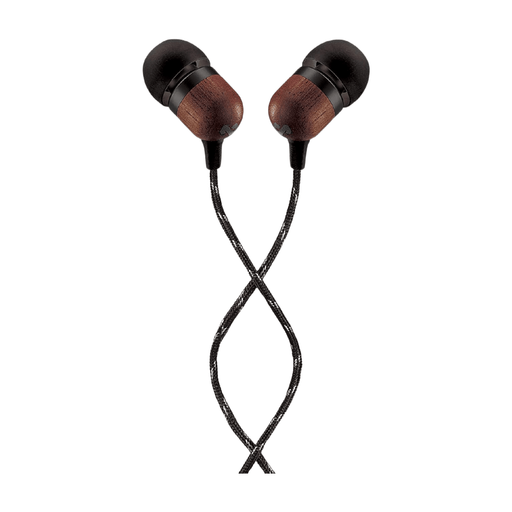
House of Marley Smile Jamaica USB-C, black
Wired USB-C earphones for a compatible playback device. The product name mentions a built-in microphone; check that the connection is compatible with your device.
View at Joybuy
Frequently asked questions about in-ear earphones at work
Does an in-ear monitor pick up radio broadcasts by itself?
No, you need a separate playback device. NPO describes live radio and catch-up listening via NPO Luister; then check whether you can connect that device to your chosen IEM.
How can you avoid continually turning up spoken radio?
First, try ear tips that create a good seal and listen at a comfortable, lower volume. The World Health Organization gives 80 dB for a maximum of 40 hours per week as an example of safe listening; this isn’t a product certification or a measurement of your earphones.
Can you always return an IEM bought online in the Netherlands after trying it out?
No, not always. Online purchases generally come with a statutory 14-day cooling-off period after delivery, but the ACM cites exceptions for hygiene products that have been removed from their packaging. Before buying, check whether this exception applies to the product in question and what conditions the seller lists.
Who should you report a faulty IEM to, and how long does the statutory guarantee last?
Report a fault to the seller. According to the Dutch Government, there’s no fixed statutory guarantee period in the Netherlands; the lifespan you can reasonably expect depends on factors including the product and the sales information. A manufacturer’s guarantee doesn’t replace your statutory rights.
Are ordinary IEMs compulsory hearing protection in Dutch workplaces?
Don’t assume that a consumer IEM is a substitute for any hearing protection required by your employer. Arboportaal outlines obligations for exposure to a daily dose above 80 dB(A), and additional obligations above 85 dB(A); a noisy office doesn’t automatically mean these limits have been reached.


