
Poetry listener on a noisy bus
You want to follow spoken passages without constantly turning up the volume. Start with a comfortable seal, then assess the sound.


Start by choosing in-ear earphones that create a comfortable seal and are compatible with your playback device’s connection. Then check whether you can follow a spoken-word recording comfortably at a sensible volume. A higher claimed noise-isolation figure or a sound described as neutral doesn’t guarantee this, and you may need to pause or remove an earphone to hear announcements.
You want to follow spoken passages without constantly turning up the volume. Start with a comfortable seal, then assess the sound.
You’ll be wearing your earphones for a while and want a choice of sizes or materials. A comfortable fit is a personal thing.
You want to listen to the reading but still be able to respond to announcements. Consider how easily you can pause your listening.
Start with a comfortable seal and check that the connection works with your player. Then listen to a familiar spoken-word recording at a sensible volume.
| What to consider | What to look for | Who is this most important for? |
|---|---|---|
| Following speech | Compare a familiar voice recording at a sensible volume, keeping the fit the same as you listen. | I want to follow the words comfortably without constantly turning up the volume. Around 28% of consumers prioritise being able to understand speech clearly. |
| Reducing bus noise | Check which ear-tip sizes are available and whether the earphones create a comfortable seal without pain or pressure. | If engine noise distracts me, I want a comfortable seal so I don’t have to turn the volume up. Around 22% of consumers prioritise reducing bus noise. |
| Comfort over long periods | Compare the included sizes and materials; don’t push the earphones further in to force a seal. | I want to listen comfortably on a long journey, even if another model claims greater noise isolation. Around 22% of consumers make wearing comfort their top priority when buying. |
| Hearing announcements | Consider whether you can easily pause or remove an earphone when an announcement is made. | I want to respond quickly to travel announcements, even if that means less isolation. Around 17% of consumers prioritise being able to hear announcements. |
| Connection and replacement | Check your player’s output, the plug on the version you’re considering and the connection type for any replacement cable. | If compatibility with my player or a suitable replacement part matters most, I check the exact connector type. Around 11% of consumers prioritise compatibility and maintenance. |
Manufacturers give noise-isolation figures for specific models. They don’t tell you how well the earphones will seal in your ears or how clearly a reading will sound on the bus.
Try different tips and assess how they feel with a familiar voice recording at a sensible volume. Bear in mind that you may need to pause to hear announcements.
The models discussed use different connectors, including MMCX, A2DC and two-pin. FiiO also warns that two-pin cables with the same nominal pin spacing won’t always fit.
Before buying a cable or adapter, check the full model, the connector on the earphone and the plug for your player.
You may need a cable or adapter with the correct connector type as a replacement.
ACM ConsuWijzer notes that there may be an exception to the cooling-off period for certain hygiene products once they’ve been removed from their packaging. Whether this exception applies to a specific product depends on the offer.
Before breaking any seal, check the terms for the product on offer and ask the seller for clarification if you’re unsure.
The ER2SE is a wired option to consider if you want to assess Etymotic’s description of its flat tuning and passive isolation.
The SE215 may suit you if you want to compare different types of ear tips and a detachable cable.
The IE 200 comes with a choice of tip materials and sizes to help you find a good fit.
The ATH-E40 is a wired monitor supplied with several sizes of silicone tips and a detachable cable.
The JD1 is a wired option for comparing tip choices, connections and controls.
This selection includes wired and wireless in-ear earphones for listening to spoken-word audio on the go. In particular, check that the connection works with your player and consider how you can pause your listening.
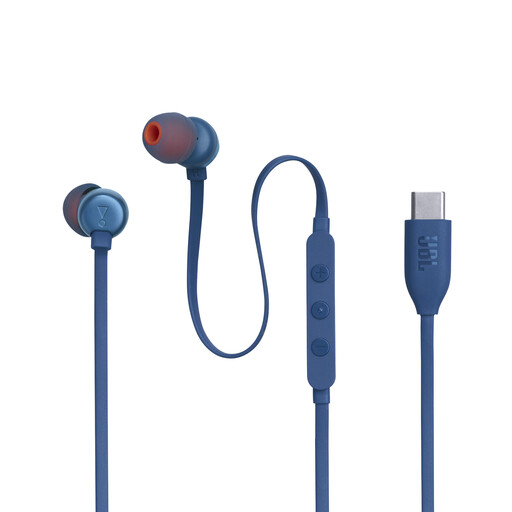 Image unavailable
A wired option for spoken-word audio if your player has a compatible USB-C connection.
The product description lists three-button controls, a microphone, three sizes of silicone ear tips and a Vocal EQ preset.
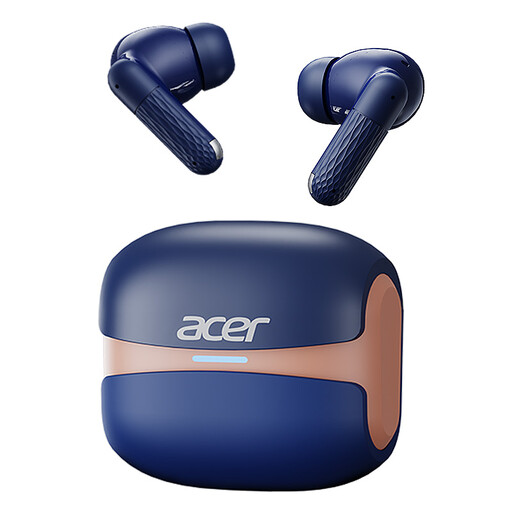 Image unavailable
A wireless option to consider if you want to use Bluetooth on your journey.
The title lists Bluetooth 5.4; the product description mentions active noise cancellation, a 9-band equaliser and touch controls.
 Image unavailable
A wireless option if your playback device supports Bluetooth.
The product description lists active noise cancellation and up to 6 hours of playback with this feature switched on.
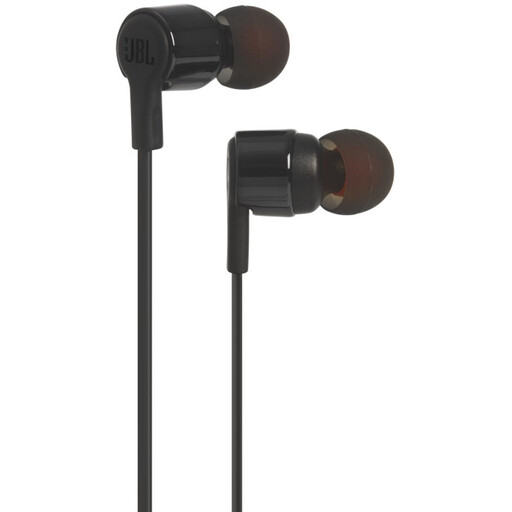 Image unavailable
A wired option if your player has a 3.5 mm connection.
The product description lists a microphone and several sizes of ear tips.
 Image unavailable
A wired option for listening on the go if your player has a compatible USB-C connection.
The product description mentions noise cancellation, in-line controls, a microphone, three sizes of ear tips and two sizes of stability wings.
No. The noise-isolation figures quoted are manufacturers’ claims for specific models. Check whether the tips create a comfortable seal and whether you can follow a familiar reading comfortably at a sensible volume.
Check that the plug fits your player and try the included tip sizes. According to their manufacturers, the IE 200 and ATH-E40 versions described have a 3.5 mm plug; check that this applies to the version you’re considering. Start at a low volume.
First, check the tip and sound opening for dirt. Shure points out that earwax or dust can block the sound opening on its earphones and reduce the volume. Follow the cleaning instructions for your model rather than turning up the volume straight away.
According to ACM ConsuWijzer, online product purchases generally come with a 14-day statutory cooling-off period from delivery. An exception may apply to certain hygiene products that have been removed from their packaging; before buying, check what applies to the product on offer. The seller is also your point of contact if a product used normally doesn’t meet what you could reasonably expect from it.