Start with ear tips that create a comfortable seal: a good fit can help you follow soft vocals without continually turning up the volume. Then choose between a flatter tuning for vocals and acoustic instruments or more emphasis on the bass, and check that the cable is compatible with your playback device. Manufacturers’ isolation figures don’t guarantee a particular level of noise reduction in your ears or at your seat; also consider whether you need to hear announcements while travelling.
Who are these earphones for?
Listener on a noisy bus journey
You want to follow soft vocals without continually turning up the volume. In-ear earphones that seal well could be a good choice, provided you can still hear important announcements when needed. The World Health Organization recommends well-fitting earphones for listening in noisy environments.
Folk listener who cares about sound
Pay more attention to the balance between vocals and acoustic instruments than to the number of drivers. Etymotic describes the ER2SE as having a flat tuning and the ER2XR as having more emphasis on the bass. These suit different preferences; one isn’t universally better than the other.
Listener on a long journey
Prioritise ear tips that remain comfortable and a connection that works with your playback device. The Consumers’ Association of the Netherlands includes wearing comfort and features, as well as sound quality, in its headphone and earphone tests.
What should you look for when choosing?
For folk on a coach, fit, your preferred sound and compatibility with your device all matter in different ways.
| What to consider |
What to look for |
Who is this most important for? |
| Seal against background noise |
Try the ear tips in your own ears and compare different fits. Etymotic lists 35–42 dB of passive attenuation for the ER2XR; Shure lists up to 37 dB for the SE215. These are manufacturer figures for specific models, not directly comparable measurements of your journey. |
If engine noise distracts me, I want to follow soft vocals without having to listen at ever-higher volumes. Around 36% of consumers give a good seal top priority. |
| Balance of vocals and instruments |
Compare the tuning with recordings you know well. Etymotic describes the ER2SE as having a flatter tuning and the ER2XR as having more emphasis on the bass; Sennheiser describes the IE 200 as having a balanced tuning. |
If vocals and acoustic instruments come first, I’d rather choose based on the sound balance than the number of drivers. Around 29% of consumers prioritise this balance. |
| Comfort throughout the journey |
Consider the sizes and materials of the ear tips, as well as the shape of the housing. Shure lists foam and flexible ear tips in three sizes for the SE215; check which options are included with each model. |
For a long journey, I want ear tips that stay comfortable, even when I don’t want to keep thinking about the fit. Around 21% of consumers choose comfort as their main consideration. |
| Connection and cable |
Check your device’s output and the connector on the earphones or replacement cable. Sennheiser lists a 3.5mm plug and MMCX cable for the IE 200; FiiO lists a detachable 0.78mm 2-pin cable for the FH11. |
If I need a wired connection or a replacement cable, I want to be sure the connectors are compatible. Around 14% of consumers give compatibility top priority. |
Buying pitfalls
-
Assuming an isolation figure guarantees noise reduction at your seat
The quoted level of isolation varies by model and also depends in practice on how well the ear tips seal in your ears.
Start by finding a comfortable fit, and don’t treat manufacturers’ figures as measurements taken on your coach journey.
-
Assuming more drivers automatically mean better sound for folk
The number or type of drivers alone doesn’t tell you how vocals and acoustic instruments will sound to you.
Compare the stated tuning with your own musical preferences rather than looking only at the number of drivers.
-
Choosing a replaceable cable without checking the connector
The models reviewed use different connections; MMCX and 0.78mm 2-pin connectors aren’t interchangeable.
Check both the output on your playback device and the cable connector for the exact version you’re considering.
-
Assuming opened in-ear earphones can always be returned
ACM ConsuWijzer says online purchases generally come with a cooling-off period, but there is also an exception for hygiene products that have been removed from their packaging. Whether it applies may depend on the specific packaging and purchase.
Before opening the packaging, read the seller’s returns information and check how it applies to your purchase.
Brands to consider
Etymotic
The ER2SE and ER2XR are wired models you can compare to hear the difference between a flatter tuning and more emphasis on the bass.
- Etymotic describes the ER2SE as having a flat tuning and the ER2XR as having more emphasis on the bass.
- Etymotic lists 35–42 dB of passive attenuation for the ER2XR. The actual seal also depends on the fit, and the quoted figure doesn’t guarantee a particular result on a bus journey.
Shure
The SE215 is a wired option if you want to compare different ear tips and a detachable cable.
- Shure lists foam and flexible ear tips in three sizes, along with a detachable MMCX cable, for the SE215.
- Shure lists up to 37 dB of isolation and deep bass. The upper figure doesn’t guarantee a specific level of noise reduction on a coach; the sound description comes from the manufacturer.
Sennheiser
The IE 200 is a wired option to consider if you want to compare a tuning described by Sennheiser as balanced and adjustable ear hooks.
- The Dutch product information lists a 3.5mm plug, an MMCX cable and different ear tips.
- The product information provided doesn’t give a directly comparable noise-reduction figure to set against the figures listed by Etymotic or Shure.
FiiO
The FH11 is a closed-back wired option with a detachable 2-pin cable and several types of ear tips included.
- FiiO describes the FH11 as having a dynamic driver and a balanced armature; the specifications list six pairs of ear tips in bass and balanced versions.
- Having two types of drivers doesn’t in itself prove that the FH11 reproduces folk better than a model with a single driver.
Joybuy product picks
This selection from Joybuy includes in-ear earphones for use on the go, with both wired USB-C models and wireless options. Check that the connection works with your device and that the features listed suit what you’re looking for. The product features shown don’t guarantee a particular sound or level of isolation on a coach journey.
 No image available
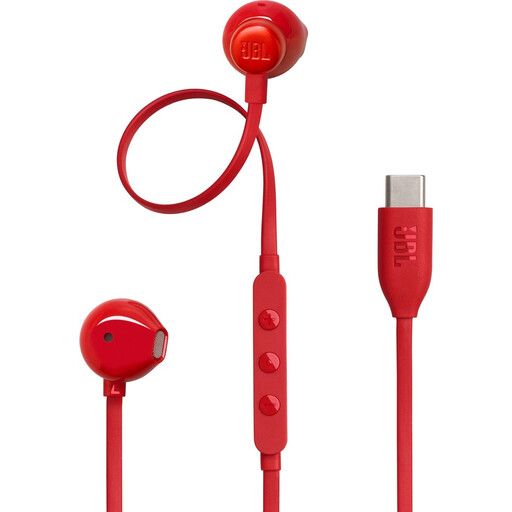
JBL Tune 305C USB-C earphones, red
A wired option if you want to listen via USB-C and bring vocals to the fore; the product description lists a Vocal EQ preset.
USB-C connection, in-line controls and built-in microphone, according to the product information. Requires a compatible USB-C device.
View at Joybuy
 No image available
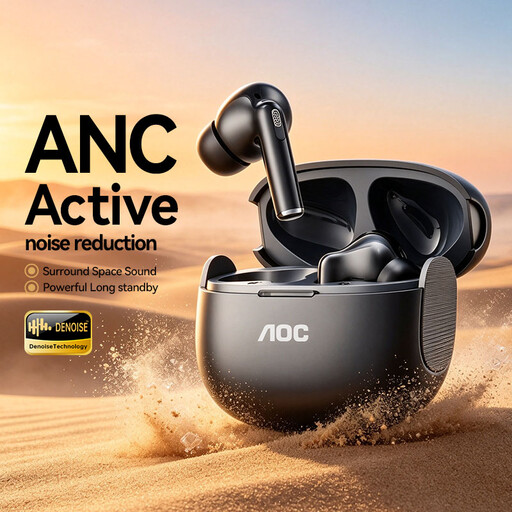
AOC ACT2615 wireless in-ear earphones
A wireless option if you want to use ANC on the go; the product description lists active noise cancellation.
The product information lists Bluetooth 6.0, touch controls and a digital charging case.
View at Joybuy
 No image available
Acer OHR548 wireless in-ear earphones
An option if you want to listen wirelessly and make calls too; the product description lists noise cancellation for calls.
The product information lists Bluetooth 5.4, touch controls and a USB-C charging case.
View at Joybuy
 No image available
Samsung Galaxy Buds4 Pro, black
A wireless option if you want ANC and the ability to adjust the sound; the product information lists active noise cancellation and an adjustable equaliser.
The description lists Bluetooth 6.1, a 9-band equaliser and 360 Audio.
View at Joybuy
 No image available
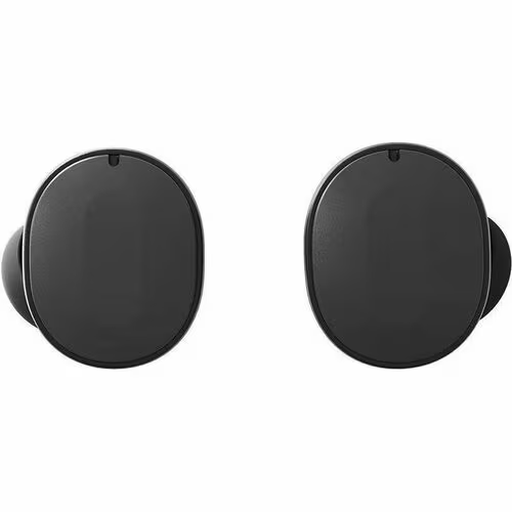
Fairphone Fairbuds Black
A wireless option if you’re looking for ANC and adjustable sound; the product description lists hybrid active noise cancellation and an app with an equaliser.
The product information lists Bluetooth 6.0 and multipoint connectivity. Check that the app works with your device.
View at Joybuy
Frequently asked questions
How can I listen on a long bus journey without continually turning up the volume?
Start with well-fitting ear tips and keep the volume low. The World Health Organization recommends, among other things, using no more than 60% of your device’s maximum volume and, if you can monitor your sound level, preferably staying below an average of 80 dB. Listening time and sound level both matter. This is health advice, not a legal volume limit or a guarantee that the same volume setting will sound equally loud on every device.
How should I care for wired in-ear earphones?
Follow the instructions for your specific model. For dirt in the nozzle of its earphones, Shure advises holding the nozzle facing down and not pushing the cleaning tool further inside, to avoid damaging the filter.
What if an earphone or cable develops a fault after purchase?
In the Netherlands, the retailer is responsible for the legal guarantee if a product breaks sooner than you could reasonably expect under normal use. ACM ConsuWijzer says there is no fixed time limit in the Netherlands; a manufacturer’s guarantee doesn’t replace this right.
Can I always return in-ear earphones bought online after trying them on?
No, don’t assume that you can. ACM ConsuWijzer says online purchases generally come with a 14-day cooling-off period after delivery, but also describes an exception for hygiene products that have been removed from their packaging. Before opening the packaging, check with the seller how the conditions apply to the specific packaging and purchase.


