
Vandaag of morgen in huis

Kwaliteit gegarandeerd

Welkomstaanbiedingen ontgrendelen: GRATIS bezorging | Tot 80% korting | Gratis 30 dagen JoyPlus-proefperiode
Download de app
Changing a wheel seems simple until a socket slips, a wheel nut gets damaged or the rim gets scratched. If you’re looking for an impact socket set for wheel nuts, you’ll often come across terms such as “professional”, “extra strong” and “universal”. Without specific details, these descriptions don’t tell you much.
For car owners, DIY enthusiasts and tyre fitters, there are three main pitfalls to avoid:
So a good choice starts with the drive size, material, socket sizes and intended use, rather than the number of accessories.
A 1/2 inch drive is common on many impact wrenches used for car tyres. Always check your tool before buying a set. A 3/8 inch socket won’t fit directly onto a 1/2 inch drive unless you use a suitable adapter. This extra connection can make the setup longer, which isn’t always practical in a confined wheel arch.
A 1/2 inch impact socket set makes most sense if you already use a 1/2 inch impact wrench or torque wrench. Also check that the sockets are designed for impact use. A standard chrome-plated hand socket isn’t automatically suitable for use with an electric or pneumatic impact tool.
Cr-Mo steel sockets are commonly used for impact sockets. Chromium-molybdenum steel is designed for applications involving repeated shock loads. Other sets are made from Cr-V steel. This material is common in hand tools, but the product description should clearly state what the sockets are designed for.
Look out for the following:
Don’t use an impact socket as an extension or chisel. Replace any socket that is visibly deformed, cracked or rounded.
For car wheel nut sockets, a protective plastic or non-metallic outer layer can be useful. Product titles may describe these as protective wheel sockets or “non-marring”. Check exactly what’s included: some sets come with a protective sleeve, while others only include a thin-wall metal socket.
The socket should fit without excessive play. Clean the socket and wheel nut before you start. Grit, sand and brake dust between the socket and nut can affect the fit. When fitting a wheel, tighten the wheel nuts by hand first, then use a torque wrench to apply the final torque according to the car manufacturer’s instructions. An impact wrench is mainly suited to loosening and to initially tightening with the correct setting.
The selection below is based on verifiable features such as drive size, included socket sizes, material, storage and intended use.
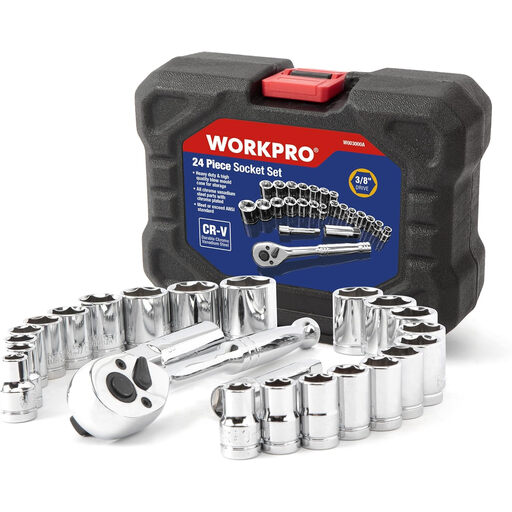
Why it suits this type of user: This compact set is suitable for general car maintenance and DIY jobs when you mainly need hand tools, rather than working exclusively on wheel nuts with an impact wrench.
The product description lists a compact set with metric sizes, a quick-release ratchet and a storage case. Check that it includes 17, 19 and 21 mm sockets for your needs, and don’t assume this set is suitable for impact use.
24-piece set, 3/8 inch ratchet, metric and SAE sizes, and a plastic storage case.
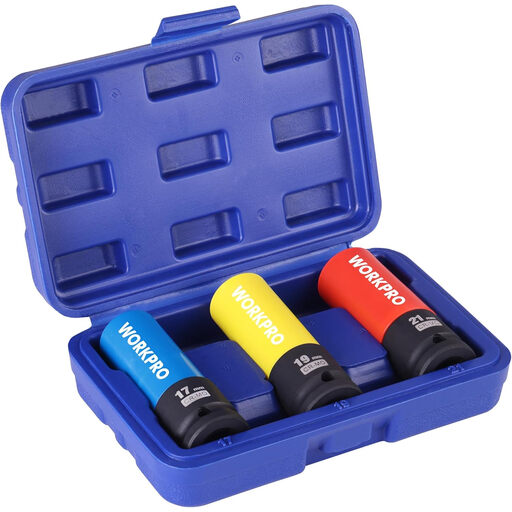
Why it suits this type of user: This set covers common wheel nut sizes and is aimed at motorists looking for a dedicated set for changing tyres.
The product information lists a 1/2 inch drive, three socket sizes and Cr-Mo steel. It also mentions a thin-wall, protective design; check that the protection is suitable for your wheels before use.
17, 19 and 21 mm sockets, 1/2 inch drive, Cr-Mo steel and a storage case, according to the product listing.
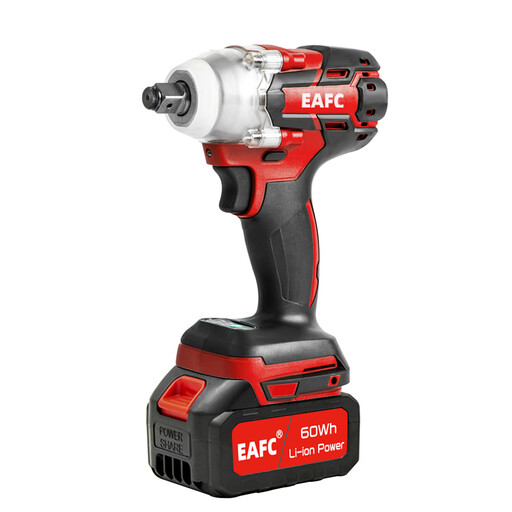
Why it suits this type of user: If you regularly work on vehicles without access to mains power, a cordless impact wrench can be practical. Check separately that you have the right 1/2 inch impact sockets.
The product listing mentions a cordless design, 21V battery, forward and reverse functions, and a square drive. The stated 200 N·m is a product specification; always check that it’s suitable for your tasks and wheel nuts.
Cordless operation, rechargeable battery included, LED lighting and adjustable speed, according to the product information.
We’ve put together a complete, up-to-date list of products that meet these strict selection criteria and the applicable European safety regulations.
Before you order, check:
A storage pouch or sturdy case stops sockets rolling loose in the boot. Keep them dry and wipe off any dirt after use. This makes it easier to spot wear and deformation.
17, 19 and 21 mm are common on many passenger cars, but this varies by make, model and wheel type. Check the size of your own wheel nuts before buying a socket set.
This isn’t recommended. Regular hand sockets aren’t necessarily designed to withstand repeated shock loads. Choose a socket that is clearly marked as suitable for use with impact wrenches.
Its lifespan depends on the load, storage, maintenance and fit. A socket used regularly under heavy loads or fitted to the wrong size will wear more quickly. Before each tyre change, check the sockets for cracks, deformation and rounded edges.
