
Vandaag of morgen in huis

Kwaliteit gegarandeerd

Welkomstaanbiedingen ontgrendelen: GRATIS bezorging | Tot 80% korting | Gratis 30 dagen JoyPlus-proefperiode
Download de app
An iced coffee in a can, a bottle of ready-to-drink coffee or a coffee concentrate might seem like a straightforward purchase at first glance. Yet products vary widely in flavour, sugar content, caffeine, packaging and preparation method. The right choice therefore depends on how you want to drink your coffee: on the go, at the office, while studying, or at home with ice and milk.
A product may be marketed as iced coffee, mocha or cappuccino iced coffee, but still consist mainly of water, sugar, milk powder and flavouring. So always check the ingredients list and the proportion of coffee extract or instant coffee. A strong coffee taste isn’t determined solely by the amount of coffee, but also by roasting, flavourings and sweeteners.
Always compare nutritional values per 100 ml and per full pack. A drink with 7 grams of sugar per 100 ml in a 240 ml pack contains around 17 grams of sugar. You won’t spot that difference if you only look at the front.
There are also options for those looking for iced coffee without sugar. For example, UCC MAJOR black states 0 grams of sugar and 0 kcal per 100 ml. McNulty Café Mcnulty Ice Americano Black states 0 grams of sugar per 190 ml pouch. Always check the current label on updated packaging, though.
On some products, the caffeine content is given per 100 ml, on others per can, or not at all in the summary. A drink with 52 mg of caffeine per 100 ml delivers around 125 mg of caffeine in a 240 ml pack. OD Gourmet Ice Coffee Cappuccino explicitly states this high caffeine content. The warning on the packaging is the key reference, especially for children, pregnant women, breastfeeding women and those sensitive to caffeine.
For a sweet iced coffee with milk, the mocha, caramel and cappuccino varieties are the obvious choices. Alongside sugar, also look at milk content and allergens. OD Gourmet Ice Coffee Mocha contains milk powder and states 5.5 grams of sugar per 100 ml. The cappuccino variant states 6.8 grams of sugar per 100 ml and 39 kcal per 100 ml.
If you’re after a lighter option, compare UCC Blend Coffee Cafe Ole Calorie Off. According to the product description, this drink contains 14 kcal per 100 ml and 0.4 grams of sugar per 100 ml. The drink uses a combination of sugar and sweetener; “low-calorie” doesn’t automatically mean sugar-free.
An iced coffee can of 185 to 300 ml is ready to drink and handy for coffee on the go. Pay attention to the size if you plan to use the drink with a lunch or while out and about. Larger multi-packs, such as 24 × 240 ml, are practical for home or an office stash, but they take up more space.
A concentrate works differently. Nescafé Espresso Concentrate Caramel comes in 500 ml and the product information states 16 servings. You can adjust the prepared drink with water, milk and ice. This makes it more flexible than a ready-to-drink cold coffee, but you’ll need a glass, fridge or ice cubes at home.
Check whether a product needs to be refrigerated after opening. UCC MAJOR black states that the pack must be refrigerated after opening and used within the period shown on the label. OD Gourmet Original advises refrigeration after opening and consumption within 24 hours. The exact shelf life of an unopened pack is printed on the packaging itself.
Also look out for:
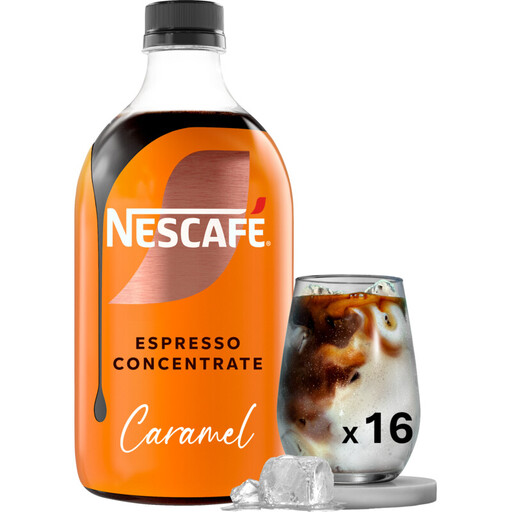
Why this fits the profile: The bottle states 16 servings, so you can make several glasses at home without opening a new can each time.
The nutritional value is given for the prepared drink: 57 kcal and 7.4 grams of sugar per 100 ml. This lets you estimate the portion in advance.
500 ml content, caramel flavour and flexible use with milk, water and ice.
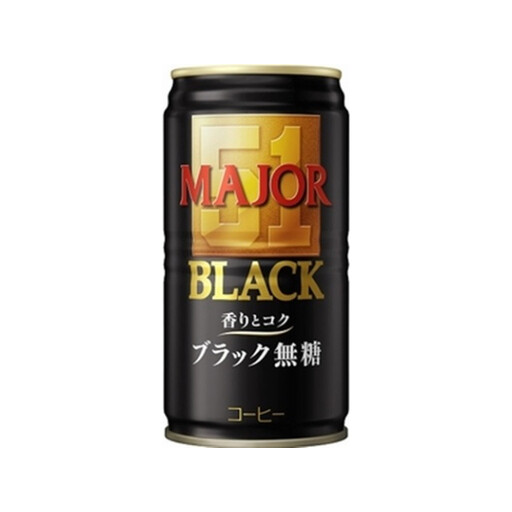
Why this fits the profile: Aimed at drinkers who want a black, unsweetened cold coffee without milk or syrup flavour.
The product information lists water and 8% coffee as ingredients and states 0 grams of sugar and 0 kcal per 100 ml.
Compact 185 ml can, black coffee style and no added sugar according to the product listing.
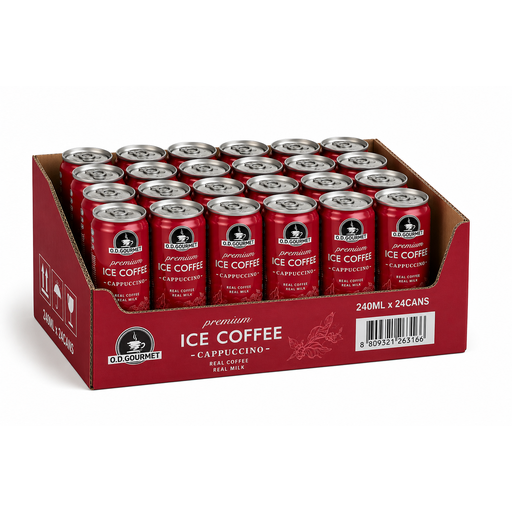
Why this fits the profile: A multi-pack of 24 packs suits a shared stash at home, in the office or in a study space.
The caffeine content is stated as 52 mg per 100 ml. Milk allergy and storage instructions are also provided.
240 ml per pack, cappuccino flavour, milk powder and a clear caffeine indication.
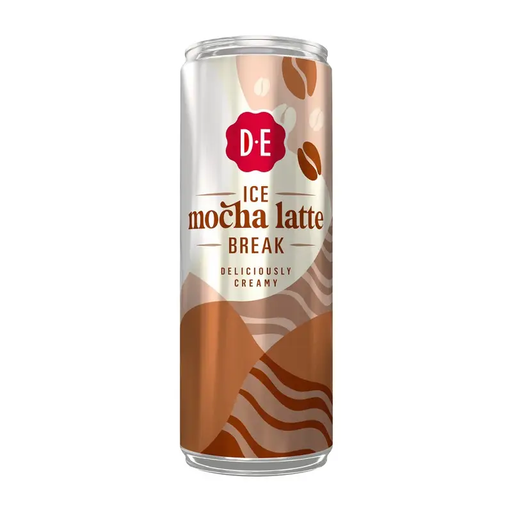
Why this fits the profile: This cold coffee combines milk with a gentle mocha flavour and is ready to drink straight from the pack.
The product information states 7.1 grams of sugar and 51 kcal per 100 ml, plus 75 mg of caffeine per can. That makes comparison easier.
250 ml, milk as a main ingredient and a separately stated caffeine content per can.
We’ve put together a full, up-to-date list of products that fully meet these strict selection criteria and current European safety regulations.
Choose a product that states 0 grams of sugar per 100 ml or per full pack. UCC MAJOR black and McNulty Café Mcnulty Ice Americano Black are examples with a sugar-free claim in the product information provided. Always check the current label, as recipes can change.
This varies by product. Follow the instructions on the packaging. Some products need to be refrigerated after opening and consumed within 24 hours or a few days. Store an unopened pack according to the stated storage conditions and best-before date.
That depends on the price per bottle, the number of servings and the amount you use per glass. Nescafé Espresso Concentrate Caramel states 16 servings from 500 ml. So compare the price per serving with a can and factor in whether you need milk, ice or other ingredients.
