
If you make iced frappé
You want to blend coffee and ice, so check whether the exact model can handle the amount of ice in your recipe.


For iced coffee frappé, a dedicated ice-crushing function matters more than a high wattage alone. Check how much ice the model is designed to process, as stated in the manual. A jug blender is more practical for making several glasses, while a rechargeable model can be a good option if you’re making just one drink and don’t want to rely on a plug socket while blending.
You want to blend coffee and ice, so check whether the exact model can handle the amount of ice in your recipe.
You usually make one drink, so look for a compact cup, one that’s easy to take with you, or a model you can use without a plug socket.
You don’t want to blend each drink separately, so compare the jug’s usable capacity.
First, check that the exact model and its manual allow for the amount of ice you want to use. Then choose a capacity and design to suit the number of glasses, the space available and how easy it is to clean.
| What to consider | What should you check? | Who is this important for? |
|---|---|---|
| Crushing ice | Check both the ice-crushing function and the amount of ice allowed in the manual for the exact model. | If I’m making iced frappé, I want to know whether my recipe is within the model’s limits. Around 33% of consumers say ice crushing is their main concern when buying. |
| Portability and space | Check the dimensions, cup capacity, power supply and included accessories. | If cupboard space is limited, or I don’t want to use a plug socket while blending, a compact or rechargeable model can be a deciding factor. Around 27% of consumers prioritise portability. |
| Number of glasses | Compare the usable capacity with the amount your recipe makes; remember that a jug’s total capacity may differ from its usable capacity. | If I want to make several frappés at once, I check whether the usable capacity is large enough. Around 20% of consumers consider the number of glasses per blending cycle a key factor. |
| Cleaning | Check which parts are removable and dishwasher-safe, and follow the manual. | If I want to wash up quickly after a drink, I check how to clean the cup and blades. Around 20% of consumers prioritise easy cleaning. |
The Nutribullet Flex NBP013BL is specified for crushing small amounts of ice. That doesn’t mean it’s suitable for a large serving packed with ice.
Follow the guidance in the manual for the exact model. If you’re making larger servings, check that both the ice-crushing function and the capacity are suitable.
The Philips HR3020/20 has a 2-litre jug, with a usable capacity of 1.5 litres. So the total capacity doesn’t tell you how much you can safely blend in one go.
Compare the usable capacity with your recipe and observe the maximum fill line. Consumentenbond advises against filling the blender above the stated maximum capacity.
According to the Dutch government (Rijksoverheid), the retailer must offer a solution if there’s a problem with a product. An extended warranty is mainly worth considering if its terms provide something beyond your existing rights.
Before deciding, read what the additional cover includes and compare its terms with your rights as a customer of the retailer.
The PowerBlend 1 JB1000WH is a jug blender to consider if you want to crush ice and may be making several glasses.
The Flex NBP013BL is a rechargeable option for a smaller portion that you can take with you in its cup.
The Blend Up Essential BL1EHB combines a compact blender with travel bottles and a cleaning programme.
The 5000 Series HR3020/20 may be a good choice if you want to make several drinks using its larger usable jug capacity.
The VitaPower Serie 2 MMB2111S is a compact blender with a drinking cup, suited to making one serving at a time.
These Joybuy models are jug blenders with product information that mentions ice crushing. Check the manual for the exact model to find out how much ice you can use, and compare the capacity with the number of glasses you want to make.
 No image available
A jug blender to consider if you want to crush ice and make several servings in one go.
The product information lists a 1.5-litre jug, two speeds, a pulse function and Ice Crush.
 No image available
The stated jug capacity may suit making more than one drink; check the usable capacity against your recipe.
The product information lists a 1.4 l glass jug, five speed settings and an ice-crushing function.
 No image available
The stated jug capacity is worth considering if you want to make several servings in one go; check that the usable capacity suits your recipe.
The product information lists a 2.1-litre jug, 14 manual speeds, a pulse function and an ice crusher.
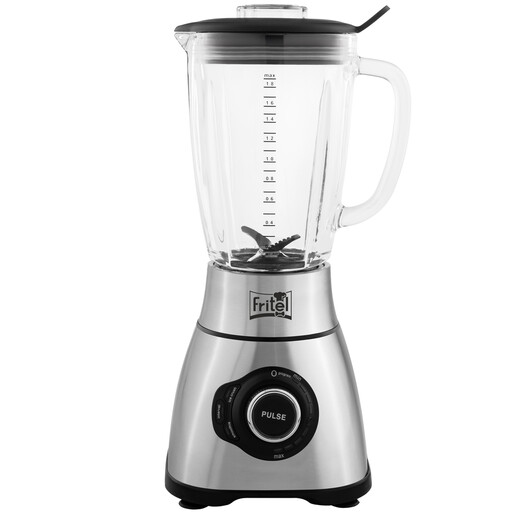 No image available
An option to compare if you’re looking for an ice-crush programme and a larger jug; check the manual for the permitted amount of ice.
The product name lists a 1.8 l glass jug, 1800 W, nine speeds and an Ice Crush function. The product information also mentions a removable blade set.
 No image available
The compact capacity may suit a smaller batch; 0.6 litres may not be enough to make several glasses in one go.
The product name lists 0.6 litres and 350 W. The product information mentions ice crushing and two speeds.
No. Don’t judge whether a blender can handle ice by its wattage alone. Consumentenbond points out that not every blender can crush ice cubes, so check the function and the limits for the exact model.
Check the manual to see which removable parts are dishwasher-safe. Consumentenbond advises wiping the housing with a damp cloth and drying the jug thoroughly.
Let very hot coffee cool first, and check the manual for your model. Consumentenbond advises letting boiling liquids cool and not exceeding the stated maximum fill level.
According to the Dutch government (Rijksoverheid), the retailer must offer a solution if there’s a problem with a product. Read the terms of any extended warranty and check whether it gives you extra rights beyond those you already have.
The NVWA outlines safety requirements for electrical appliances. The product requirements that apply depend, among other things, on the scope of the relevant legislation. Don’t assume that a blender meets every requirement simply because of its type.