Want to make ice as soon as you get home? Compare both the time until the first batch is ready and how much ice you can make while serving drinks; a daily output figure doesn’t tell you how much ice will be ready straight away. If you’re serving several glasses, the water tank and ice basket matter too, while a covered ice cube tray may be enough if you can freeze ice in advance. For an electric machine, also check the actual space it needs, how to maintain it and whether the specific model on offer carries the CE marking.
Who is an ice maker right for?
Making fruit drinks on a whim
You want to get started as soon as you’re back from the market, but don’t have any ice in the freezer. First, check how long the first cycle takes, then consider how much more ice you’ll need. CASO Design and DOMO provide information on the first cycle for specific models.
Serving drinks to a group
You’re pouring fruit drinks one after another and want to balance ice production, refilling and storage. DOMO and Princess provide information on tank capacity and ice storage for specific models.
Cooking with limited worktop space
You want to position and maintain the appliance without it taking over your workspace. Measure the available space and check that you can easily access the water tank and ice basket; the dimensions of the exact model are important.
What should you look for when choosing?
If you’re making fruit drinks after a trip to the market, your choice comes down to being able to serve them quickly, having enough ice for several glasses and finding a machine that fits into your kitchen routine.
| What to consider |
What should you check? |
Who is this important for? |
| Ice quickly for your first drink |
Compare the stated time to the first cycle for each specific model. CASO Design says the IceChef Compact takes 6–13 minutes; DOMO says the DO9220IB takes 8 minutes. These are manufacturer claims, not performance measurements from your kitchen. |
If I want to pour my first glass as soon as I get home, the first batch matters more than the daily total. Around 36% of consumers prioritise having that first batch quickly. |
| Ice for several glasses |
Consider tank capacity, ice storage and production per cycle separately. For model 01.283069.01.001, Princess lists a 2,8-litre tank and space for 800 grams of ice; CASO Design lists a 2,2-litre tank for the IceMaster Pro. |
If you’re serving several fruit drinks in a row, you’ll want to know when you’ll need to refill the tank or transfer the ice. Around 29% of consumers prioritise having enough ice for successive glasses. |
| Space and noise |
Measure the available worktop space and check the external dimensions of the exact model. Only compare noise levels if the measurements were taken under the same conditions. |
If my worktop is already full, I want to know in advance whether I can position and use the appliance without blocking my workspace. Around 21% of consumers prioritise a suitable fit and an acceptable noise level. |
| Cleaning and use |
Check that the basket and drain are easy to access, and follow the cleaning instructions for your model. Use drinking water, and wash any fruit you prepare according to advice from the Netherlands Nutrition Centre. |
If you use the appliance regularly, you’ll want to clean the ice basket and drain without any fuss. Around 14% of consumers prioritise easy maintenance. |
Avoid common buying mistakes
-
Mistaking daily output for ice that’s ready to use straight away
The stated daily output is different from the time it takes to make the first ice cubes and the amount ready at the end of each cycle.
Decide how many glasses you want to fill straight away, then compare the first cycle, production while serving and storage capacity separately.
Successive cycles take time, and ice you want to use later needs space in the freezer.
-
Choosing an ice cube tray or machine without considering when you’ll use it
With a tray, you need to freeze the ice in advance; an electric machine makes ice once you fill it with water and switch it on.
If you have ice ready before your trip to the market and enough freezer space, first consider whether a covered tray will meet your needs.
A tray needs preparation and freezer space; a machine takes up worktop space and needs maintenance.
-
Assuming dimensions are the same across different versions
The manufacturer’s page lists conflicting dimensions and weights for the CASO IceChef Compact. The manufacturer’s dimensions for the DOMO DO9220IB also differ from those listed by a Dutch retailer.
Before buying, check the model number, external dimensions and the clearance needed with the retailer.
Brands and models to compare
CASO Design
The IceChef Compact and IceMaster Pro are different models with different tank capacities. Compare them based on how much water you want to add while making ice.
- According to CASO Design, the IceChef Compact has a 1-litre tank, two ice sizes and a self-cleaning function. The manufacturer lists a 2,2-litre tank for the IceMaster Pro.
- CASO Design lists conflicting dimensions and weights on the IceChef Compact page. Check the version and dimensions before ordering.
DOMO
The DO9220IB is worth considering if you’re prepared to wait for the first ice cubes and want a removable basket and a drain.
- DOMO lists a 1,5-litre tank, 8 minutes until the first ice and a maximum stated output of 12 kilograms per 24 hours for the DO9220IB.
- DOMO’s stated external dimensions for the DO9220IB differ from those listed by a Dutch retailer. Check the dimensions of the version on offer.
Princess
The 283069, model 01.283069.01.001, is worth comparing if tank capacity and ice storage are important to you.
- Princess lists a 2,8-litre tank, space for 800 grams of ice and a maximum of 9 ice cubes every 10 minutes for this model.
- When buying, check that the electric appliance on offer carries the required CE marking; the Princess product page does not confirm that the specific model on offer has this marking.
Joybuy products
These Joybuy options are electric ice makers for home use. Compare the stated first batch and tank capacity with your needs, check how much worktop space you’ll need, and look for the CE marking on the specific model on offer.
 No image available
Salora ICE12B ice maker
An option to compare if you want a first batch quickly and the choice of two ice sizes.
The product title states 9 ice cubes in 6–9 minutes, two ice sizes, a 1,3-litre reservoir and a stated output of 12 kg per 24 hours.
Joybuy
 No image available
Ice maker, 120 W, 2,2-litre tank
An option to compare if a larger tank and a self-cleaning function are important to you.
The product title states 120 W, 9 ice cubes in 9 minutes, a stated output of 12 kg per 24 hours and a self-cleaning function.
Joybuy
 No image available
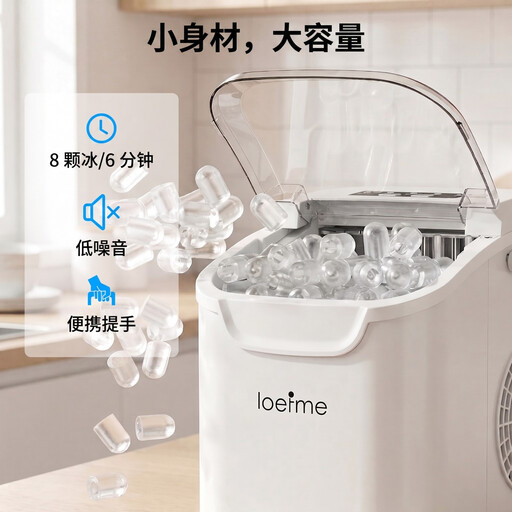
LOEFME 12/Q ice maker
An option to compare if you want two ice sizes and a smaller tank suits your needs.
The product title states a 0,8-litre tank, two ice sizes (S and L), a self-cleaning function, 9 ice cubes every 6–13 minutes and a stated output of 12 kg per 24 hours. You may need to refill it when making ice for longer periods.
Joybuy
 No image available
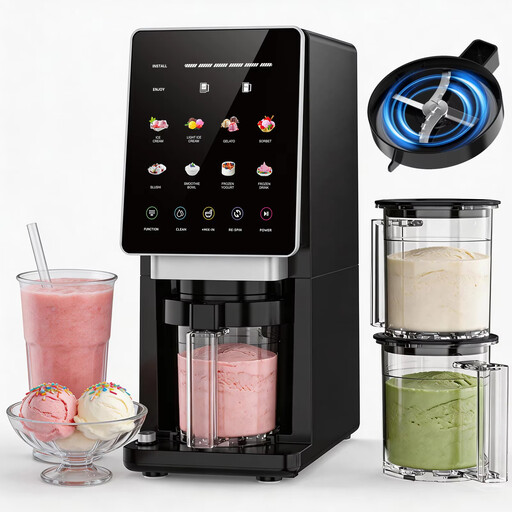
Teendow KF-2501U1 ice maker
An option to compare if the listed programmes and controls matter more to you than a stated time for the first cycle.
The product title lists 8 preset programmes, self-cleaning, mixing and restart functions, and a worktop design.
Joybuy
 No image available
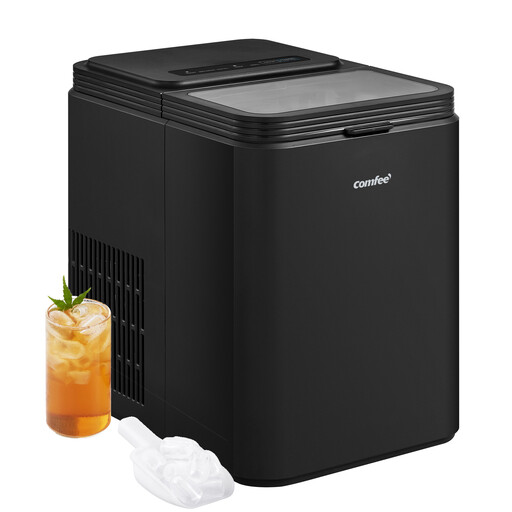
COMFEE' RCI12BL1EU(E) ice maker
An option to compare if you want a stated first batch, two ice sizes and a self-cleaning function.
The product title states 8 ice cubes in 6 minutes, a 1,3-litre tank, a stated output of 12 kg per 24 hours, an ice scoop and a basket. The instructions recommend leaving at least 15 cm of clearance all around for ventilation.
Joybuy
Frequently asked questions
How should you choose between the time to the first ice cubes and the daily capacity?
If you want a drink as soon as you get home, first check the stated time for the first cycle and how many ice cubes it produces. For several glasses, production while serving, the tank and the ice storage matter too; a maximum figure per 24 hours doesn’t mean that amount will be ready straight away.
Can you put fruit or juice in the water tank?
Don’t assume you can: the instructions for the DOMO DO9220IB say to fill it with water. IKEA says you can use fruit or mint in its covered ice cube tray. Wash any fruit you prepare according to advice from the Netherlands Nutrition Centre.
Can you store ice cubes for later?
Transfer any ice you want to use later to the freezer; don’t rely on the ice basket to keep it frozen. DOMO’s instructions for the DO9200IB say to transfer a large batch to a freezer bag. Check the manual for your own model.
What rules apply when buying an electric ice maker in the Netherlands?
According to the Netherlands Food and Consumer Product Safety Authority, an electrical product placed on the market in the Netherlands must carry the required CE marking; independent product testing is not routinely required. When buying at a distance, the Dutch government says you’ll often have 14 days to change your mind. You’re also entitled to a product that works properly; if there’s a problem, the retailer must provide a solution.
Is Dutch tap water suitable for ice cubes?
The Dutch government describes drinking water in the Netherlands as clean and safe to drink. Use drinking water for ice cubes and follow the water and cleaning instructions for your chosen appliance.


