What should you look for when choosing?
Start with your serving schedule: work out whether you need a single batch ready for a busy period or can top up the ice gradually. Then consider the worktop space available and your cleaning routine.
| What to consider |
What should you check? |
Who should consider this? |
| Ice for a busy serving period |
Compare the storage capacity with the amount you want to serve at once. For product 09300121, Maxima lists a storage capacity of 1 kg and a production rate of 15 kg per 24 hours separately. |
If I’m pouring several glasses at once, I want to know how much ice will be ready straight away. Around 36% of consumers prioritise having enough ice for a busy serving period. |
| First batch ready in time |
Compare both the time and the quantity for the first cycle. Princess states that the 283069 can make up to 9 ice cubes in 10 minutes; DOMO states that the DO9292IB makes 8 ice cubes in 9 minutes. These are separate manufacturer specifications. |
If I can prepare before the workshop starts, I want to know when the first ice cubes will be ready. Around 29% of consumers prioritise having the first batch ready in time. |
| Cleaning after use |
Check that the basket and drain are accessible, and follow the instructions for the exact model. For the KB12, H.Koenig describes steps including washing the basket and rinsing it with drinking water. |
If I want to put the machine away after a workshop, I want to know which parts I need to empty and clean. Around 21% of consumers prioritise easy maintenance. |
| Worktop space |
Measure the spot where you plan to use the appliance. CASO Design lists the IceChef Compact as measuring 220 × 265 × 280 mm, with a 1-litre tank; the IceChef Pro measures 250 × 325 × 370 mm and has a 2.2-litre tank. |
If I also need to fit ingredients and glasses on the worktop, I want to know in advance how much space the machine will take up. Around 14% of consumers prioritise having enough worktop space. |
Ice makers at Joybuy
These Joybuy products are countertop models for preparing ice for drinks. Compare the stated first-cycle output, tank capacity and production rate with your serving schedule and available worktop space.
 No image available
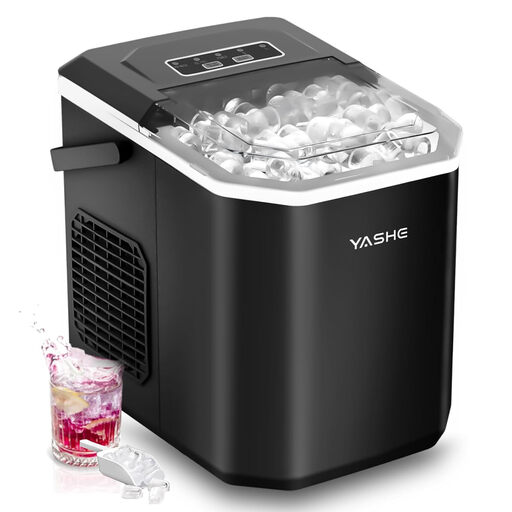
YASHE HZB-12/G ice maker
The stated first batch may suit you if you start making ice before a serving round.
The product name states 9 ice cubes in 6 minutes, two ice sizes, up to 26 lb of ice per day, a self-cleaning function and a carry handle.
View at Joybuy
 No image available
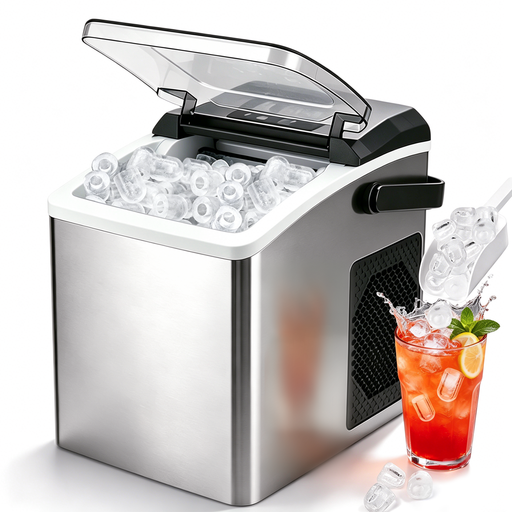
Ice maker with carry handle, 2 ice sizes
The stated first cycle may be useful if you want to make a small batch in advance.
The product name states 9 ice cubes in 6 minutes, a 1.3-litre tank and a stated production rate of 12 kg per 24 hours.
View at Joybuy
 No image available
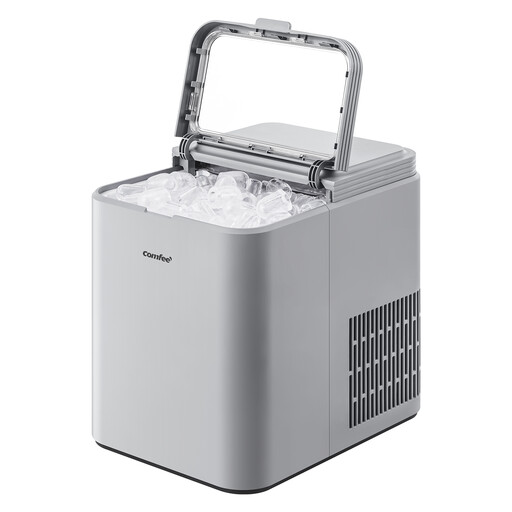
Comfee' RCI12GY1EU(E) ice maker
Tank capacity may be a factor if you’re preparing ice in several batches.
The product name states 8 ice cubes in 6 minutes, a production rate of 12 kg per 24 hours, a 1.3-litre water tank and a self-cleaning function.
View at Joybuy
 No image available
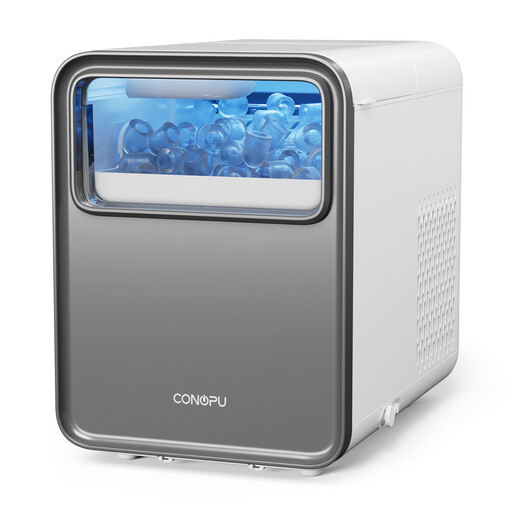
CONOPU ice maker
The stated cycle may suit you if you want to prepare a first batch in advance.
The product name states 9 ice cubes in 6 minutes, two ice sizes, a self-cleaning function and a stated daily production of 26.5 lbs.
View at Joybuy
 No image available
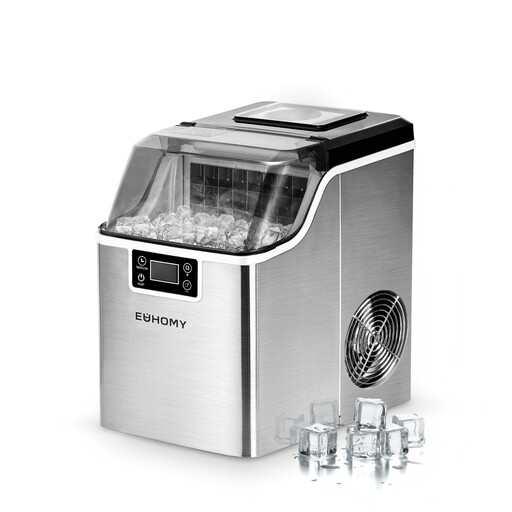
Euhomy ice maker
The larger stated tank may be useful if you want to add water less often while preparing.
The product name states 24 ice cubes in 13 minutes, a 3.2-litre tank, a self-cleaning function and a production rate of 24 kg per 24 hours. The ice cubes come out connected to each other and need to be separated with the scoop before use.
View at Joybuy
Frequently asked questions
How should I plan ice for the first serving round?
Work out how many glasses will be filled at once and compare that with the amount of ice available, not just the stated production per 24 hours. If necessary, start making ice before the serving round; the first cycle will only produce a limited batch.
Is a self-cleaning programme enough after the workshop?
Don’t assume that it is. Follow the instructions for the exact model when emptying and cleaning parts that come into contact with water or ice. For the KB12, H.Koenig’s instructions include washing the basket and rinsing it with drinking water.
Who can help if an ice maker I bought privately breaks down too soon?
For a consumer purchase in the Netherlands, the seller is responsible under the statutory guarantee if the product doesn’t perform as you could reasonably expect when used normally. ACM ConsuWijzer says the seller must then resolve the problem free of charge, for example by repairing or replacing the product, or refunding you. For a business purchase, the applicable terms must be considered separately.
What Dutch rules apply to the appliance and to drinks I sell?
CE marking is mandatory for electrical products covered by the relevant rules; check the specification of the appliance you want to buy. The NVWA states that food safety rules also apply when a private individual occasionally sells food or drinks to consumers. In that case, the NVWA refers to a food safety plan or hygiene code based on HACCP.


