
Spontaneous fruit drink maker
You regularly make a cold drink for yourself and don’t want to freeze ice in advance. The time it takes to make the first batch matters more to you than the maximum daily output.


For a single fruit drink, a countertop ice maker is worth considering if you often want to make ice on the spur of the moment and have space to set up and clean the machine. If you only make a drink now and then and can plan ahead, ice cube trays in your existing freezer may be more practical. When comparing machines, check the time and quantity for the first cycle, the dimensions and the cleaning instructions. Don’t assume the machine will keep the ice frozen for long.
You regularly make a cold drink for yourself and don’t want to freeze ice in advance. The time it takes to make the first batch matters more to you than the maximum daily output.
You want ice on demand, but you also need somewhere to put the machine and a place to store it after use. Its dimensions and how easy it is to move are worth considering.
You don’t make fruit drinks often and want to weigh up whether a machine is convenient enough to justify buying one when you already have a freezer. Cleaning and storage are part of that decision too.
Suitable if: you make one drink now and then, already have a freezer and can freeze ice in advance.
Trade-off: you won’t need an extra appliance on your worktop, but you will need to plan ahead.
Suitable if: you regularly want ice without having to freeze a supply first and have room for the machine.
Trade-off: you’ll need to clean the machine and check how to store the ice after each cycle.
Suitable if: you want to make several drinks in a row or being able to choose the ice size matters to you.
Trade-off: a larger tank or extra controls won’t necessarily make a single glass of ice any faster.
| What to consider | What should you look for? | Who is this important to? |
|---|---|---|
| First batch | Compare the number of cubes and the stated time for one cycle. Treat manufacturers’ figures as claims, not independent measurements. | If I want to make a drink straight away, I look at the first batch rather than just the daily output. Around 36% of consumers put the first batch first. |
| Worktop space | Measure the available space and compare it with the exact model’s width, depth and height. | In a small kitchen, I want to know whether the machine will fit and can be put away after use. Around 29% of consumers say available space is the most important factor. |
| Cleaning and storage | Check the cleaning instructions for the specific model, access to the tank and ice basket, and how to use or freeze the ice after it is made. | If I’m making ice for a drink, I want to be able to clean the parts that come into contact with it properly and know how to handle the ice. Around 21% of consumers put maintenance and use first. |
| Occasional use | Think about how often you need ice and whether ice cube trays in your existing freezer will do the job. | If I only make a fruit drink now and then, I want to know whether the convenience of a machine is worth more than planning ahead with ice cube trays. Around 14% of consumers say occasional use is the most important factor. |
Salora lists the ICE12B’s capacity as up to 12 kg per day, while the manufacturer states that the first cycle produces 8 ice cubes in 6–9 minutes. So the daily capacity doesn’t tell you how many cubes will be ready straight away.
For a single glass, compare the stated number of cubes and the time for the first cycle.
KitchenBrothers’ manual for models KB692, KB719 and KB756 warns that ice will melt if it is left in the machine for too long.
Use the ice straight away or follow the storage instructions for your chosen model. Check that you have freezer space if you want to store a supply.
You may need to transfer the ice to the freezer promptly.
Ariete describes the 0643/01 as a machine for ice cream, sorbet and frozen yoghurt, with a bowl that needs to be pre-chilled—not as a machine for making loose ice cubes for drinks.
Check the full model code and what the machine is designed for before treating a search result as an alternative.
The ICE12B is a compact countertop model for anyone who mainly wants to make a first batch quickly. Salora lists a 1.3-litre water tank.
According to KitchenBrothers, the KB1000692 has a 2-litre water tank, making it an option to consider if you make several drinks in a row.
Princess offers models with different stated features. The 283069 and 283089 are separate models, so compare them individually.
The Ice Volcano 2G is a countertop model that Klarstein describes as having a larger tank and controls for making repeated batches.
This selection of Joybuy products features countertop ice makers for anyone who wants to make ice for drinks. Compare the first cycle, the available worktop space and the stated tank capacity with your own needs.
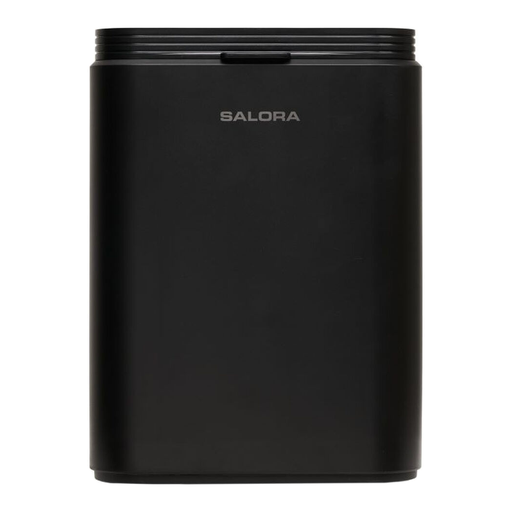 Image unavailable
For anyone who wants to make a first batch of ice without freezing a supply in advance; Salora states that it makes 8 cubes in 6–9 minutes.
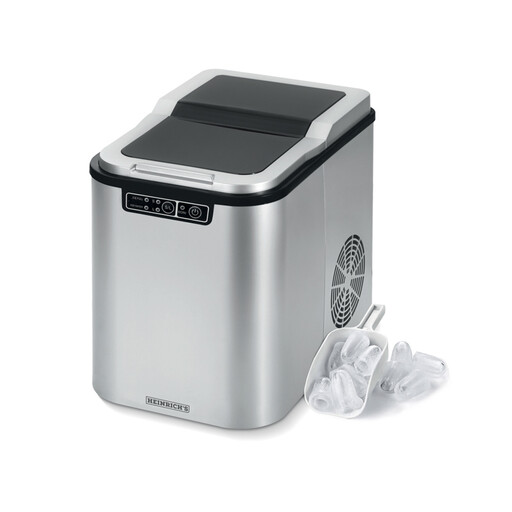 Image unavailable
For anyone who wants to make a first batch and is considering the choice of ice sizes and tank capacity.
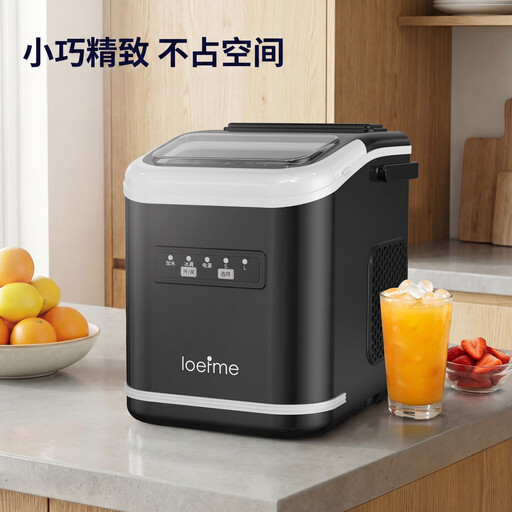 Image unavailable
For anyone who wants to compare the stated first cycle and two ice sizes for making a drink.
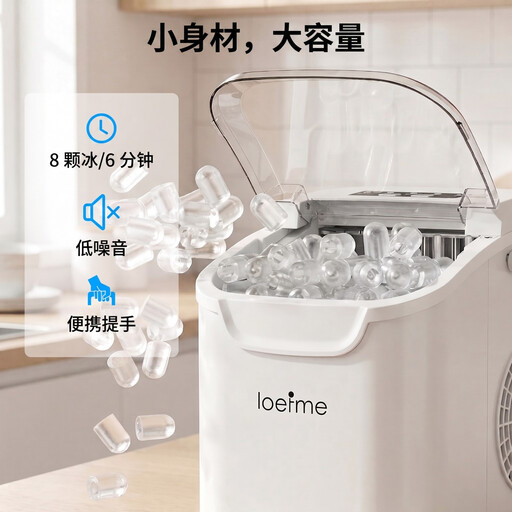 Image unavailable
For anyone who wants to compare a smaller stated tank capacity and have a choice of ice sizes.
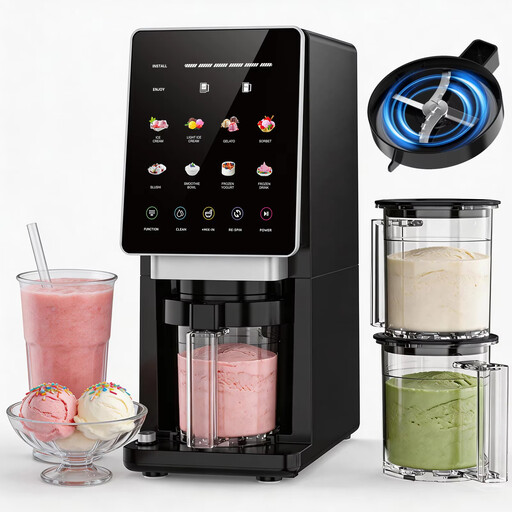 Image unavailable
For anyone who wants to compare the listed programmes and features with how they plan to make ice.
No, that figure describes output over 24 hours, not the first batch. For one drink, it’s better to compare the stated number of cubes and the time per cycle, then decide how much ice you want in your glass.
Don’t assume that a countertop model works like a freezer. The KitchenBrothers manual for the KB692, KB719 and KB756 says that ice melts if it is left in the machine for too long. Use it straight away or follow the manual for your particular model.
Follow the cleaning instructions for your model’s tank and ice basket. The Voedingscentrum also recommends washing your hands and using clean utensils; wash raw fruit under running water.
The Low Voltage Directive 2014/35/EU applies to mains-powered appliances with a rated AC voltage between 50 and 1000 V. Parts intended to come into contact with water or ice for consumption are covered by the applicable food contact materials rules, including Regulation (EC) 1935/2004. Business.gov.nl stresses that a CE mark is not an independent quality mark. Check the information for the exact model.
For consumer purchases in the Netherlands, the seller is responsible for the statutory guarantee if the product doesn’t perform as you could reasonably expect under normal use, as ACM ConsuWijzer explains. Online distance purchases also usually come with a 14-day cooling-off period, subject to the applicable conditions; the Dutch Government explains these rules.