What should you look for when buying?
First compare the space available and the amount of ice made per cycle. Then consider refilling, storage capacity and cleaning.
| What to consider |
What to look for when buying |
Who should consider this? |
| Worktop space |
Check the dimensions of the exact model and take the placement instructions and ventilation clearance into account. |
If your kitchen has little worktop space, you’ll want to know whether the machine can be positioned ready to use. Around 40% of consumers put available worktop space first. |
| First batch of ice |
Compare the number of cubes per cycle and the stated cycle time for the same model. DOMO lists different times for the DO1108IB in the description and specifications table. |
If you need ice shortly before serving, you’ll mainly want to know when the first usable batch will be ready. Around 30% of consumers make speed their top priority. |
| Cleaning in a shared kitchen |
Check whether the parts are removable, whether there’s a drain opening and which cleaning steps are specified in the manual. |
If several housemates use the appliance, clear arrangements for emptying and cleaning can help. Around 20% of consumers give maintenance top priority. |
| Ice for several drinks |
Compare the tank capacity, storage capacity and cubes per cycle separately; daily output isn’t the same as the amount ready to use straight away. |
If housemates are making several fruit coolers one after another, it matters how much ice is ready before the basket needs emptying. Around 10% of consumers prioritise group use. |
Ice makers at Joybuy
These Joybuy products are countertop ice makers. When comparing them for fruit coolers, consider the space available, ice per cycle, tank capacity and cleaning features.
 No image available
Salora ICE12B ice maker
The two stated ice cube sizes and the dimensions may be useful to consider if you want to fit the machine on a small worktop.
The product information lists 8 ice cubes in 6–9 minutes, a 1,3-litre water tank and dimensions of 213,4 × 295,9 × 270 mm.
View at Joybuy
 No image available
120 W ice maker, 2,2-litre tank
The stated amount per cycle and tank capacity are worth considering if you want to make ice for several drinks in a row.
The product name lists 120 W, 9 ice cubes in 9 minutes and a 2,2-litre tank. The product information mentions two sizes and a self-cleaning function.
View at Joybuy
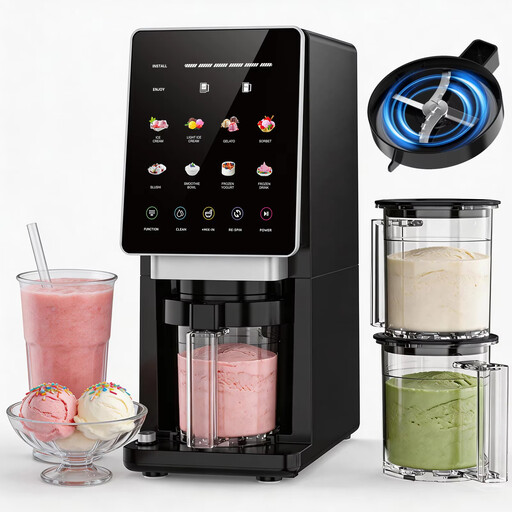 No image available
Teendow KF-2501U1 ice maker
The stated programmes and self-cleaning function are worth considering if you’re looking for these features in a countertop appliance.
The product name lists 8 presets; the product information mentions a self-cleaning function.
View at Joybuy
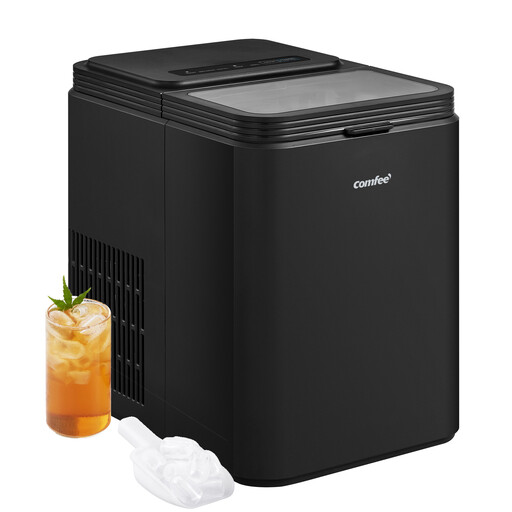 No image available
COMFEE' RCI12BL1EU(E) ice maker
The stated ice output per cycle and tank capacity are useful to compare if you need a first batch shortly before serving.
The product name lists 8 ice cubes in 6 minutes and a 1,3-litre tank. The product information mentions two ice sizes, a removable basket, a scoop and a self-cleaning function.
View at Joybuy
 No image available
CONOPU ice maker, 1,5-litre tank
The stated cycle time and drain opening are worth considering if you want to compare both the first batch and cleaning.
The product name lists 9 ice cubes in 6 minutes. The product information mentions a 1,5-litre tank, two ice sizes, a self-cleaning programme and a drain opening.
View at Joybuy
Frequently asked questions
Do I need spring water for fruit coolers?
Spring water isn’t usually necessary: according to the Netherlands Nutrition Centre, Dutch tap water meets strict standards. However, follow the water and cleaning instructions for your chosen appliance; DOMO mentions spring water in the product description for the DO9220IB.
What should I consider when positioning and cleaning the machine?
Position the machine on a flat, stable surface and keep the ventilation openings clear, following the manual for the DOMO DO9253IB. For cleaning, follow the instructions for your own model; a drain opening or automatic programme doesn’t make those steps unnecessary.
What can I do if my ice maker isn’t working properly?
In the Netherlands, you’re entitled to a product that works properly. According to the Dutch government, if there’s a problem, contact the seller; there’s no set legal guarantee period of two years for every product. If you have additional cover, check what extra rights it actually gives you.
What product rules apply to items sold in the Netherlands?
According to the Netherlands Food and Consumer Product Safety Authority, CE marking is compulsory for electrical consumer products. Parts intended to come into contact with food are also covered by the relevant food contact materials regulations. A CE statement or brand description alone doesn’t prove that an individual model has been checked against all applicable requirements.
Can I return an appliance bought online?
For online purchases from a business, you usually have a 14-day cooling-off period, according to the Dutch government. The rules may differ if you buy from a private seller, so check the terms of the specific seller.


