
Cook with limited worktop space
You want ice for your drinks, but first you need to check whether the appliance will fit on your worktop with enough clearance for use. PRIMO and DOMO publish the dimensions of the PR407IB and DO9220IB.


When choosing an ice maker for a small kitchen, don’t just check the appliance’s dimensions. Make sure you also know how much clearance it needs while in use. PRIMO lists the PR407IB as measuring 31,5 × 22,5 × 30 cm, with a 1,6-litre tank; DOMO lists the DO9220IB as measuring 32 × 22,5 × 29,8 cm, with a 1,5-litre tank. Also compare the time and quantity for the first cycle with the tank capacity: the stated daily output doesn’t tell you how much ice will be ready straight away.
You want ice for your drinks, but first you need to check whether the appliance will fit on your worktop with enough clearance for use. PRIMO and DOMO publish the dimensions of the PR407IB and DO9220IB.
You want to know when the first ice cubes will be ready, not just how much ice a manufacturer says the machine can make in a day. PRIMO, DOMO and Princess list cycle times for specific models.
You make several rounds of drinks, so you’ll want to consider refilling the tank, emptying the basket and storing the ice. For the DO9200IB, DOMO recommends transferring made ice cubes from the basket to a freezer bag for storage.
| What to consider | What to look for when buying | Who is this important to? |
|---|---|---|
| Fitting it on a small worktop | Measure the width, depth and height, and check the placement and ventilation instructions for the exact model. | If I have limited worktop space, I want to know whether the appliance will fit there with the clearance it needs. For shoppers who prioritise where it will go, this accounts for around 40% of the main considerations. |
| Waiting for the first ice cubes | Compare both the stated number of cubes and the time per cycle; these are manufacturer specifications. | If I’m making a cold drink on the spur of the moment, what matters most is when the first batch will be ready. Around 30% of shoppers give the first cycle top priority. |
| Making several drinks and refilling | Compare the tank capacity and basket separately, and think about where you’ll store the ice you’ve made. | When I’m making several drinks in a row, I consider refilling and temporarily storing the ice. For shoppers mainly looking to prepare several rounds, this accounts for around 20%. |
| Cleaning and parts | Read the model’s care instructions and check whether relevant parts are available. | If I use the appliance regularly, I want to know what cleaning it involves and whether parts can be replaced. Around 10% of shoppers prioritise maintenance and parts. |
The stated amount of ice per 24 hours and the first production cycle describe different things. If you want a drink soon, the first cycle tells you more than the daily capacity.
Compare the stated number of ice cubes per cycle and the time until the first cubes are ready separately from the daily output.
The appliance’s dimensions don’t automatically tell you how much room you’ll need for ventilation, opening it and removing the basket.
Measure the space available and check the manual and placement instructions for the exact model before buying.
According to the Dutch government, the Netherlands has no fixed statutory warranty period. If a product is faulty, the retailer is your point of contact. What you can expect from a product depends partly on the product itself and the circumstances.
Keep your proof of purchase and contact the retailer if there’s a fault.
The PR407IB is a countertop model with published dimensions, a 1,6-litre tank and a removable basket.
According to DOMO, the DO9220IB has a 1,5-litre tank, published dimensions and separately listed parts.
The Princess 283098 is worth comparing if a carrying handle, different ice sizes and a self-cleaning function are important to you.
These Joybuy products are ice makers designed for use on a worktop. Compare their stated cycle time, ice sizes and tank capacity with the way you plan to use them. Also check that materials which come into contact with water or ice comply with Regulation (EC) No 1935/2004.
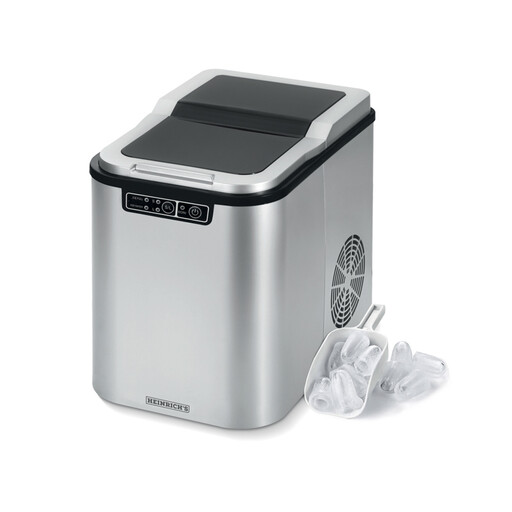 No image available
An option to compare if you want different ice sizes and would like to plan for the first batch.
The product name states that it makes 9 ice cubes in 9 minutes, has a 2,2-litre tank and a self-cleaning function, and can produce a stated 12 kg per 24 hours.
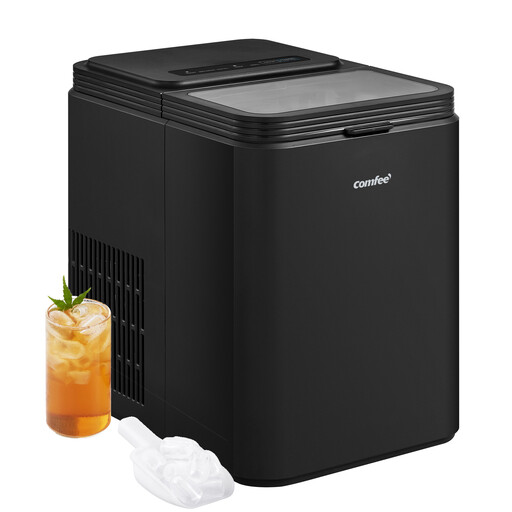
 No image available
An option to compare if you want to choose between two ice sizes and can plan ahead for the first cubes.
The product name states that it makes 9 ice cubes every 6–13 minutes, has a 0,8-litre tank and an automatic cleaning function, and can produce a stated 12 kg per 24 hours.
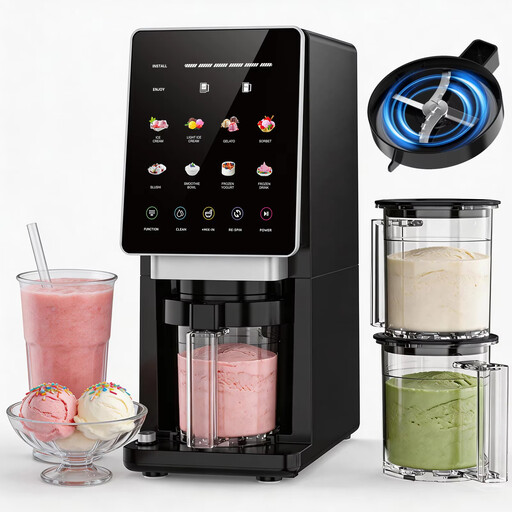 No image available
A countertop model to compare if the listed programmes and cleaning features are important to you.
The product name lists eight pre-programmed programmes, a self-cleaning function, and mixing and restart functions.
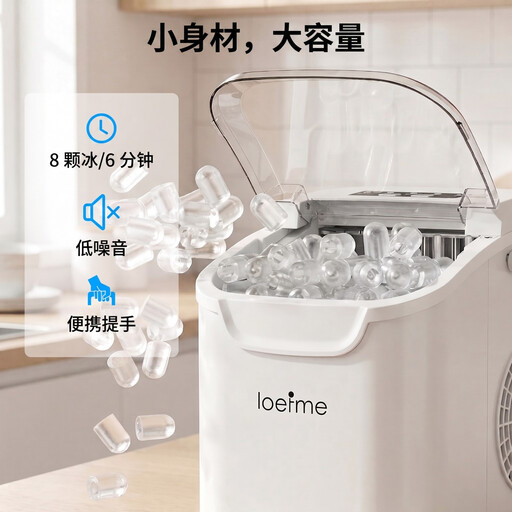
 No image available
An option to compare if you want a first batch of ice and a choice of two sizes.
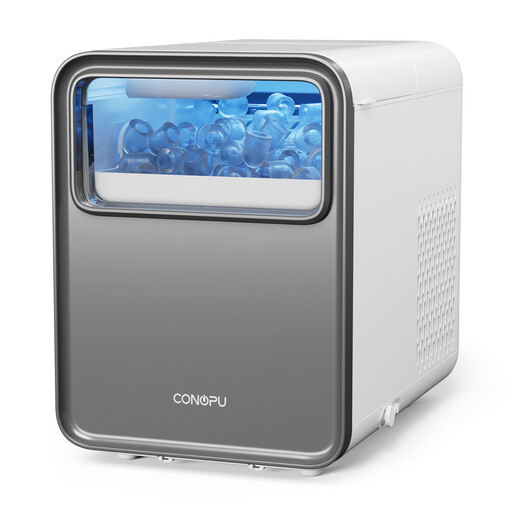
The product name states that it makes 8 ice cubes in 6 minutes, has a 1,3-litre tank and a self-cleaning function, and comes with a basket and scoop. It can produce a stated 12 kg per 24 hours.
 No image available
An option to compare if you want to make bullet ice in two sizes.
The product name states that it makes 9 ice cubes in 6 minutes and has two ice sizes, a basket and a scoop. The stated daily output is 26.5 Lbs.
No. Compare its width, depth and height with the space available, and also read the placement and ventilation instructions for the exact model. The appliance dimensions don’t automatically show how much clearance you’ll need when using it.
Don’t assume the basket is designed for freezer storage. For the DO9200IB, DOMO recommends transferring made ice cubes from the basket to a freezer bag. Check the instructions for the model you choose.
Not necessarily: according to the Netherlands Nutrition Centre, Dutch tap water meets strict standards, and spring or mineral water is generally no healthier. Do follow your appliance’s water instructions, though; general information about tap water is no reason to use water if you know it’s unsafe.
If a product is faulty, contact the retailer about your statutory rights in the Netherlands. According to the Dutch government, there is no fixed statutory two-year period; what you could reasonably expect from the product depends on the product and the circumstances.
According to the European Commission, materials that come into contact with food must comply with Regulation (EC) No 1935/2004 when placed on the EU market; the Commission also includes food-processing machinery in this category. Check the information for the specific model: a product listing alone doesn’t prove that the model complies with the rules.