
If you want to prepare ice in advance
Worth considering if you want to serve several drinks at once during a party and have room to freeze portions. DOMO explains how to transfer the ice cubes from the basket to a freezer bag for the DO9200IB.


Choose a countertop ice maker based on how much ice you’ll need during the party and whether you have room to freeze portions in advance. A stated output per 24 hours isn’t the same as having a supply ready to use straight away, so also compare the first cycle, collection basket, refilling, dimensions and cleaning requirements.
Worth considering if you want to serve several drinks at once during a party and have room to freeze portions. DOMO explains how to transfer the ice cubes from the basket to a freezer bag for the DO9200IB.
A good fit for a household that would rather make smaller batches than build up a large supply. If so, check the first cycle, collection basket and how to refill the water.
If you’ll only use the appliance occasionally, its external dimensions, cleaning and storage are important considerations. Also check whether it’s easy to drain the machine after use.
Choose this if: you have limited freezer space and use ice in batches.
Bear in mind: having a first batch doesn’t mean a large supply will be ready straight away.
Choose this if: you want to serve several drinks at once and have room in the freezer.
Bear in mind: you’ll need to make the ice in advance and store the portions in the freezer.
Choose this if: you want to put the machine away between parties and be able to drain it easily.
Bear in mind: a self-cleaning function doesn’t replace the model’s maintenance instructions.
Compare output, collection capacity and ease of use separately: a daily output figure doesn’t tell you how much ice is available at any one time.
| What to consider | What should you check? | Who should give this more weight? |
|---|---|---|
| Supply at the busiest time | Check the collection capacity and whether you can freeze portions in advance. | If I want to serve several drinks at once, I want to know in advance how much ice will be ready to use. Around 36% of consumers prioritise having a supply ready for the busiest time. |
| Making more batches | Compare the time to the first cycle and the number of cubes per cycle; check the conditions attached to the manufacturer’s figures. | If I want to make more ice during the party, I look at when the first batch will be ready. Around 28% of consumers put continuous ice-making at the top of their list. |
| Worktop space and storage | Measure the available space and compare it with the exact model’s external dimensions. | If I want to put the machine away after a party, its dimensions need to suit my kitchen and storage space. Around 18% of consumers put a suitable size first. |
| Cleaning and draining | Read the model-specific instructions and check how to drain and clean the reservoir, basket and outlet. | If I only use the appliance occasionally, I want to know how much maintenance it needs afterwards. Around 18% of consumers give cleaning and draining top priority. |
Daily output and the amount of ice you can take from the collection basket at any one time are two different things.
Check them separately. If you need a lot of ice at a particular time, make portions in advance and store them in the freezer if that works for you.
A stated time doesn’t tell you on its own how much ice there is in a batch. Figures given for different models aren’t necessarily directly comparable.
Use the first-cycle time to work out when you can start serving. To find out how much ice will be available, also check the collection capacity and the information about the cubes.
A self-cleaning function doesn’t automatically remove the need to follow the model-specific instructions for draining, cleaning and storage.
Before buying, read the manual for the exact model and check how to care for the reservoir, basket and outlet.
After use, you’ll still need time to drain the water and clean the parts according to the manual.
The DO9220IB is a useful comparison for making batches during a party; the DO9200IB is also described as suitable for ice you freeze in advance.
The 1.6-litre black version is worth comparing if you’re looking for a self-cleaning function.
Model 283069 is worth considering if you want to take the stated sizes and collection capacity into account.
The IceMaster Pro is a useful comparison for a 2.2-litre tank and adjustable cube sizes.
These Joybuy products are designed for making batches of ice during a small party; check the details that matter for your worktop and how you plan to use each model.
 No image available
The stated time to make the first batch can help you plan when to make more ice during the party; treat it as a product claim.
The product name states 8 cubes in 6–9 minutes, a maximum of 12 kg per 24 hours, two cube sizes and a 1.3-litre water tank.
 No image available
The stated tank capacity and self-cleaning function are worth considering if you’ll be making batches during a party and planning to clean the machine afterwards.
The product name states 9 cubes in 9 minutes, a maximum of 12 kg per 24 hours, two cube sizes and a 2.2-litre tank. A self-cleaning function is also listed.
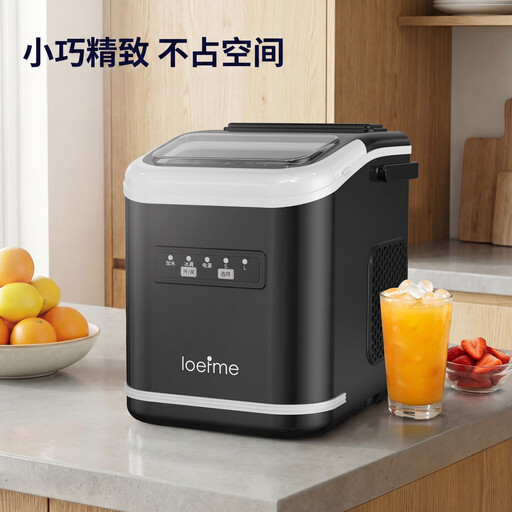 No image available
The stated cycle time and tank capacity are relevant if you want to make more batches during the party; the manufacturer’s figures aren’t a comparative real-world test.
The product name states 9 cubes every 6–13 minutes, a maximum of 12 kg per 24 hours, two sizes (S/L), a 1.4-litre tank and automatic cleaning.
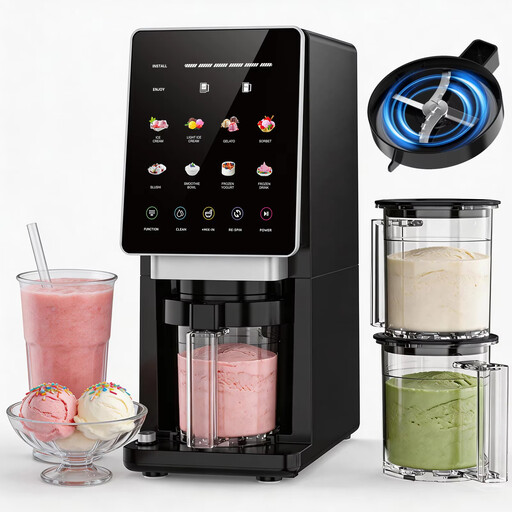 No image available
This countertop model may be worth comparing if you’re interested in the stated programmes and cleaning functions; before buying, check what each function means for the way you’ll use it.
The product name states 8 preset programmes, a self-cleaning function, and mixing and restart functions.
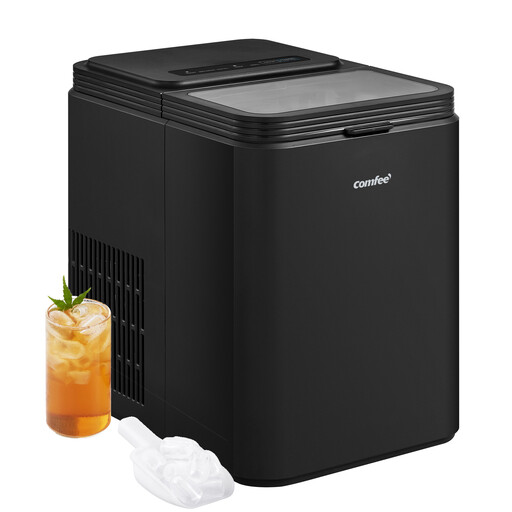 No image available
The stated cycle time and basket are worth considering if you want to make batches during a party.
The product name states 8 cubes in 6 minutes, a maximum of 12 kg per 24 hours, a 1.3-litre tank, two cube sizes and a self-cleaning function. An ice scoop and basket are also listed as included in the product name.
No. That figure is the stated output over 24 hours, not the amount in the basket at any one time. Also check the collection capacity: for example, Princess lists an 800-gram collection reservoir for model 283069.
Make batches in good time and store them in the freezer. For the DO9200IB, DOMO recommends transferring the cubes from the basket to a freezer bag.
Follow the manual for the exact model when draining, cleaning and storing it. A self-cleaning function, such as the one KitchenBrothers lists for the version reviewed, isn’t a reason to skip those instructions.
No. ACM ConsuWijzer explains that the statutory guarantee depends on what you could reasonably expect from the product under normal use. This is separate from whether the manufacturer also offers its own guarantee.
Products intended to come into contact with food must meet the relevant Dutch and European requirements. The Netherlands Food and Consumer Product Safety Authority and the European Commission explain these obligations; they don’t, by themselves, prove that a particular model complies.