
Small household with limited worktop space
Makes a few fruity drinks at a time and wants to know whether the machine will fit and how quickly the first batch will be ready.


For a few glasses, the first batch of ice, the machine’s dimensions and how easy it is to empty and clean matter more than its stated daily output alone. Salora says the ICE12B makes eight cubes in 6–9 minutes; DOMO states that the DO9253IB makes nine cubes in nine minutes. These are manufacturer specifications, not results from a like-for-like test. If you need several batches, the ice basket and any freezer space you have also matter.
Makes a few fruity drinks at a time and wants to know whether the machine will fit and how quickly the first batch will be ready.
Pours drinks one after another, so compares the first cycle, how often the water needs topping up and the basket capacity.
Wants to build up a supply of ice in advance and has space to freeze batches separately.
Cycle times and capacities are as stated by the manufacturers. Check the details for the exact model, and consider the ice basket, water reservoir and available space separately.
| What to consider | What should you check? | Who is this important for? |
|---|---|---|
| First batch | The number of cubes per cycle and the stated time for the exact model. | If I only need ice when I’m making a few fruity drinks, I want to know when the first batch will be ready. Around 36% of consumers prioritise the first batch. |
| Size on the worktop | Width, depth and height, plus the clearance specified in the instruction manual. | In a small kitchen, I measure the space before choosing an appliance. Around 29% of consumers focus mainly on the worktop space available. |
| Several batches | Compare the water reservoir capacity with the ice basket capacity; they are different things. | When I’m pouring several glasses in a row, I want to know how much ice is ready at once and whether I’ll need to top up the water or empty the basket. Around 21% of consumers prioritise making consecutive batches. |
| Cleaning | Check how easy it is to reach the parts, how to drain the appliance and which cleaning instructions apply. | I want to be able to reach and clean the parts that come into contact with ice and water easily. Around 14% of consumers prioritise easy maintenance. |
The stated output per 24 hours is not the same as the amount of ice the collection basket holds at once. Salora states that the ICE12B has an ice basket capacity of 0,45 kg.
For the number of glasses you plan to make, compare the first cycle and the ice basket capacity separately. DOMO suggests freezing batches in advance as a way to have ice ready.
Making several batches takes extra time; storing ice in advance also requires freezer space.
The water reservoir and ice basket serve different purposes. Princess states that model 283069 has a capacity of 2,8 litres and an ice collection capacity of 800 grams.
Check both figures and their units for the same model before deciding how much ice you can collect at once.
The stated speed or noise characteristics of different models are not results from a comparison under identical conditions.
Use the figures to assess whether a model suits the way you’ll use it, but don’t use them to declare a winner.
The ICE12B is a compact option for smaller batches, with a 1,3-litre water reservoir and a 0,45 kg ice basket.
The DO9253IB has a 1,8-litre water reservoir and is designed for making batches one after another.
Model KB1000719 has a 2-litre reservoir and two adjustable ice sizes.
Model 283069 offers three adjustable ice sizes.
The IceMaster Pro has two ice sizes and a 2,2-litre water reservoir.
The Joybuy products below are countertop ice makers. Compare the stated batch size, reservoir and any cleaning features for each model.
 No image available
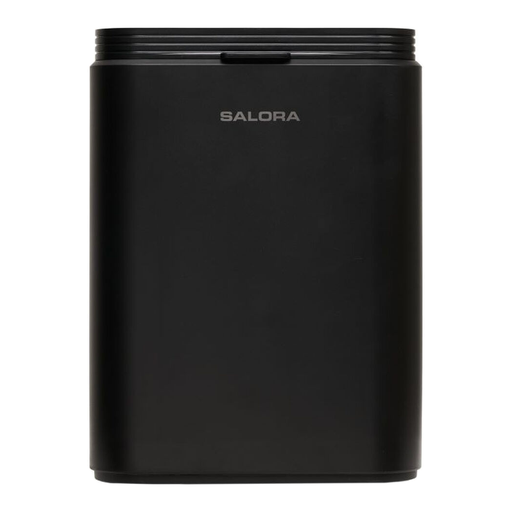
For a few glasses, the first batch is a useful point of comparison: Salora states that it makes eight cubes in 6–9 minutes.
Water reservoir: 1,3 litres. Two ice sizes. Ice basket: 0,45 kg. Dimensions: 213,4 × 295,9 × 270 mm. The stated daily output is not the amount held in the basket at once.
 No image available
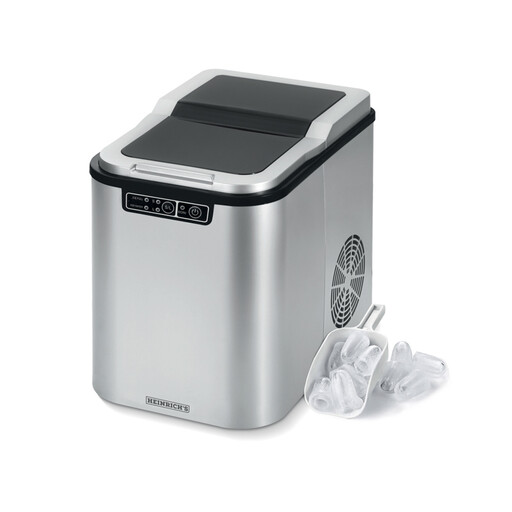
The stated larger batch per cycle could be useful if you’re making several glasses one after another.
The product name states 120 W, two ice sizes, nine cubes in nine minutes and a 2,2-litre reservoir. A self-cleaning function is also mentioned.
 No image available
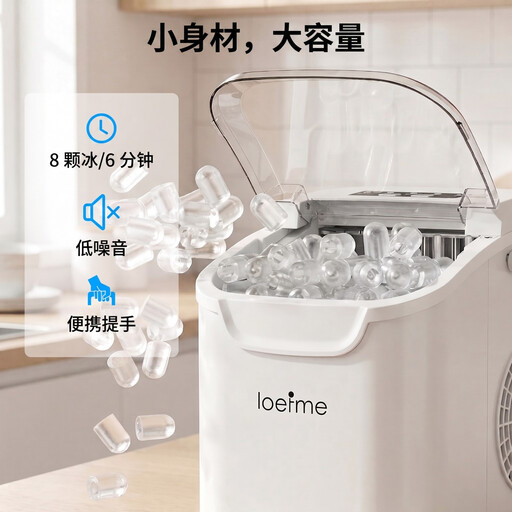
The stated cycle time and two ice sizes give you specific features to weigh up against the batch size you need.
The product name states nine cubes per cycle in 6–13 minutes, two sizes (S/L), a 0,8-litre reservoir and automatic cleaning. The stated output is 12 kg per 24 hours.
 No image available
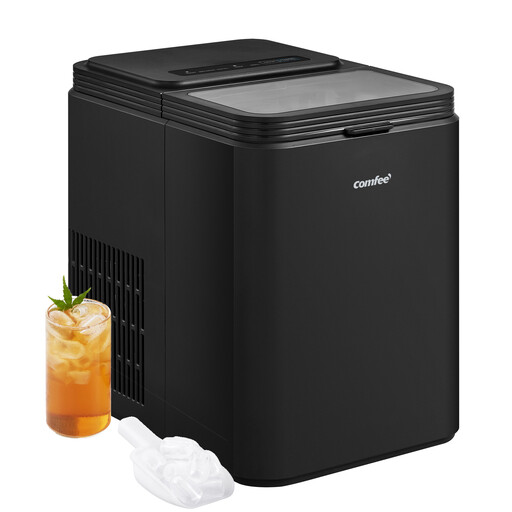
The stated first cycle time and compact dimensions may help you decide whether this model suits a few glasses and the space you have available.
The product name states eight cubes in six minutes, a 1,3-litre water tank, two ice sizes and self-cleaning. The description gives an ice basket capacity of 0,4 kg and dimensions of 295,7 × 213 × 295 mm. The daily output is not the amount held in the basket at once.
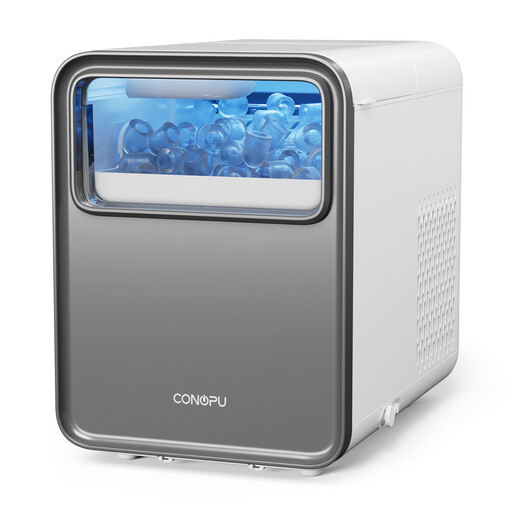 No image available
For a small first batch, the product name states that it makes nine bullet ice cubes in six minutes; also check that its stated dimensions will fit on your worktop.
The description states that it has a 1,5-litre reservoir and measures 35 × 23 × 30 cm. The product name mentions two ice sizes, a basket and a scoop.
No. A figure for 24 hours is not the amount of ice held in the basket at once. For example, Salora states that the ICE12B has an ice basket capacity of 0,45 kg; DOMO suggests freezing ice in advance to have it ready.
Use drinking water and keep kitchen utensils clean. Follow the model’s cleaning instructions for the reservoir, basket and scoop; a removable basket or drain plug doesn’t replace cleaning. The Netherlands Nutrition Centre advises using clean kitchen utensils and safe drinking water.
In the Netherlands, contact the seller to discuss a solution if a product is faulty. According to the Dutch government, there is no fixed statutory guarantee period; what you can expect from a product depends in part on the product and the circumstances.
For equipment covered by the relevant EU rules, the manufacturer uses the CE marking to indicate that the product complies with those rules; the European Commission does not issue a central EU certification following product testing. Materials that come into contact with ice for consumption must comply with the relevant EU rules on food contact materials. A product listing on a website does not, by itself, confirm that all applicable requirements have been met.