
For anyone who wants a cold drink on the spur of the moment
You want to make a small first batch of ice without filling an ice tray in advance. So compare the stated waiting time and the number of cubes per cycle.


If you usually only make a few cold drinks, compare the output and waiting time per cycle, as well as the space the machine takes up, rather than focusing only on its maximum daily output. A larger reservoir can be useful if you make several batches; also check how to empty and clean the basket and reservoir. The times and capacities stated are manufacturers’ specifications, not independent measurements.
You want to make a small first batch of ice without filling an ice tray in advance. So compare the stated waiting time and the number of cubes per cycle.
If you have limited worktop space, measure the spot where the appliance will go and compare it with the model’s external dimensions.
If you sometimes make several rounds of drinks, check how often you’ll need to refill the machine and how to empty and clean the ice basket.
If you only make a small amount of ice now and then, your choice will mainly depend on the first cycle, the worktop space available, maintenance and whether you need extra batches for guests.
| What to consider | What should you look for? | Who is this important to? |
|---|---|---|
| A quick first batch | Compare the stated time in minutes and the number of cubes per cycle for the exact model. | If I want to make a few cold drinks quickly, I want to know how long the first cycle takes and how many cubes it produces. Around 36% of consumers give the speed of that first small batch top priority. |
| Worktop space | Measure the available space and check the external dimensions and clearance required around the appliance. | If I have limited worktop space, I want to be sure the appliance will fit before considering its capacity. Around 29% of consumers give the worktop space required top priority. |
| Emptying and cleaning | Check the instructions, whether the basket is removable and how to drain the reservoir. | If I only use the machine occasionally, I want to be able to remove the water and ice cubes easily afterwards. Around 21% of consumers give maintenance after use top priority. |
| Several drinks in a row | Check the water reservoir, the number of cubes per cycle and the collection basket separately. | If I’m making drinks for guests, I want to know how practical it is to make several batches and when I’ll need to refill the machine. Around 14% of consumers give having enough ice for successive drinks top priority. |
A claim in kilograms per day doesn’t tell you how many cubes are ready at once. For example, KitchenBrothers states that the KB719 can produce up to 12 kg per 24 hours and makes nine cubes per eight-minute cycle.
If you only need ice for a few drinks, compare the cycle time and the number of cubes per cycle. Use a daily output figure mainly to assess longer, repeated use.
For the Princess 283069, Princess lists a 2.8-litre water reservoir and a separate ice basket with a capacity of up to 800 grams. These figures refer to different parts of the machine.
Check the product specifications separately to see how much water the reservoir holds and how much ice the basket can contain.
How you empty and clean an ice maker varies by model. For the DO9220IB, DOMO lists a removable basket and a drain opening; PRIMO states that the PR407IB is not dishwasher-safe.
Read the maintenance instructions for the exact model and check which parts can be removed and how they can be cleaned.
The DO9220IB is worth comparing if you’re looking for a model with compact external dimensions, a removable basket and a drain opening.
The 283069 is worth comparing if you make several batches and want to assess the reservoir and basket capacities separately.
The KB719 is worth considering if you want to compare cycle times, refilling and emptying the ice basket.
The PR407IB is worth comparing if reservoir capacity and ease of cleaning are important to you.
The KB12 is worth comparing if a larger reservoir and a choice of two sizes matter to you.
The IceCraft 10046190 is worth comparing if you’re looking for a 1.3-litre reservoir and two ice cube sizes.
These models are for anyone looking for a worktop ice maker to make small batches of ice for cold drinks.
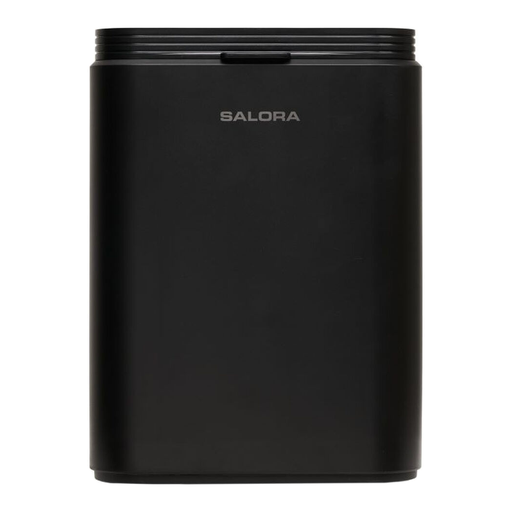 No image available
Suitable if you want a small first batch: the product name states that it makes eight ice cubes in six to nine minutes and offers two ice sizes.
The product name also lists a 1.3-litre reservoir and a maximum output of 12 kg per 24 hours. Use the appliance on a stable, flat surface, with at least 15 cm of clearance on all sides and an earthed socket.
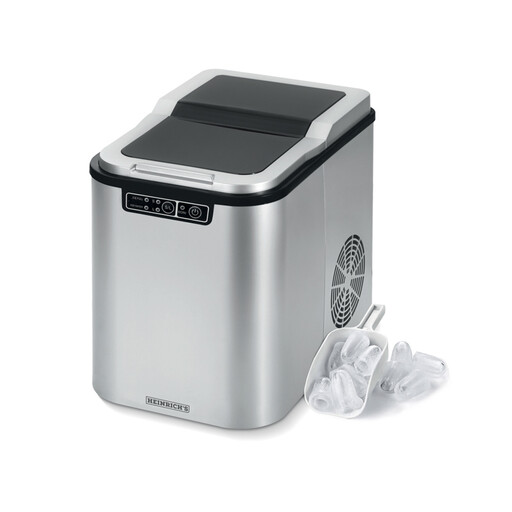 No image available
An option worth comparing if you’re looking for a stated output per cycle and a 2.2-litre water reservoir.
The product name states that it makes nine ice cubes in nine minutes, offers two ice sizes and has a self-cleaning function. The stated output of 12 kg per 24 hours is a different measure from the output of a single cycle.
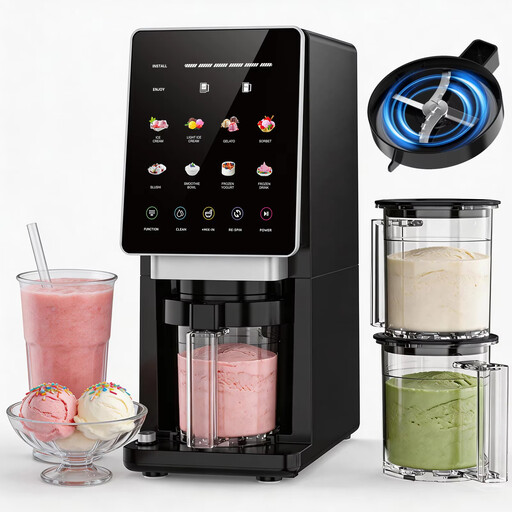 No image available
This model is worth comparing if you’re looking for an appliance designed to sit on your worktop.
The product name states that it has eight preset programmes and a self-cleaning function.
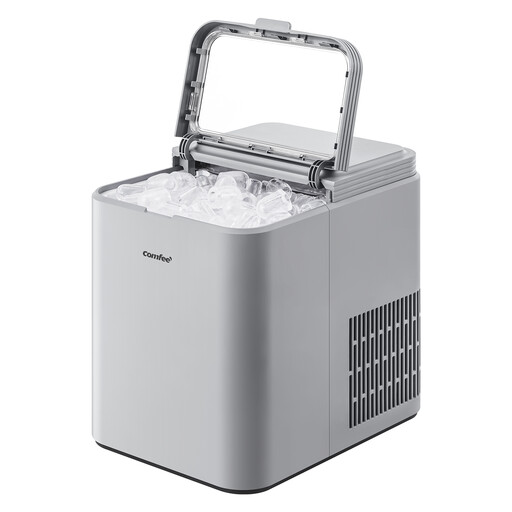 No image available
Suitable if you want a small first batch: the product name states that it makes eight ice cubes in six minutes and has a compact design.
The product name lists a 1.3-litre reservoir, two ice sizes and a self-cleaning function; the product description mentions a removable basket. Use clean drinking water, never immerse the appliance, plug or cord, and unplug it before cleaning.
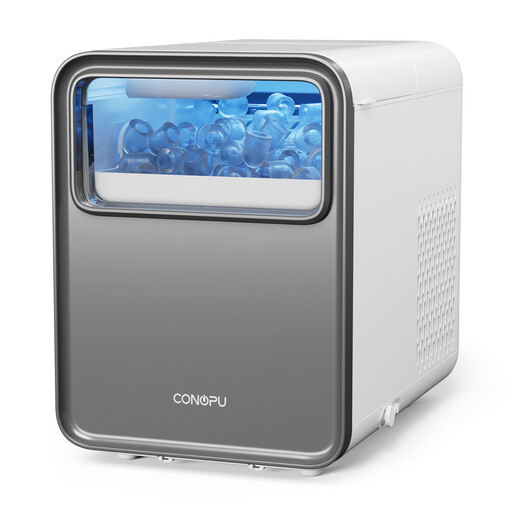 No image available
An option worth comparing if small batches and a choice of two ice sizes matter to you.
The product name states that it makes nine bullet-shaped ice cubes in six minutes. It also lists a daily output of 26.5 Lbs; this is not the same as the output of a single cycle.
Not if you usually only make a few drinks at a time. First compare the stated waiting time and number of cubes per cycle; daily capacity describes a different type of use and is not an independent measurement.
Follow the instructions for the exact model. For the DO9220IB, DOMO lists a removable basket and a drain opening; don’t assume that parts from another model are dishwasher-safe. PRIMO states that the PR407IB is not dishwasher-safe.
For a distance purchase from a business made online in the Netherlands, you generally have a 14-day cooling-off period, according to the Government of the Netherlands. Products must also be of satisfactory quality; contact the seller if there’s a fault. The Government of the Netherlands states that there is no fixed statutory guarantee period in the Netherlands.
Electrical products are subject to the applicable European product regulations. Business.gov.nl explains that CE marking is not a quality mark or proof of independent approval. Materials that come into contact with food or ice must comply with the applicable European rules on food contact materials, including Regulation (EC) No 1935/2004, as explained by the European Commission.