
Housemates with peak-time demand
If several people are making cold drinks at the same time, the amount of ice per cycle, the basket capacity and the point at which the machine indicates that it’s full are all worth considering.


Choose an ice maker for a shared kitchen based on how much ice your housemates need in quick succession and how much space the appliance takes up, including room for ventilation. Also compare the water tank, ice basket and access to the drain: a quick cycle or high daily output doesn’t tell you how much ice will be ready at once. Check the maintenance instructions and information about applicable safety and food-contact requirements for the model you choose.
If several people are making cold drinks at the same time, the amount of ice per cycle, the basket capacity and the point at which the machine indicates that it’s full are all worth considering.
If you have little permanent worktop space, take into account both the appliance’s external dimensions and the room it needs around it for use and ventilation.
When sharing an appliance, it helps to agree who will change the water, empty the machine and clean the parts that come into contact with ice. The Netherlands Nutrition Centre recommends clean hands and clean kitchen utensils when preparing food.
Start by thinking about the busiest times when your housemates need ice, then measure the space available. This will help you weigh up capacity, tank size and maintenance against what your shared kitchen can accommodate.
| What to consider | What to look for | Who is it important for? |
|---|---|---|
| Enough ice at busy times | Compare the number of ice cubes per cycle, cycle time, tank capacity and full-basket indicator for the exact model. A manufacturer’s stated figures don’t measure how much ice you’ll have ready in your kitchen. | If several housemates make drinks around the same time, you’ll want to know how much ice can be ready at once. Around 25% of consumers are mainly looking for enough ice during busy periods. |
| Clean, shared use | Check whether the basket and drain are easy to access, what the manual recommends, and who will take responsibility for filling, emptying and cleaning the machine. | If different housemates use the scoop and other parts, clear cleaning arrangements and accessible components are important. Around 25% of consumers prioritise shared hygiene. |
| Worktop space | Measure the space available and compare it with the external dimensions and placement instructions for the specific model. | If several people use the worktop, you’ll want the machine to fit without compromising your work space or the required ventilation clearance. Around 20% of consumers are mainly looking for a solution to limited worktop space. |
| Noise in a shared space | Check the stated noise level and consider where the appliance will go. An unverified claim that a model is quiet isn’t the same as a real-world test. | If other people are in the same kitchen or living space while the machine is running, noise may matter more than a larger tank. Around 15% of consumers mainly prioritise low noise levels. |
| Warranty and help if something goes wrong | Read the warranty terms and keep your proof of purchase. Remember that a manufacturer’s warranty is separate from your rights with the retailer. | If you mainly want to know in advance what to do if the appliance develops a fault, check the terms and who to contact. Around 15% of consumers put service and warranty support first. |
The amount produced in 24 hours and the amount ready at once are two different things. A full basket can also interrupt ongoing production.
Check the capacity and operation of the basket for the model you’re considering. If lots of people need ice at the same time, you could also see whether making ice in advance and storing it in a suitable freezer would work for you.
Making ice in advance involves extra steps and requires freezer space.
Several housemates will use the same parts that come into contact with ice for consumption. A cleaning programme doesn’t automatically clean accessible parts for you.
Follow the model’s manual and agree who will change the water, empty the machine, and clean the scoop and other accessible parts.
Allow time to clean the scoop, basket and other accessible parts.
According to the Dutch Government, there is no fixed two-year statutory warranty period in the Netherlands. A manufacturer’s warranty is separate from your rights with the retailer.
Keep your proof of purchase and contact the retailer first if there’s a fault. The Dutch Government explains that you’re entitled to a product that works as it should, depending on what you can reasonably expect.
The KB692 and KB759 show how tank capacity and size can vary between models.
The DO9253IB is a countertop model to consider if you also want to make ice in advance and store it.
The IceMaster Pro 3301 is worth considering if a 2.2-litre tank and two adjustable ice cube sizes are important to you.
The 283069 is worth considering if you’re interested in display controls, a timer and three adjustable ice cube sizes.
This selection features countertop models for making ice to serve with cold drinks. Compare the tank capacity, stated cycle time and amount of worktop space each model needs.
 No image available
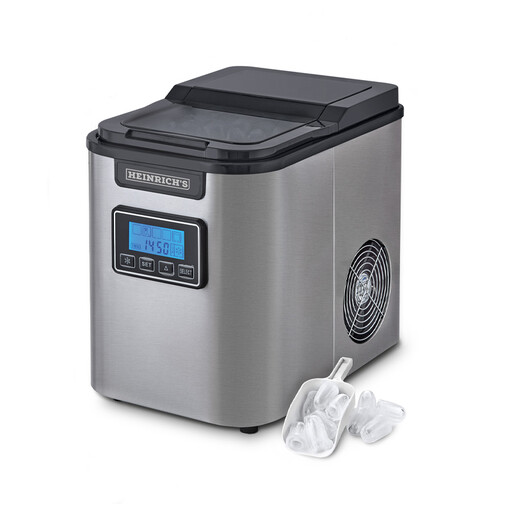
An option to consider if housemates make drinks one after another and want to choose between several ice sizes.
The product name lists a 2.2-litre tank, three ice sizes, 9 ice cubes in 9 minutes and an output of 12 kg per 24 hours. Daily output doesn’t tell you how much ice will be in the basket at once.
The stated external dimensions are 36,0 × 24,9 × 32,7 cm; measure your available space and check the placement instructions.
 No image available
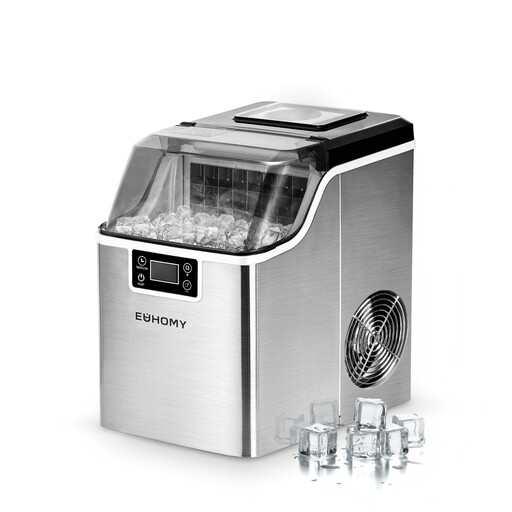
A model to consider if a larger water tank and the number of ice cubes produced per cycle suit the way several housemates use it.
The product information lists 24 ice cubes per cycle, a 13-minute cycle, a 3.2-litre tank, a timer, a basket and a scoop. The stated daily output isn’t the same as the amount of ice available at once.
The product information also mentions a self-cleaning programme; make sure you follow the maintenance instructions for accessible parts too.
 No image available
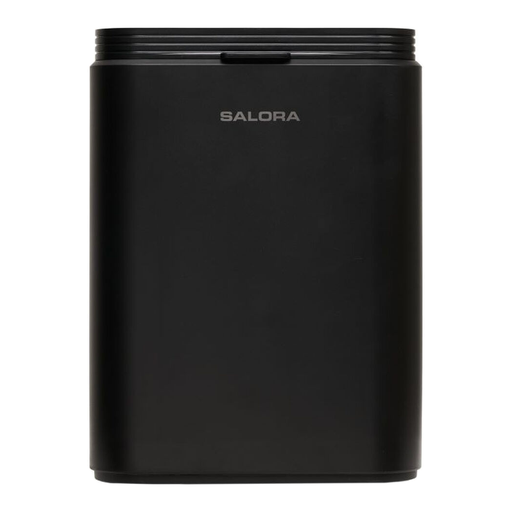
A compact option to consider if you only make ice occasionally and have limited worktop space.
The product name lists a 1.3-litre tank, two ice sizes, an output of 12 kg per 24 hours and a preparation time of 6–9 minutes. The product information mentions a removable basket and indicators for a full basket and low water level.
The stated dimensions are 295,7 × 213 × 295 mm. If you run consecutive cycles, a smaller tank may need refilling more often than you expect.
 No image available
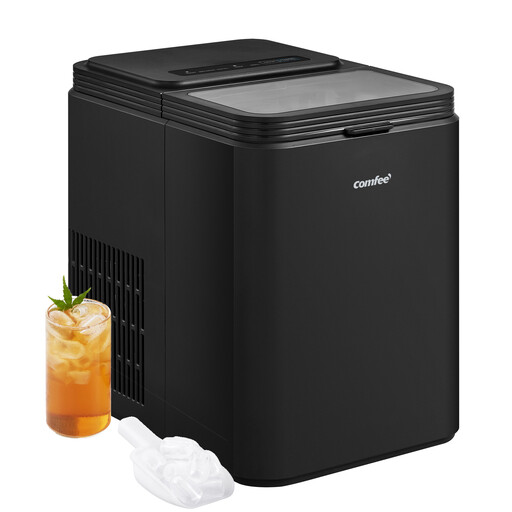
A model to consider if you make drinks individually and find a removable basket useful for sharing.
The product name lists 8 ice cubes in 6 minutes, a 1.3-litre tank and an output of 12 kg per 24 hours. The product information mentions two ice sizes, a removable basket, a scoop and a self-cleaning function.
The stated dimensions are 295,7 × 213 × 295 mm. Daily output doesn’t tell you how much ice will be ready at once.
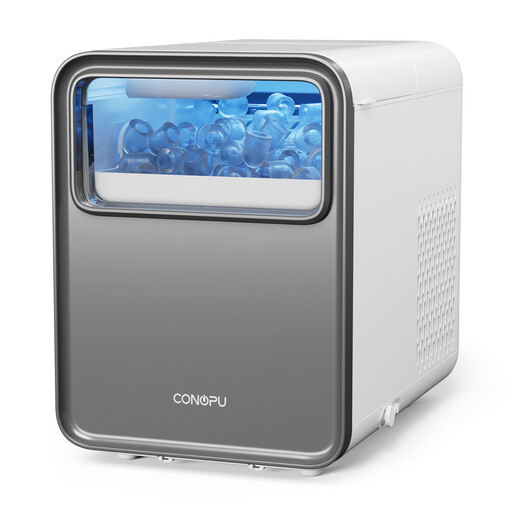 No image available
An option to consider if you’re looking for a compact machine with a drain opening and a full-basket indicator.
The product information lists a 1.5-litre tank, 9 ice cubes in 6 minutes, two ice sizes, a self-cleaning programme and a drain opening.
The stated external dimensions are 35 × 23 × 30 cm. Check that your available space also leaves room for use and ventilation.
Don’t assume the daily output is the amount ready at once. Check the capacity and operation of the basket for the model you choose; you can also store made ice in a suitable freezer.
Not as a general rule. Keep the scoop and other accessible parts clean, and follow the manual for emptying and cleaning the machine. The Netherlands Nutrition Centre recommends clean hands and kitchen utensils when handling food and drink.
The countertop models reviewed have water tanks that you fill by hand; check this for the specific model. Use drinking-quality water and follow the filling and maintenance instructions.
No. According to the Dutch Government, there is no fixed statutory warranty period in the Netherlands; what you can expect depends on the product. Contact the retailer if there’s a problem. A manufacturer’s warranty is an additional benefit.
Check the information about applicable CE marking and materials that come into contact with water or ice for the model you choose. The Netherlands Food and Consumer Product Safety Authority and Business.gov.nl explain the requirements that apply to electrical appliances; the Authority also outlines the rules for food-contact materials. A CE mark on its own isn’t an independent safety test.