
Host serving lots of drinks at once
You want to be able to grab ice for several drinks during the busiest hours of your party, and can freeze a supply in advance if needed.


Choose an ice maker based on how much ice you need during the busiest hours of your party, and where you can store batches as they’re made. A stated output per 24 hours isn’t the same as having that much ice in the basket at once; manufacturer specifications, such as Princess’s for model 283098, list the basket capacity separately. So compare the cycle time, tank capacity, available freezer space and the room you have on the worktop.
You want to be able to grab ice for several drinks during the busiest hours of your party, and can freeze a supply in advance if needed.
You’re looking for a portable countertop model and want to check in advance that there’s room on the worktop, a suitable socket and, if needed, space in the freezer.
You’ll be making ice during the party and want to know how much fits in the basket at once, and how often you’ll need to top it up or transfer the ice.
First, decide whether you can freeze ice in advance. Then compare how quickly the machine makes new batches and how much space it takes up.
| What to consider | What should you look for? | Who is this important for? |
|---|---|---|
| Enough ice during busy periods | Compare the number of cubes per cycle and the cycle time with the basket capacity; don’t treat the daily output as ice ready to use all at once. | If I’m serving several drinks at once during the busiest hours, I want to know how quickly an empty basket will be replenished. Having enough ice during busy periods is a top priority for around 33% of consumers. |
| Keeping and storing ice | Check the basket capacity and whether the holiday cottage has a suitable freezer for storing ice between batches. | If I want ice ready to serve throughout the party, I need to know where I can store newly made cubes. Having an ice supply is the main concern for around 27% of consumers. |
| Space and set-up | Measure the available worktop space and check the socket, cable reach and how the water tank is filled. | In a small kitchen, I want to know in advance whether the machine will fit and can be connected conveniently. Around 20% of consumers prioritise space and portability. |
| Cleaning up after the party | Check the manual, the drainage options and which parts can be removed; a self-cleaning function doesn’t automatically replace all manual cleaning. | After a party, I want to be able to empty and clean the machine according to the instructions. Ease of maintenance is the main buying concern for around 20% of consumers. |
A stated output per 24 hours doesn’t tell you how much ice is in the basket at once. For example, Princess lists a basket capacity of 0.5 kg for model 283098.
Check the daily output and basket capacity separately, and decide where you’ll store the cubes made between batches.
Making ice in advance takes planning and, if you want to build up a supply, you’ll need room in the freezer.
A short time to the first cubes doesn’t, on its own, tell you whether you’ll have enough ice during the busiest hours.
Also compare the number of cubes per cycle, the basket capacity and whether you can store ice between batches.
An extended warranty is separate from your statutory consumer rights; check exactly what additional cover it provides.
Keep your proof of purchase and the seller’s details. The Dutch government explains that the Netherlands has no fixed statutory warranty period.
The KitchenBrothers countertop model, described as having a 2-litre tank, may suit you if you’d rather refill the water less often.
According to Princess, model 283098 combines a carry handle, a 1.75-litre water tank and two adjustable cube sizes.
According to DOMO, the DO9220IB has a 1.5-litre tank, a removable basket and a drainage outlet.
Salora describes the ICE12B as a compact model, with a 1.3-litre tank according to the manufacturer.
These countertop ice makers are designed for making and serving ice at gatherings. Compare the stated cycle times and tank capacities with your party plans, and check the basket capacity, available freezer space and product-specific information before choosing.
 No image available
The stated cycle time can be useful if you want to make fresh batches regularly during the party; also plan where you’ll store the cubes between batches.
According to the product name: 12 kg per 24 hours, two ice sizes, 6–9 minutes per cycle and a 1.3-litre tank.
Compare the basket capacity with your needs: the daily output isn’t the same as having all the ice ready at once.
 No image available
The larger tank may suit you if you’d rather refill the water less often during the party; also check that the machine will fit in the space available.
The product name lists 120 W, two ice sizes, nine cubes every nine minutes, up to 12 kg per 24 hours, a 2.2-litre tank and a self-cleaning function.
The stated daily output doesn’t tell you how many cubes are available at once; check the basket capacity separately.
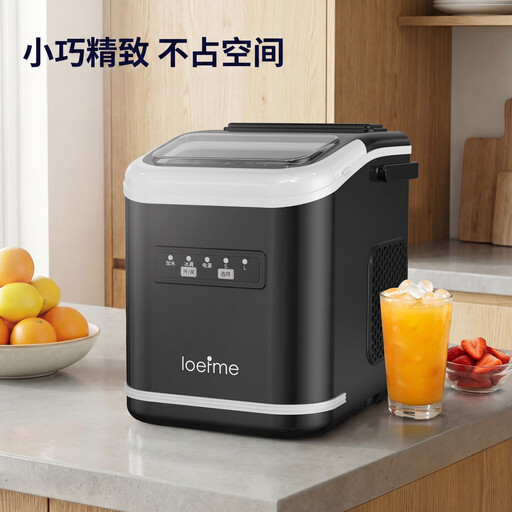 No image available
The stated cycle time and choice of two sizes are worth comparing if you’ll be serving different drinks at a gathering.
The product name lists nine cubes every 6–13 minutes, two ice sizes, up to 12 kg per 24 hours and automatic cleaning.
Check the basket capacity and follow this model’s cleaning instructions.
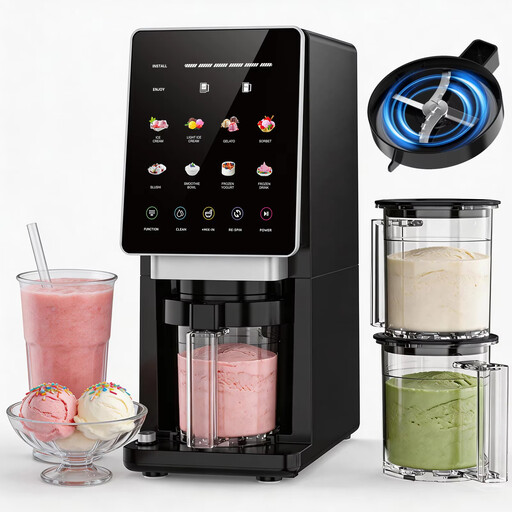 No image available
This countertop model may be worth considering if you’re looking for an ice maker for a holiday stay with limited kitchen space; measure the available space before choosing.
The product name lists eight preset programmes, a self-cleaning function, and mixing and resume functions.
Check the product-specific information for the capacity and space requirements.
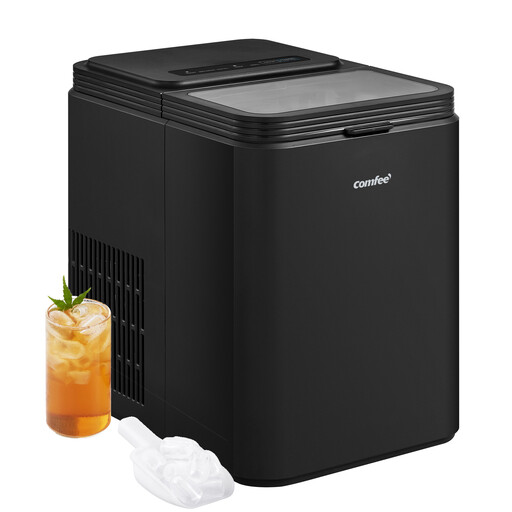 No image available
The stated cycle time and basket capacity are useful points to compare if you want to serve fresh cubes during the party; also plan where you’ll store any extra ice.
The product name lists eight cubes in six minutes, up to 12 kg per 24 hours, a 1.3-litre tank, two sizes, a self-cleaning function, a scoop and a basket.
The daily output isn’t the same as having all the ice ready at once; check this model’s basket capacity separately.
No. That’s the stated output over 24 hours, not the amount the basket can hold. Check the basket capacity and, if needed, make ice in advance and transfer it to a suitable freezer.
Follow the manual for the exact appliance and check for any local water advice. The Dutch government says that supplied drinking water in the Netherlands almost always meets quality requirements; this doesn’t replace checking for local advice. DOMO recommends using spring water for the DO9220IB.
Follow the cleaning instructions for the specific model. DOMO lists a removable basket and a drainage outlet for the DO9220IB; a self-cleaning function on another model doesn’t automatically mean that manual maintenance is unnecessary.
When you buy as a consumer, the product must meet reasonable expectations, and the seller is responsible for providing a solution if it is faulty. According to the Dutch government, the Netherlands has no fixed statutory warranty period; an additional warranty is separate from your statutory rights.
The Dutch government says that electrical appliances offered for sale in the EU must have a CE mark. Check the marking and product information for the item you buy; a mention on a sales page alone doesn’t prove that a specific item meets the requirements.