
Party host serving lots of drinks at once
Wants enough ice ready before a busy serving period and plans production and available stock separately.


Choose based on how much ice you need during your busiest serving period, not just the stated output per 24 hours. If lots of guests need serving at once, making ice in advance and freezing it can help. Also compare the cycle time, tank capacity, worktop space required and cleaning options for the exact model. Manufacturers’ output figures are claims, not measurements taken during your workshop.
Wants enough ice ready before a busy serving period and plans production and available stock separately.
Can’t keep checking whether the basket is full or the water tank needs refilling while cooking, so a practical plan for stock and refills is useful.
Needs to leave room for cooking equipment and weigh up a compact appliance against tank capacity and how often it needs refilling.
| What to consider | What should you check? | Who is this important for? |
|---|---|---|
| Ice during a busy serving period | Compare the output per cycle and, if available, per hour; separately work out how much ice you need at once. | If lots of guests want a drink at the same time, I want to know whether the machine can keep producing after the first cubes are ready. Around 33% of consumers prioritise production during peak periods. |
| Preparing a supply in advance | Check the ice basket capacity and plan where you can store cubes made earlier. | I don’t want to wait for cycle after cycle while cooking, so I’d rather prepare ice in advance if I have freezer space. Around 27% of consumers prioritise having ice ready in advance. |
| Worktop space and noise | Measure the available space and check the dimensions, tank capacity and stated noise level for the exact version. | When I need to cook beside the appliance, I want to leave enough room to work and know how often it might need refilling. Around 20% of consumers put available space first. |
| Cleaning and draining | Check how to drain the water and which parts can be emptied or cleaned according to the instructions. | When using it repeatedly, I want emptying and cleaning to fit into my routine without skipping the instructions. Around 20% of consumers make maintenance their main consideration. |
A manufacturer may give a daily output figure alongside a separate cycle time and basket capacity. The daily figure doesn’t tell you how much ice will be ready for a single serving period.
Plan for your busiest period and compare the output per cycle, basket capacity and tank capacity for the same model. Make ice in advance if needed.
Making ice in advance takes freezer space and planning; you may also need extra ice during a busy period.
A self-cleaning programme doesn’t automatically empty, drain and clean the appliance for you.
Before buying, read the instructions for the exact version and check how to clean the tank, ice tray and drain.
Set aside time to empty and clean the appliance after use.
The Princess 283069 manual describes domestic use. If you provide ice as part of a business, Dutch food regulations may also apply.
Establish whether the workshop is private or commercial. If you’re using the appliance for business, check that it’s suitable and find out which food regulations apply.
Providing food or drink commercially may also require registration and additional food safety procedures.
Compare the stated continuous output of the DO9247IB with the option of freezing cubes made in advance with the DO9253IB.
The IceChef Compact is worth comparing if worktop space is a priority; the IceChef Pro has a larger stated tank capacity. The IceCube Pro makes a small number of larger cubes per cycle.
The 283069 ice maker, version 01.283069.01.001, is worth considering if a timer and a choice of three cube sizes are important to you.
The KB12 is worth comparing if you’re looking for automatic production, an LCD screen and two ice sizes.
Compare this ice maker if a handle, indicator lights and a drain suit your changing set-up.
This selection features worktop ice makers for making ice during a workshop or preparing a supply for a party.
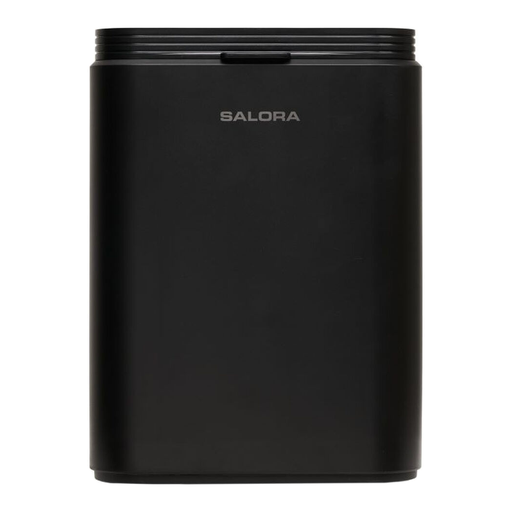 No image available
Could suit a busy serving period when you want a first batch quickly and a choice of two ice sizes.
Stated output: 12 kg per 24 hours. The product name specifies 8 cubes in 6–9 minutes and a 1,3 l reservoir.
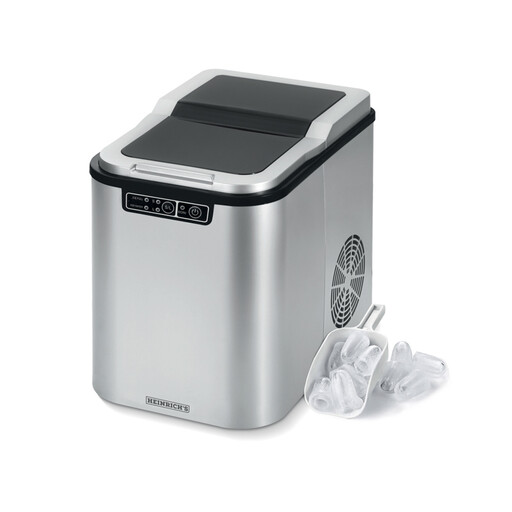 No image available
Worth comparing if you want to make ice on the worktop and the stated production cycles suit your serving plans.
The product name lists 9 cubes in 9 minutes, up to 12 kg per 24 hours and a 2,2 l water tank. It also mentions a self-cleaning function.
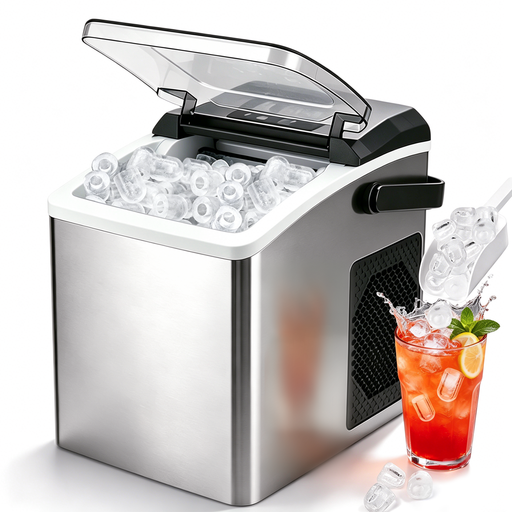 No image available
Could suit you if you want to move an ice maker with a handle between different set-ups.
The product name lists two ice sizes and a stated output of 12 kg per 24 hours.
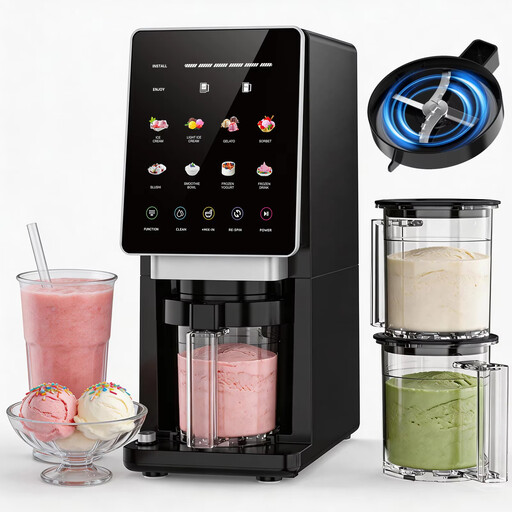 No image available
Compare this model if its stated programmes and restart functions suit the way you want to operate the appliance during your workshop.
The product name lists eight programmes, a self-cleaning function, and mix and resume functions. It also mentions use on the worktop and on the go.
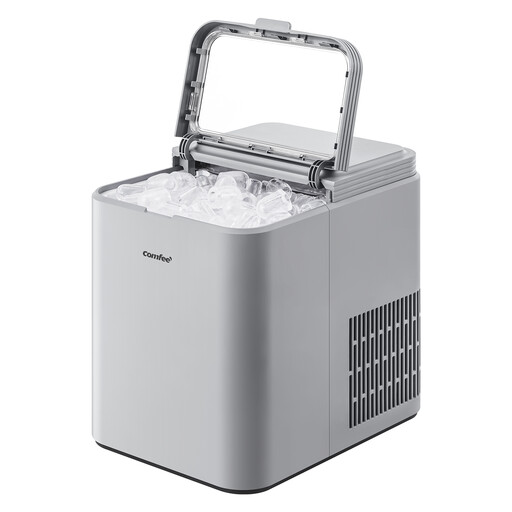 No image available
Could suit you if you want to make ice on the worktop and compare in advance how much space and storage the listed version offers.
The product name lists 8 cubes in 6 minutes, up to 12 kg per 24 hours and a 1,3 l tank. It also mentions two ice sizes and a self-cleaning function. The safety instructions specify clean drinking water and an earthed socket; keep the appliance away from heat sources and naked flames.
You can’t tell from the daily output figure alone. Estimate how much ice you need at once during your busiest serving period, compare that with the stated output per cycle or per hour, and set some ice aside in advance if you expect a clear peak. The figures quoted by DOMO and other manufacturers are manufacturer claims.
Yes, if you have enough freezer space. DOMO says you can freeze the cubes made by the DO9253IB. Don’t assume that the basket of a worktop ice maker can be used as a freezer unless this has been confirmed.
Follow the instructions for the version you receive. BluMill recommends leaving its ice maker upright for at least 24 hours after delivery; this instruction doesn’t automatically apply to other models. Also check how to empty and clean the tank, ice tray and drain.
If you sell or supply food directly to consumers as a business, the Netherlands Food and Consumer Product Safety Authority says that food businesses must register. Food businesses must also follow hygiene requirements and have a food safety plan based on HACCP or an approved hygiene code, as explained by Business.gov.nl. You can’t automatically assume that these business requirements apply to a private party.
The relevant EU rules for food contact materials apply to parts that come into contact with food, including Regulation (EC) No 1935/2004. The EU Low Voltage Directive applies to equipment within the range of 50–1.000 V AC or 75–1.500 V DC and sets requirements for electrical safety and CE marking. A statement on a product page is not, by itself, full confirmation that an individual appliance complies.