
Iced coffee drinker with limited worktop space
Wants to know in advance whether the appliance will fit in a narrow space, with room around it and enough access to operate it.


First, choose an ice maker whose dimensions, required clearance and lid access suit the space where you want to use it. Then compare the stated time to the first ice cubes with how much ice you need at once. Manufacturers’ figures for cycle time, basket capacity and daily output describe different things, so they are not directly comparable in real-world testing.
Wants to know in advance whether the appliance will fit in a narrow space, with room around it and enough access to operate it.
Usually makes one or a few drinks, so focuses on the first ice cubes rather than just the stated daily output.
Makes drinks for others one after another, so compares the reservoir, collection basket and how often it needs refilling.
First, measure the full space available for the appliance. Then decide whether you mainly need a first batch for one drink or enough ice for several drinks in a row.
| What to consider | What should you check? | Who should pay particular attention? |
|---|---|---|
| Will the machine fit on the worktop? | Measure the width and depth of the exact model and check the instructions for clearance, lid access and drainage. | If I have limited worktop space, I want to know whether I can actually use the appliance there. Around 36% of consumers say available space is their most important requirement. |
| Time to the first batch | Compare the stated number of minutes and the number of cubes in the first cycle; don’t look only at kg per 24 hours. | For an impromptu iced coffee, I want to know when the first usable ice cubes will be ready. Around 29% of consumers give the first batch top priority. |
| Cleaning and emptying | Check whether the basket is removable, how the water drains and what cleaning the instruction manual recommends. | With regular use, I want to be able to clean the basket and drain without any fuss. Around 21% of consumers say easy maintenance is their main buying concern. |
| Ice for several drinks | Compare the tank capacity, basket capacity and stated daily output separately. | If I’m making several iced coffees in a row, I look at how often I’ll need to refill it and how much ice the basket holds. Around 14% of consumers prioritise making several drinks one after another. |
A stated output in kg per 24 hours doesn’t tell you how much ice is ready in the first cycle or how much fits in the collection basket. Salora lists eight cubes in six to nine minutes and a basket capacity of 0.45 kg separately for the ICE12B.
Compare the first cycle, basket capacity and daily output with the number of iced coffees you make at once.
A narrow machine still needs space to sit and be operated. Also check the exact version: CASO’s product page lists two different sets of external dimensions for the IceChef Compact.
Measure the full space available and check the placement instructions and dimensions for the model you want to buy.
A self-cleaning function doesn’t automatically mean you no longer need to clean the basket, water outlet or other accessible parts.
Check the instruction manual to see how to empty, drain and clean your chosen model.
Compare models by their own dimensions and features; specifications for one version don’t automatically apply to other models from the same brand.
The DO9220IB is a useful model to compare if you want to measure your available worktop space precisely. DOMO lists this model as 22.5 cm wide and 32 cm long, with a 1.5-litre reservoir.
The ICE12B is a useful model to compare for a narrow worktop. Salora lists a width of 213.4 mm and a 1.3-litre water reservoir.
The KB719 is worth considering if you make several drinks one after another. KitchenBrothers lists a 2-litre reservoir.
The Princess 283069 is worth comparing if you’re looking for different ice sizes and a larger reservoir.
The IceChef Compact is worth comparing if a 1-litre reservoir and two ice sizes suit your needs.
These Joybuy products are ice makers designed for use on a worktop. For each model, check the space required, the stated first cycle and how much ice you need at once.
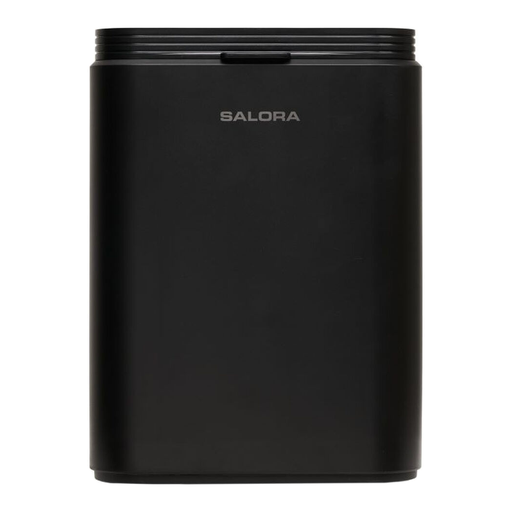 No image available
An option to compare if you’re mainly looking for a narrow machine to make ice for one or a few iced coffees.
Salora lists a width of 213.4 mm, a 1.3-litre reservoir and a basket capacity of 0.45 kg. The title states that it makes eight ice cubes in six to nine minutes and produces 12 kg per 24 hours.
Allow for the stated minimum clearance of 15 cm on all sides.
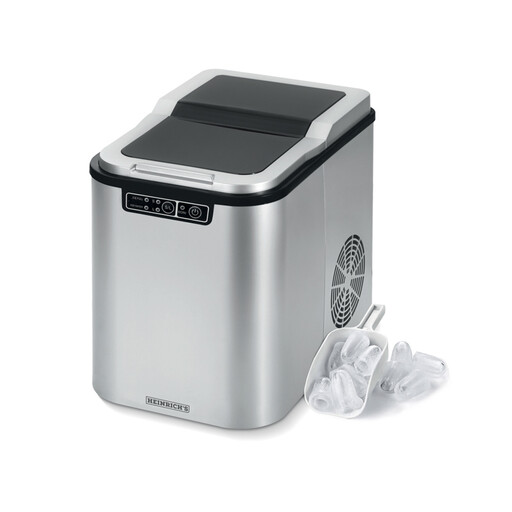 No image available
The stated first cycle may be useful to compare if you want a batch of ice for one drink.
The product title lists 120 W, nine ice cubes in nine minutes, a 2.2-litre water tank, two ice sizes and an output of 12 kg per 24 hours.
Daily output doesn’t tell you how much ice fits in the basket at once.
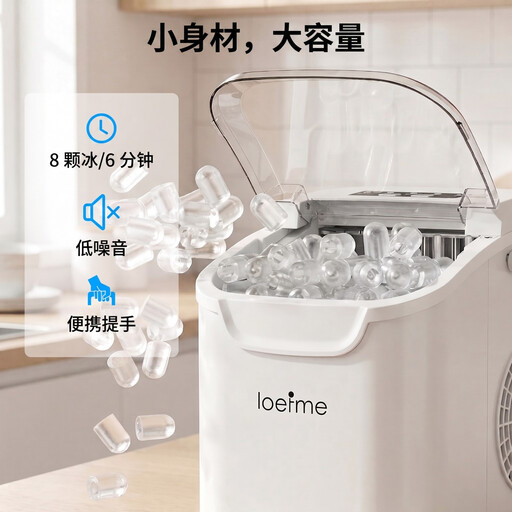 No image available
A model to compare if the stated cycle time for the first batch matters to you.
The product title lists nine ice cubes per cycle in six to 13 minutes, a 0.8-litre water tank, two ice sizes and an output of 12 kg per 24 hours.
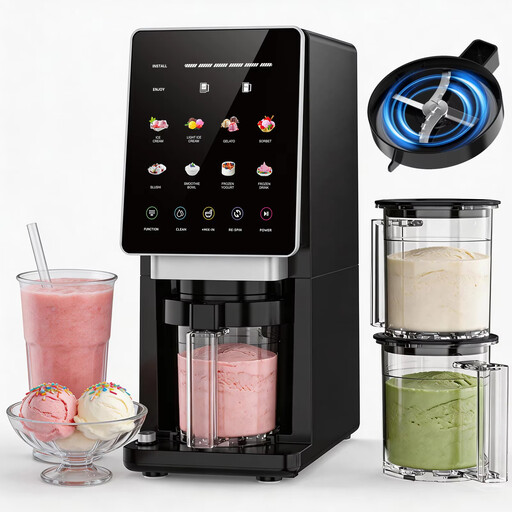 No image available
The title describes this model as a worktop ice maker.
The product title lists eight pre-set programmes and a self-cleaning function.
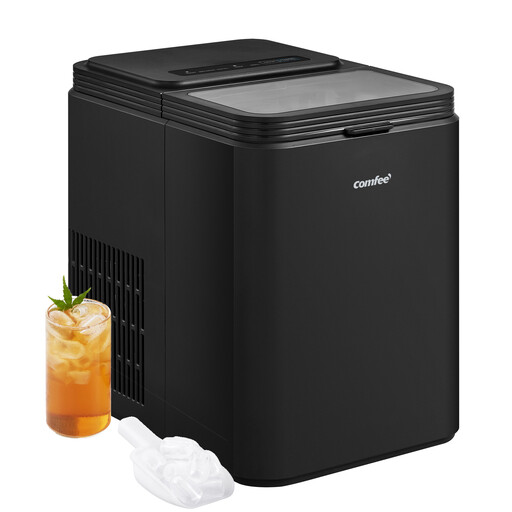 No image available
A model to compare if you want the first ice cubes ready for one drink.
The product title lists eight ice cubes in six minutes, an output of 12 kg per 24 hours and a self-cleaning function. According to Joybuy, this is the RCI12BL1EU (E).
The first cycle and daily output describe different quantities and stages of use.
No. That daily output doesn’t tell you how much ice will be ready for your first drink or how much fits in the collection basket. For the ICE12B, Salora separately lists eight ice cubes in six to nine minutes and a basket capacity of 0.45 kg; compare these figures with the amount you need.
Measure the available width and depth, then check the instructions for the exact version for guidance on placement, clearance, lid access and emptying. The external dimensions alone don’t guarantee a practical set-up; CASO’s product page also lists two different sets of dimensions for the IceChef Compact.
No. A paid-for extended warranty doesn’t replace your statutory rights. According to ACM ConsuWijzer, the seller must provide an appropriate remedy for a faulty product at no cost under the law, for example by repairing or replacing it, or issuing a refund; the situation and remedy depend on the fault.
For electrical equipment covered by applicable EU rules, the manufacturer must comply with those rules and apply the required CE marking. Parts that come into contact with water or ice for consumption must also meet the applicable requirements for food contact materials. The CE marking alone is not an independent product test.