What should you look for when buying?
First, work out how much ice you need in quick succession and who will clean the appliance. Then compare the worktop space required and whether you have a preferred ice size.
| Consideration |
What should you look for? |
Who is this for? |
| Time until ice is ready |
Compare the stated time to the first batch with the batch size and capacity of the collection basket. |
If I only start making coffee when I need ice, I want to know how long the first batch takes. Around 31% of consumers in this usage scenario give the availability of ice for making iced coffees one after another top priority. |
| Cleaning when shared |
Check whether the basket is easy to access, how to empty the tank and what the manual says about cleaning. |
If several housemates use the same scoop and basket, I want to agree who changes the water and cleans the appliance. Around 31% of consumers give easy emptying and hygienic sharing top priority. |
| Worktop space and noise |
Measure the available space and leave room to open the lid and refill the water; check the stated dimensions and noise level. |
If the worktop is also needed for making coffee and other kitchen tasks, I want to know whether the appliance will fit comfortably. Around 23% of consumers prioritise available worktop space, while also considering noise. |
| Ice size and storage |
Check how many sizes you can select and whether you have space in the freezer for ice you want to use later. |
If I want to match the ice to my glass or store batches for later, I look at the settings and whether I have a separate space in the freezer. Around 15% of consumers give size options or storage top priority. |
Ice makers at Joybuy
These Joybuy products are countertop ice makers. Their listed features can help you compare tank capacity, cycle time and cleaning functions. For the exact model, check which EU product rules apply: where required under CE rules, the product must carry the CE marking. Parts that come into contact with water or ice must comply with the relevant food contact materials rules, including Regulation (EC) No 1935/2004, as explained by the European Commission.
 No image available
120W ice maker, 2.2 l
Worth comparing if you want to factor in tank capacity and two ice sizes when making drinks one after another.
The product title lists a 2.2-litre tank, two ice sizes, nine ice cubes in nine minutes and a self-cleaning function. It also states a production claim of 12 kg per 24 hours; this doesn’t tell you how much ice is ready at one time.
View at Joybuy
 No image available
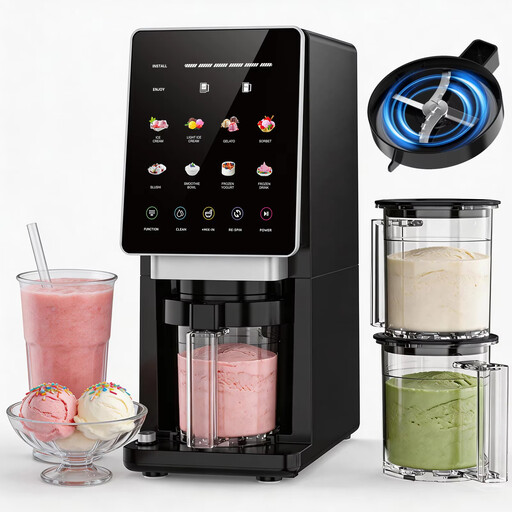
Teendow KF-2501U1
An option to compare if a self-cleaning function and multiple presets are important to your shared cleaning routine.
The product title lists eight preset programmes, a self-cleaning function, and mixing and restart functions. It doesn’t state the tank capacity or ice-making time.
View at Joybuy
 No image available
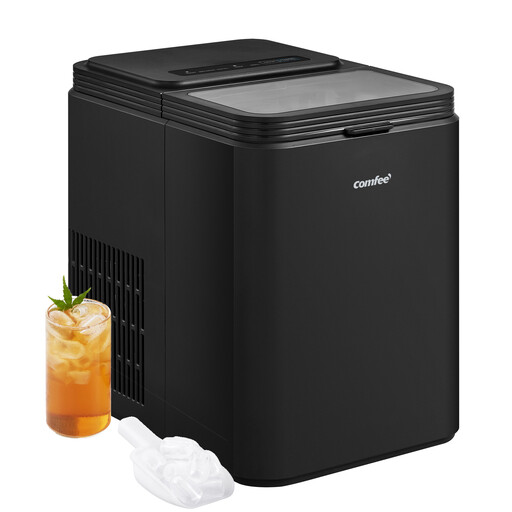
COMFEE’ RCI12BL1EU(E)
May suit you if you want to factor in a small first batch and a removable basket for use by housemates.
The product title lists eight ice cubes in six minutes, a 1.3-litre tank, two ice sizes, a self-cleaning function, and a supplied ice scoop and basket.
View at Joybuy
 No image available
CONOPU ice maker, two sizes
An option to compare if a removable basket and drain opening are important for tidying up after use.
The product title lists nine ice cubes in six minutes and two sizes. The product description gives a 1.5-litre tank and dimensions of 35 × 23 × 30 cm.
View at Joybuy
 No image available
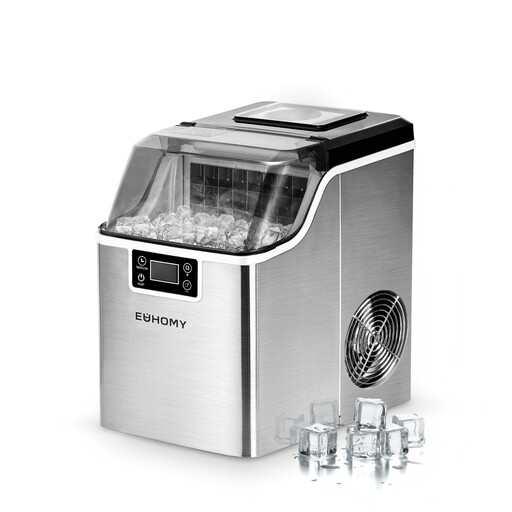
Euhomy ice maker, 3.2 l
Could be worth comparing if a larger tank and a bigger batch per cycle matter to you; bear in mind the manual step described.
The product title lists a 3.2-litre tank, 24 ice cubes in 13 minutes, a self-cleaning function, and an ice scoop and basket. According to the product description, the 24 cubes stick together after each cycle and need to be separated with the scoop before use.
View at Joybuy
Frequently asked questions
Does 12 kg of ice per 24 hours mean 12 kg is ready straight away?
No. It’s the manufacturer’s production claim over a 24-hour period; the first batch, the tank and the collection basket are separate figures. Compare them with how much ice you need in quick succession.
How do you keep an ice maker ready to use for several housemates?
Agree who will change the water, keep the basket and scoop clean, and empty and clean the appliance according to the manual. A self-cleaning function doesn’t replace these arrangements; the Netherlands Nutrition Centre also recommends clean hands and clean kitchen utensils.
What can you do if your ice maker breaks too soon under normal use?
According to ACM ConsuWijzer, you have a statutory guarantee in addition to any manufacturer’s warranty. If the product doesn’t meet the reasonable expectations you were entitled to have, the retailer is responsible for providing an appropriate solution; in the Netherlands, there isn’t one fixed statutory guarantee period for every appliance.
Which safety rules apply to an ice maker?
Check which EU rules apply to the exact model. Electrical equipment that is required to comply with CE rules must carry the required CE marking; parts that come into contact with drinking water or ice must comply with the relevant food contact rules, including Regulation (EC) No 1935/2004. The Dutch government and the European Commission explain these applicable requirements.
Do you have a cooling-off period when you buy online?
According to ACM ConsuWijzer, ordinary online product purchases generally come with a statutory cooling-off period of up to 14 days after delivery. Check whether a statutory exception applies.


