
Host serving several iced coffees at once
Wants to have ice ready before pouring, so looks at the machine’s output during preparation as well as the storage capacity of the ice basket.


If you’re planning to serve several iced coffees at once, prepare your ice supply in advance. Compare the stated ice production with the time you have to prepare and the available storage capacity. A large water tank or high daily output doesn’t, on its own, tell you how much ice will be ready when you serve. If worktop space is limited, weigh the smaller dimensions against the need to refill or empty the machine more often.
Wants to have ice ready before pouring, so looks at the machine’s output during preparation as well as the storage capacity of the ice basket.
Needs a countertop model that fits alongside other kitchen equipment and may be happy to refill the water or remove ice more often while cooking.
Wants easy access to the water reservoir, basket and scoop when using the machine around mealtimes. The Netherlands Nutrition Centre recommends using clean kitchen utensils.
Compare the stated output with the time you have before serving, and check the storage capacity separately. Manufacturer specifications don’t measure how the machine performs over an entire serving session.
| What to consider | What should you check? | Who is this important for? |
|---|---|---|
| Enough ice when you serve | Compare the stated output per hour or cycle with your preparation time, and check the storage capacity separately. | If I want to fill several glasses at once, I want to have enough ice ready before serving. Around 36% of consumers prioritise having enough ice for a single serving occasion. |
| Space and refilling | Measure the available width, depth and height, then compare the dimensions and tank capacity of the exact model version. | On a busy worktop, I want to know whether the machine will fit and how often it needs attention for refilling. Around 29% of consumers say available worktop space is their main concern. |
| Cleaning between uses | Check whether the basket and scoop are easy to reach or remove, and read the cleaning instructions for the specific model. | If I use the machine again around mealtimes, I want to be able to clean the parts that come into contact with water and ice properly. Around 21% of consumers prioritise ease of maintenance. |
| Preferred ice size | Check which ice sizes can be selected on the exact model; assess its output separately. | For iced coffee, I want to be able to choose an ice size that suits my glass. Around 14% of consumers give their preferred ice size the highest priority. |
Daily output, cycle time and the amount of ice the basket can hold are different things. A figure for 24 hours doesn’t tell you how much ice will be ready when your guests get their coffee.
Work backwards from serving time and compare the stated output during your preparation window with the basket’s capacity.
You may need extra preparation time or have to empty the ice basket repeatedly while the machine is running.
A model may fit on your worktop, but a small water tank could mean more frequent refills while you’re cooking or serving.
Measure the space, then compare the tank capacity of the models you’re considering.
Frequent refilling can interrupt your attention while cooking or serving.
A self-cleaning function doesn’t automatically mean that accessible parts such as the basket and scoop don’t need to be cleaned by hand.
Follow the instructions for the exact model and check how to access the water reservoir, basket and scoop.
The Princess 283069 is worth considering if you’re looking for a large tank and ice basket, as well as several adjustable ice sizes.
The IceChef Compact and IceChef Pro illustrate the choice between a smaller footprint and greater tank and storage capacity.
The DO9220IB may be worth considering if a removable basket, a drainage opening and individual spare parts are important to you.
These countertop models are designed for anyone who wants to make ice for iced coffee in advance. Pay particular attention to the stated cycle time, tank capacity and storage capacity; each answers a different question.
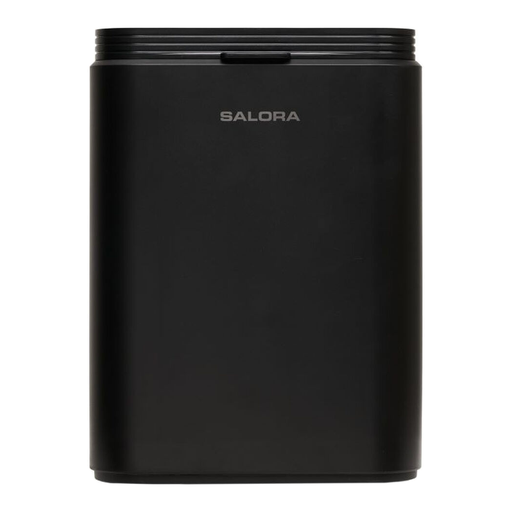 No image available
An option to compare if you want to assess ice output and storage capacity together for a serving occasion.
The product information lists two ice sizes, a 1.3-litre tank and a first batch of eight ice cubes in 6–9 minutes. The stated output is 12 kg per 24 hours; the basket holds 0.45 kg.
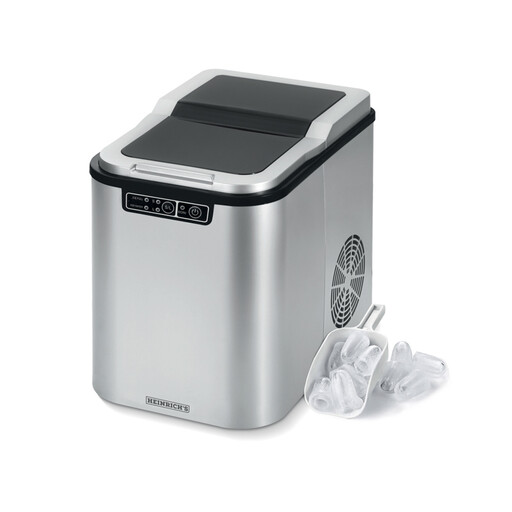 No image available
The larger tank may suit you if you want to refill less often while preparing. Also check the ice output and storage capacity separately.
The product information lists two ice sizes, nine ice cubes in nine minutes, a 2.2-litre tank, a self-cleaning function and a stated output of 12 kg per 24 hours.
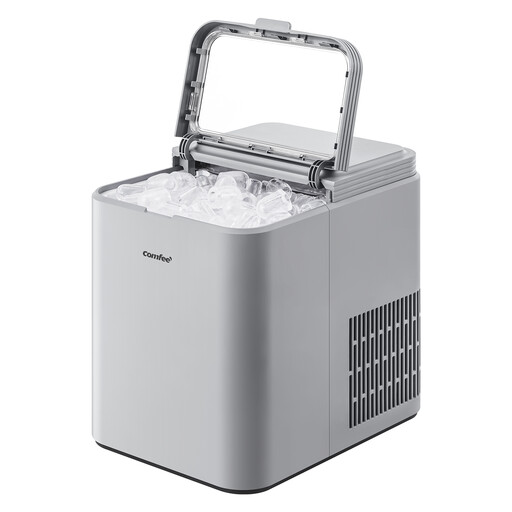 No image available
Worth considering if a short stated time for the first batch and easy access to the ice basket matter to you.
The product information lists eight ice cubes in six minutes, a 1.3-litre tank, two ice sizes and a self-cleaning function. The basket holds 0.4 kg; a scoop and basket are included.
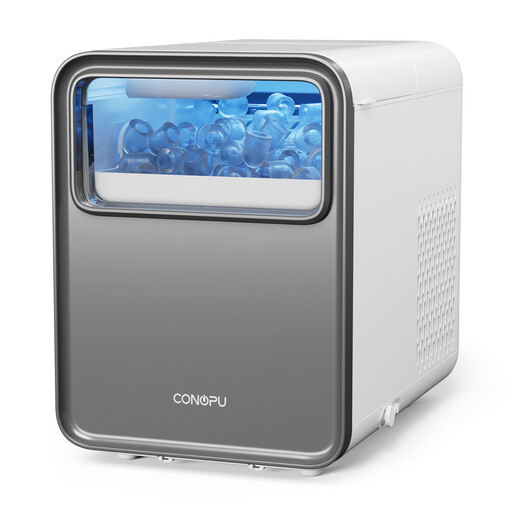 No image available
This countertop model may appeal if you want to select between two ice sizes; also check that the storage capacity suits your serving plans.
The product information lists nine ice cubes in 6–8 minutes, two ice sizes and a self-cleaning function. The ice basket has a stated capacity of 0.6 kg; the stated daily output is 26.5 lbs.
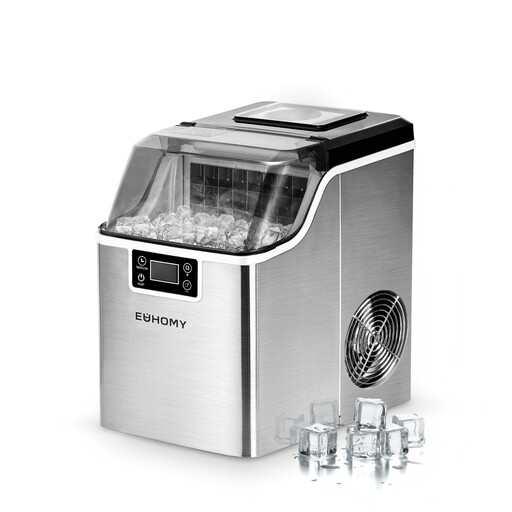 No image available
The larger tank may be useful if you want to make ice in advance and minimise refilling. Bear in mind how the ice cubes come out of the machine at the end of each cycle.
The product information lists 24 ice cubes in 13 minutes, a 3.2-litre tank, a self-cleaning function and an output of 24 kg per 24 hours. The 24 ice cubes are joined together after each cycle and need to be separated by hand before use.
No. The stated daily output isn’t the same as the amount of ice already in the basket. Plan backwards from serving time and check the output per cycle or hour, as well as the storage capacity of the model you choose.
Follow the instructions for the exact model when emptying and cleaning the water reservoir, basket and scoop. The Netherlands Nutrition Centre recommends using clean kitchen utensils; DOMO lists a removable basket and drainage opening for the DO9220IB.
Electrical equipment within the applicable range of 50 to 1,000 volts AC must meet the relevant EU safety requirements, including CE marking. Materials that come into contact with water or ice for consumption are subject to the applicable rules for food-contact materials, including Regulation (EC) No 1935/2004. This doesn’t automatically confirm whether a specific product complies with the requirements.
According to the Netherlands Authority for Consumers and Markets, the seller is responsible for the statutory guarantee if a product is faulty. The appropriate solution depends on the circumstances; a manufacturer’s guarantee doesn’t replace your statutory rights.
For distance purchases from a business, you generally have 14 days to change your mind, but there are exceptions. The Dutch Government also distinguishes this from purchases made from a private individual; check which terms apply to your order.