
Host with guests coming and going
You want to be able to scoop ice repeatedly while guests are visiting, so cycle time, basket capacity and refilling are your main considerations.


If you’re expecting guests who will need ice over an extended period, choose a machine with a cycle time that suits how often you want to refill it. If you plan to make ice in advance, you’ll also need enough usable freezer space. Measure your worktop too, and check how to refill and clean the machine. Manufacturer figures don’t guarantee the same output in every holiday cottage, so also check the electrical and food-contact documentation relevant to the specific model.
You want to be able to scoop ice repeatedly while guests are visiting, so cycle time, basket capacity and refilling are your main considerations.
You want to set the machine up temporarily or take it with you, so you need to consider its size, weight and the location of the plug socket.
You want to make ice before guests arrive and store portions separately in a freezer.
Suitable when: guests use ice throughout the afternoon or evening and you can refill the machine in between.
Bear in mind: a fast first cycle won’t give you a large supply straight away.
Suitable when: you’re setting up the machine temporarily or moving it between locations.
Bear in mind: check the dimensions and weight; a smaller water tank may mean more frequent refills.
Suitable when: your guests’ visit is planned and the holiday cottage has a usable freezer.
Bear in mind: the collection basket isn’t a freezer; make portions and store them separately.
| What to consider | What to look for when buying | Who is this important for? |
|---|---|---|
| Enough ice at the busiest time | Compare the number of cubes per cycle, cycle time and basket capacity. DOMO and Princess list these figures as manufacturer specifications for specific models. | If I want to be able to scoop ice repeatedly while guests are visiting, I look at both the cycle and the collection capacity. Around 36% of consumers give ice production during a visit top priority. |
| Fitting it in and taking it with you | Check the dimensions of the exact version, its weight, carrying handle and placement instructions. Confirm the details for the CASO IceChef Compact 3401, as the stated dimensions and weights vary. | If I have limited worktop space or want to move the machine, I need to know that the space and transport arrangements will work. Around 29% of consumers prioritise placement and transport. |
| Storing ice in advance | Check whether there’s a freezer and how much ice you can store in it. DOMO recommends transferring ice from the basket to a freezer bag for later use. | If I want to prepare portions before guests arrive, I need suitable freezer space as well as an ice maker. Around 21% of consumers give storing ice in advance top priority. |
| Cleaning and using it again | Check how to empty and clean the reservoir and basket, and follow the instructions for the exact model. Use drinking water. The Netherlands Nutrition Centre says Dutch tap water meets strict standards. | If I want to put the machine away between visits and use it again later, I need to know how to keep it clean according to the instructions. Around 14% of consumers make maintenance their first selection criterion. |
A stated quantity per 24 hours doesn’t tell you how much ice is ready in one cycle or how much fits in the basket at a time.
Compare these figures separately, and prepare portions in advance if lots of guests will want ice at the same time.
Preparing portions in advance takes time and requires freezer space.
For ice you want to use later, DOMO recommends transferring the cubes from the basket to a freezer bag.
Before buying, check whether the holiday cottage has a usable freezer.
The stated dimensions and weights for the CASO IceChef Compact 3401 vary. An inaccurate measurement could mean the machine won’t fit in the space you had in mind.
Measure the worktop and confirm the dimensions and weight of the exact version.
The DO9200IB is an example of a machine for making ice repeatedly and transferring portions to a freezer.
The IceChef Compact may suit temporary setups where a carrying handle and small water tank are important.
Version 01.283069.01.001 is an example to consider if different cube sizes and collection capacity matter to you.
This selection focuses on machines for making ice repeatedly while guests are visiting. For the specific model, also check the relevant electrical and food-contact documentation.
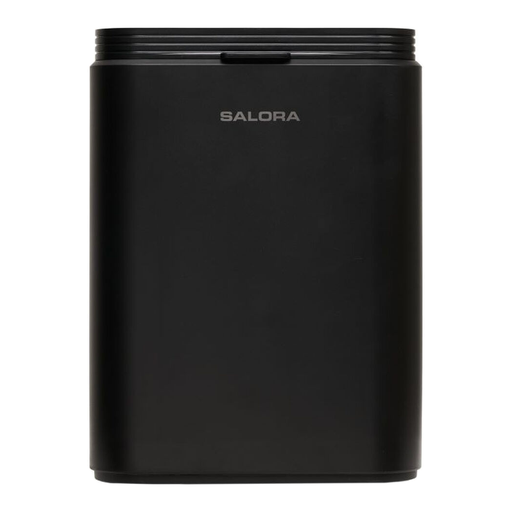 Image unavailable
An option to compare if you want to make successive batches while guests are visiting.
The product name lists 8 cubes in 6–9 minutes, up to 12 kg per 24 hours, two ice sizes and a 1.3-litre reservoir.
The instructions specify an earthed 220–240 V socket and at least 15 cm of clearance all around; don’t use an extension lead or multiway adaptor.
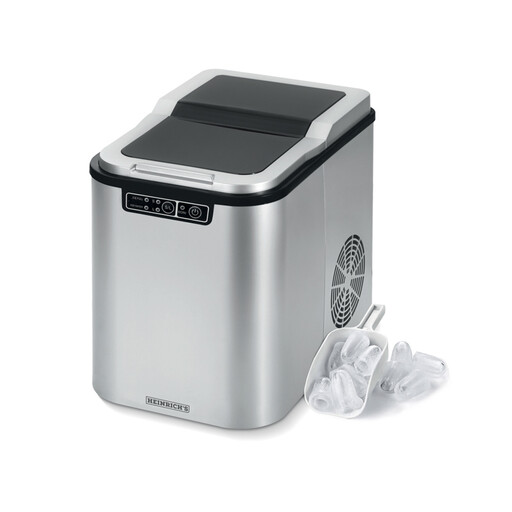 Image unavailable
An option to compare if you want to make successive batches of ice while guests are visiting.
The product name lists 9 cubes in 9 minutes, up to 12 kg per 24 hours, a 2.2-litre reservoir and a self-cleaning function.
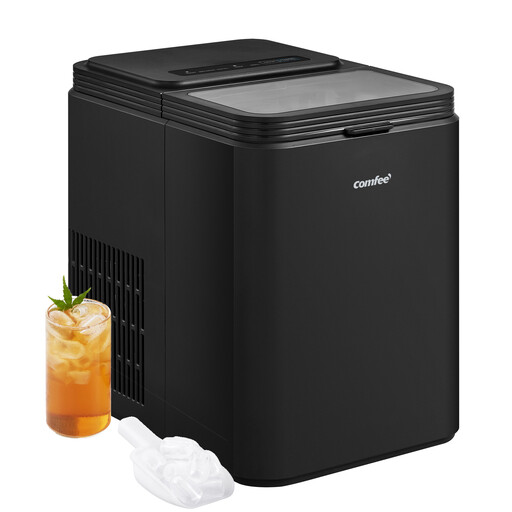 Image unavailable
An option to compare if you want to make batches while guests are visiting and choose between different ice sizes.
The product name lists 8 cubes in 6 minutes, up to 12 kg per 24 hours, a 1.3-litre water tank and a self-cleaning function.
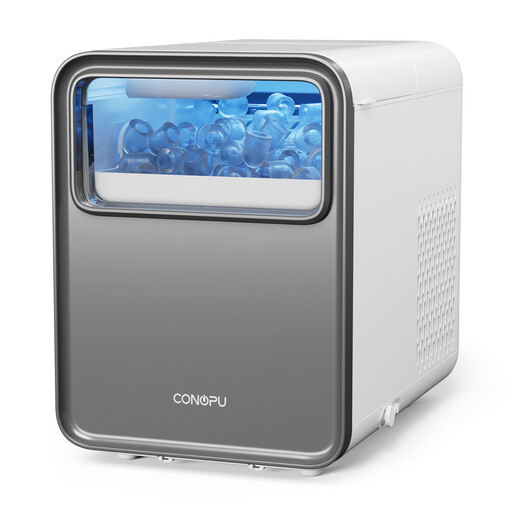 Image unavailable
An option to compare if you want to make batches while guests are visiting and place the appliance on the worktop.
The product name lists 9 cubes in 6 minutes, a stated daily output of 26.5 lb and two ice sizes.
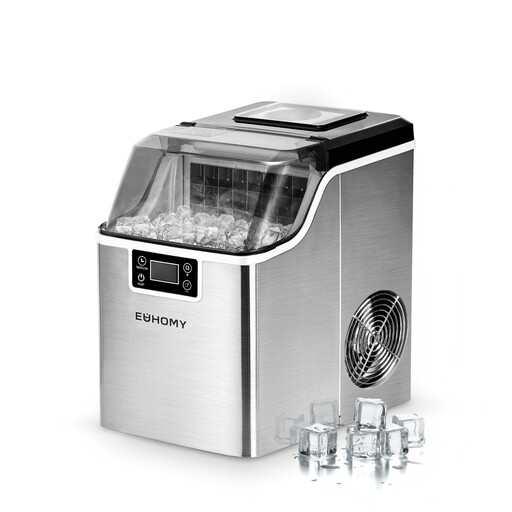 Image unavailable
An option to compare if you want to make larger successive batches while guests are visiting.
The product name lists 24 cubes in 13 minutes, up to 24 kg per 24 hours, a 3.2-litre tank and a self-cleaning function. The product information says that joined cubes need to be separated by hand before use.
No. A stated daily output doesn’t tell you how much ice is ready in the first cycle or how much fits in the collection basket. Compare these figures separately and, if needed, prepare portions before your guests arrive.
For the DO9200IB, DOMO recommends transferring ice from the basket to a freezer bag if you want to use it later. So check whether the holiday cottage has a usable freezer.
Use drinking water and follow the instructions for the exact model when emptying and cleaning it. The Netherlands Nutrition Centre says Dutch tap water meets strict standards. For version 01.283069.01.001, Princess warns against leaving water in the appliance for a long time.
No. According to ACM ConsuWijzer, your statutory guarantee is separate from any manufacturer’s or seller’s guarantee. What you can reasonably expect from a product is also taken into account when assessing your statutory guarantee.
Electrical equipment within the applicable range of 50–1,000 V AC must meet European electrical safety and CE marking requirements. Parts that come into contact with water or ice for consumption are subject to the relevant EU rules on food-contact materials. According to the European Commission, a CE mark is not proof of independent approval by an authority.