
Spontaneous iced-coffee maker
You don’t want to have to buy or prepare ice before you can enjoy a drink after getting home. The wait for your first batch matters more to you than the total output over a day.


If you want ice ready for your first iced coffee soon after getting home, compare the stated time to the first batch and the number of cubes per cycle; daily output doesn’t tell you how much ice will be ready straight away. Then choose a tank and machine size that will fit on your worktop, and check how to clean the basket and water-contact parts. Manufacturer figures are not the same as a like-for-like independent test.
You don’t want to have to buy or prepare ice before you can enjoy a drink after getting home. The wait for your first batch matters more to you than the total output over a day.
You want to make ice for your drinks, but have limited worktop space. So check both the machine’s external dimensions and how much room it needs when in use.
You regularly make more than one iced coffee. In that case, successive cycles, refilling and emptying or storing the ice you’ve made are all practical points to consider.
Start with the time and quantity for your first batch. Then check that the machine will fit and find out how to look after the water tank and ice basket.
| What to consider | What should you check? | Who is this important for? |
|---|---|---|
| Wait time for your first iced coffee | Compare the stated time in minutes with the number of cubes per cycle for that exact model. DOMO gives both around 7 minutes in the text and 8 minutes in the specifications table for the DO1132IB. | If you want to make a drink as soon as you get home, the first batch matters more than the daily output. Around 38% of consumers say the speed of the first batch is their top priority. |
| Cleaning and water management | Check that the ice basket and parts that come into contact with water are accessible, and follow the cleaning instructions for your model. DOMO lists a self-cleaning programme and drainage opening for the DO1132IB. | If you use the machine regularly, you’ll want to know how to drain the water and clean the parts. Around 23% of consumers prioritise easy maintenance. |
| Worktop space | Measure the space available and compare it with the external dimensions of the exact model. Also allow room to refill the water and scoop out the ice. | If you have little free worktop space, you’ll want to know in advance whether the machine will fit there comfortably. Around 23% of consumers say suitable dimensions are their top priority. |
| Ice for several drinks | Check the tank capacity, time and quantity per cycle, and basket capacity separately. A larger tank or higher daily output doesn’t mean more ice will be ready straight away. | If you make several drinks one after another, you’ll want to know when you may need to refill the tank or empty the basket. Around 16% of consumers prioritise having ice for several drinks. |
A figure for 24 hours doesn’t tell you how many cubes will be ready for your first drink after you get home.
Compare the time for the first cycle and the number of cubes per cycle with what you need for one or more drinks.
These figures describe different things. For example, Princess lists a capacity of 2.8 litres and a separate ice basket capacity of 800 grams for the 283069.
Check the external dimensions, how much water you can add and when you’ll need to empty the ice basket.
A cleaning programme doesn’t automatically replace draining and cleaning the water-contact parts and basket as instructed in the manual.
Before you buy, check how to access the parts and follow the instructions for the model you choose.
DOMO offers models with different tank capacities and maintenance features.
The Princess 283069 is worth considering if you’re looking for several ice-size settings and a larger stated capacity.
According to CASO Design, the IceMaster Pro 3301 has two ice sizes and a 2.2-litre tank.
The Severin EZ 7415 is worth a look if you’re considering its stated capacity and how easy it is to access the parts.
These are home ice makers with different tank capacities and stated ice sizes. Compare each model with the space you have and the amount of ice you want to make.
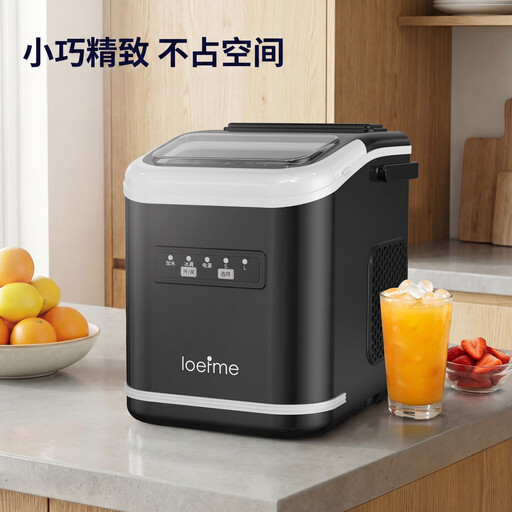 No image available
Consider this model if you want two ice sizes and its stated tank capacity suits your needs.
Water tank: 1.4 L. Two ice sizes: S/L. According to the product title: 9 ice cubes per cycle in 6–13 minutes and an output of 12 KG/24H. The stated cycle time is a range, not a fixed wait for the first batch.
The product title lists an automatic cleaning function.
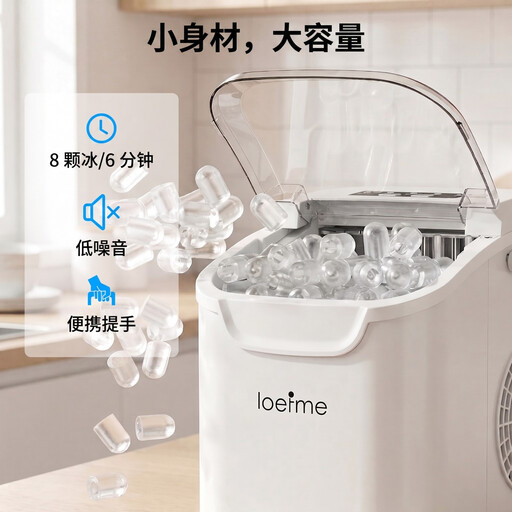 No image available
Consider this model if you want two ice sizes and a 0.8 L tank suits the amount you make.
Water tank: 0.8 L. Two ice sizes: S/L. According to the product title: 9 ice cubes per cycle in 6–13 minutes and an output of 12 KG/24H. The stated cycle time is a range, not a fixed wait for the first batch.
The product title lists an automatic cleaning function.
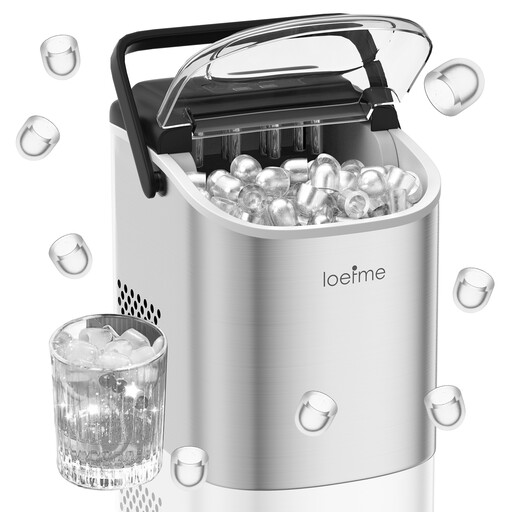 No image available
Consider this model if you want two ice sizes and a 1.2 L tank suits your needs.
Water tank: 1.2 L. Two ice sizes: S/L. According to the product title: 9 ice cubes per cycle in 6–13 minutes and an output of 12 KG/24H. The stated cycle time is a range, not a fixed wait for the first batch.
The product title lists an automatic cleaning function.
No. A figure for 24 hours describes output over a longer period. For ice straight away, also check the time and number of cubes in the first cycle. DOMO says the DO9253IB makes 9 cubes in 9 minutes and up to 12 kg in 24 hours.
Don’t assume the basket is suitable for long-term ice storage unless the instructions for your specific model say so. DOMO says you can freeze the cubes made by the DO9253IB to build up a supply; follow your appliance’s manual for storing and emptying the ice.
Use water that’s safe to drink and follow the machine’s manual. The Netherlands Nutrition Centre says Dutch tap water is safe to drink, but also highlights situations where lead from old pipes may be a concern.
Yes. The Netherlands Food and Consumer Product Safety Authority sets out requirements for materials that come into contact with food. Electrical appliances for which harmonised EU rules require CE marking must also comply with those rules. The European Commission explains that CE marking isn’t compulsory for every product and isn’t a certificate issued by a central EU body; check which requirements apply to the specific model.
For a standard online purchase in the Netherlands, you generally have a statutory 14-day cooling-off period after delivery, with some exceptions. You’re also covered by the legal guarantee: according to ACM ConsuWijzer, a product must last for as long as you can reasonably expect it to under normal use. This is separate from any manufacturer’s warranty.