
Host serving several thirsty guests at once
If you’re serving several cold drinks during the same meal, it’s especially useful to have the first batches ready on time and a plan for the next round.


For a meal with guests, choose an ice maker based on how much ice is available for the first drinks and subsequent rounds, not just its 24-hour production rate. Compare the number of cubes per cycle and the capacity of the ice basket; if you expect a larger number of people to need ice at once, you can make some in advance and freeze it. A more compact machine takes up less space, but may need refilling more often.
If you’re serving several cold drinks during the same meal, it’s especially useful to have the first batches ready on time and a plan for the next round.
If you want to have your ice ready before the meal, you can make several batches and freeze them rather than relying on the machine’s daily production rate alone.
If you want to keep the appliance on the worktop while cooking and clean it afterwards, compare its dimensions, tank capacity and maintenance requirements.
First decide whether you want to make fresh batches during the meal or prepare a supply in advance. Then consider the space available and the maintenance involved.
| What to consider | What to look for | Who is this most important for? |
|---|---|---|
| Ice ready in time for drinks | Compare the number of cubes per cycle, cycle time and ice basket capacity for the exact model. | If I’m serving drinks one after another, I want to know when the next batch will be ready. Around 36% of consumers prioritise having ice for the first drinks and subsequent rounds. |
| Enough ice for a busy round | Check the ice basket capacity and whether you can freeze several batches before your guests arrive. | If lots of glasses need ice at once, I’d rather prepare a supply in advance than wait during the meal. Around 29% of consumers prioritise having ice ready before dinner. |
| Worktop space | Measure the space available and compare the machine’s dimensions, tank capacity and how easy the filling opening is to reach. | If I have limited worktop space, I want to be able to position the appliance and top it up if needed. Around 21% of consumers focus mainly on space and refilling. |
| Cleaning after use | Check the model-specific instructions for emptying, cleaning, rinsing and drying. | If I use the machine often, I want to know in advance what cleaning it involves. Around 14% of consumers give ease of maintenance top priority. |
Production per 24 hours, cubes per cycle and the amount the ice basket holds are three different things. So a high daily production figure doesn’t mean all that ice will be ready immediately.
Plan the first round of drinks around the cycle specifications and make extra ice in advance if you expect a busy period.
Making ice in advance takes time and requires enough room in the freezer.
For the Klarstein Albaron 10040346, the manufacturer lists a 1.5-litre water tank and a 600-gram ice basket. The tank capacity isn’t the amount of ice the basket can hold.
Compare the tank, ice basket and production per cycle separately for the exact model.
A cleaning programme doesn’t, by itself, tell you what other steps are needed. For example, the maintenance instructions for the H.Koenig KB15 also describe washing, rinsing and drying.
Before buying, read the manual for the exact model and follow its maintenance instructions.
The DO9253IB is an option for making batches during a dinner; the separate DO1132IB is smaller and may be worth considering if space is limited.
According to Princess, the ice maker 283069, model 01.283069.01.001, has three adjustable cube sizes and an 800-gram ice basket.
According to the manufacturer, the Albaron 10040346 offers two cube sizes and a self-cleaning programme.
The KB15 is worth considering if you want to compare how easy it is to use, its maintenance instructions and the availability of model-specific parts.
These Joybuy products are ice makers for cold drinks. Compare the listed cycle time, cube sizes, tank and ice basket to find one that suits your dinner plans. Before buying, also check the information that applies to the exact model on food-contact materials and electrical safety.
 No image available
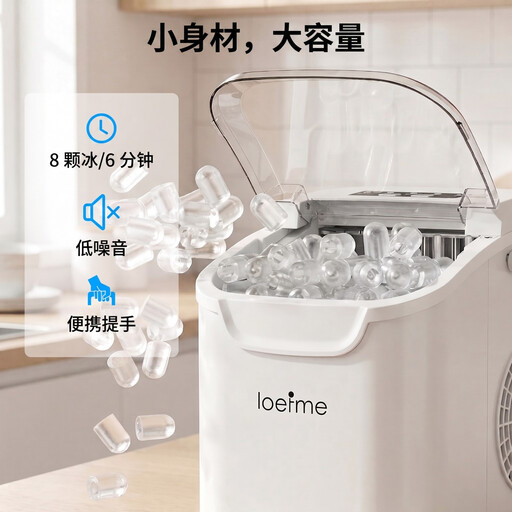
The listed cycle time may be useful if you want to make fresh batches during dinner.
The product name states that it makes 8 cubes in 6–9 minutes, offers two cube sizes and has a 1.3-litre water tank. The product description lists an ice basket capacity of 0.45 kg.
 No image available
The stated batch size and tank capacity are worth considering if you want to make ice during a meal.
The product name states that it makes 9 cubes in 9 minutes, offers two cube sizes, has a 2.2-litre tank and includes a self-cleaning function.
 No image available
The stated cycle time and cube sizes may be useful if you’re serving a variety of cold drinks.
The product name states that it makes 9 cubes every 6–13 minutes, offers S and L sizes and has a 0.8-litre water tank. It also lists automatic cleaning.
 No image available
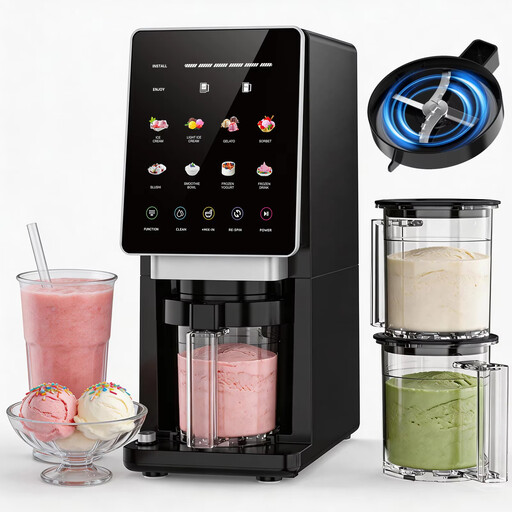
This countertop model may suit you if you want to keep an ice maker on the worktop while you cook.
The product name lists eight preset settings, as well as self-cleaning, mixing and resume functions.
 No image available
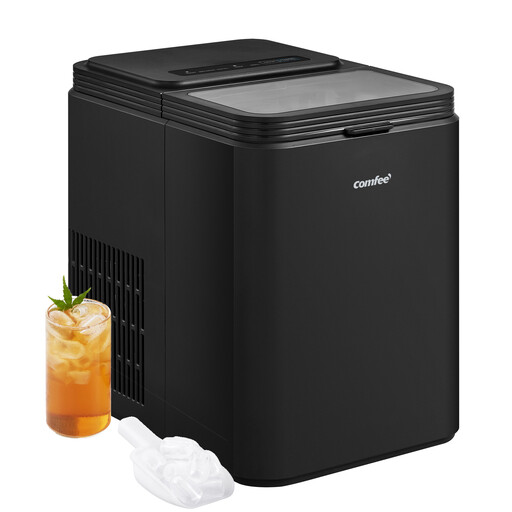
The stated cycle time and ice basket capacity may be useful if you want to top up your supply during dinner.
The product name states that it makes 8 cubes in 6 minutes, offers two cube sizes, has a 1.3-litre tank and includes a self-cleaning function. The product description lists an ice basket capacity of 0.4 kg.
That figure alone doesn’t tell you how much ice is ready to use straight away. DOMO lists 12 kg per 24 hours for the DO9253IB; for the first round, also compare the number of cubes per cycle and the ice basket capacity, or make several batches in advance.
Yes. DOMO specifically states that you can freeze the cubes made by the DO9253IB. Plan how many cycles you’ll need and make sure you have enough space in your freezer.
Follow the manual for the exact model. For the H.Koenig KB15, the manufacturer recommends washing the ice tray, rinsing and drying it thoroughly, and draining any remaining water. Don’t follow these instructions for another model without checking its manual first.
Materials that come into contact with water or ice for consumption must comply with the applicable EU rules on food-contact materials, including Regulation (EC) No 1935/2004, as explained by the European Commission. Electrical models that fall within the scope of the Low Voltage Directive must also meet the applicable electrical safety and conformity requirements. Check the evidence for the exact model; product information alone doesn’t prove that all applicable requirements have been met.
No. You don’t need an extended warranty to have statutory rights when buying as a consumer in the Netherlands. The Dutch government explains that there is no fixed statutory warranty period and that the seller is your point of contact if a product is faulty. Compare any additional cover with the rights you already have.