
Host who prepares ice in advance
If you live alone and don’t want to wait for several small batches when you have guests, it may be useful to transfer the ice to the freezer. DOMO recommends this for the DO9200IB.


If you only make ice occasionally for guests, the amount you can store at a time matters just as much as how long the first batch takes. Compare the ice basket capacity with the amount you want to have ready, and consider whether you can transfer earlier batches to the freezer. For an electric model, also check the CE marking on the specific item being offered.
If you live alone and don’t want to wait for several small batches when you have guests, it may be useful to transfer the ice to the freezer. DOMO recommends this for the DO9200IB.
If you only plan to use the appliance when you have guests, compare its external dimensions with the space where you’ll store it. Salora lists the external dimensions and ice basket capacity for the ICE12B; these tell you different things.
If you put the machine away after use, instructions for emptying and cleaning it are important. DOMO lists a drain opening for the DO9220IB; check the manual for the model you’re considering.
Start by thinking about how much ice you want ready when your guests arrive. Then consider how much space the appliance takes up and what maintenance it needs after use.
| Buying concern | What to look for | Who is this most relevant to? |
|---|---|---|
| Enough ice when guests arrive | Compare the stated cycle time and number of cubes per cycle with the ice basket capacity. Also check whether you can transfer ice to the freezer. | When I have friends over, I don’t want to wait for another cycle every time I need more ice. Around 40% of consumers say having enough ice ready when guests arrive is their main buying concern. |
| Worktop space | Measure the available space and compare the external dimensions, water reservoir and ice basket capacity. | When my worktop space is limited, I want to know whether the machine will fit and where I can store it between visits. Around 30% of consumers say space is their main buying concern. |
| Maintenance after use | Read the model-specific instructions for emptying and cleaning, and check which parts can be removed or accessed. | If I only use the machine occasionally, I want to know how to look after the water and appliance afterwards. Around 20% of consumers say maintenance is their main buying concern. |
| Value for occasional use | Think about how often you have guests and whether you have space to store ice made in advance. Check the cost and terms of the specific offer. | If I only need ice now and then, I weigh up a separate appliance against how often I’ll use it and the storage space it needs. Around 10% of consumers say buying an appliance for occasional use is their main buying concern. |
A stated production rate over 24 hours is different from the amount that fits in the ice basket at one time. Salora lists a daily output of 12 kg and an ice basket capacity of 0,45 kg for the ICE12B.
Compare the basket capacity with how much you’ll need when guests arrive, and allow time to transfer earlier batches to the freezer if needed.
Preparing ice in advance takes extra effort and enough freezer space.
Not all DOMO models have the same reservoir or drain. Comparing them by brand name alone could therefore give you the wrong impression.
Check the full model number and compare the specifications with the offer and the manufacturer’s information.
ACM ConsuWijzer distinguishes between statutory guarantees and a voluntary manufacturer’s or seller’s warranty.
Read the terms of any additional warranty and check what rights you have against the seller.
An additional warranty may cost extra; review the terms before paying for it.
The ICE12B is a worktop model whose external dimensions, reservoir and ice basket can each be compared separately.
The DO9200IB may be worth considering if you want to make several batches in advance; the DO9220IB has different listed features.
The 283069 is a useful reference if a timer, adjustable ice sizes and the stated ice basket capacity are important to you.
These models are worktop ice makers for home use. Compare the stated cycle time with the basket capacity, and check the CE marking and the instructions for use and maintenance on the item being offered.
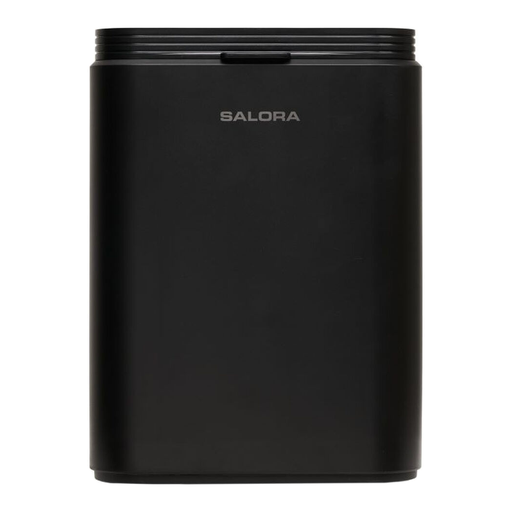 Image unavailable
A model to compare if you want to make a first batch for guests and may want to transfer the ice to the freezer in advance.
The stated cycle makes 8 ice cubes in 6–9 minutes; the water reservoir holds 1,3 litres and the ice basket has a capacity of 0,45 kg. Allow for at least 15 cm of clearance on all sides for ventilation.
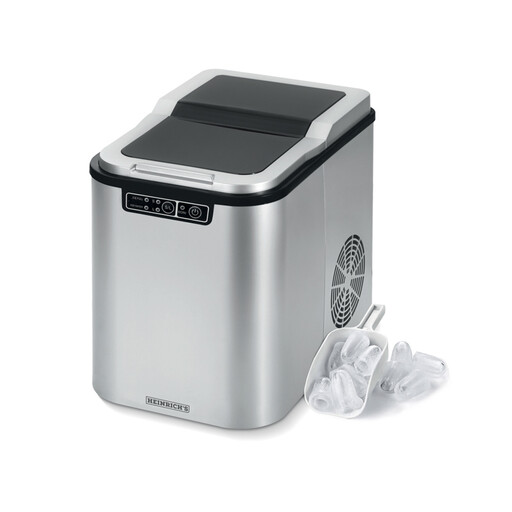 Image unavailable
An option to compare if you want to weigh the stated cycle time and reservoir capacity against how much ice you’ll need for guests.
The product title lists 9 ice cubes every 9 minutes, a 2,2-litre water tank, two ice sizes and a self-cleaning function.
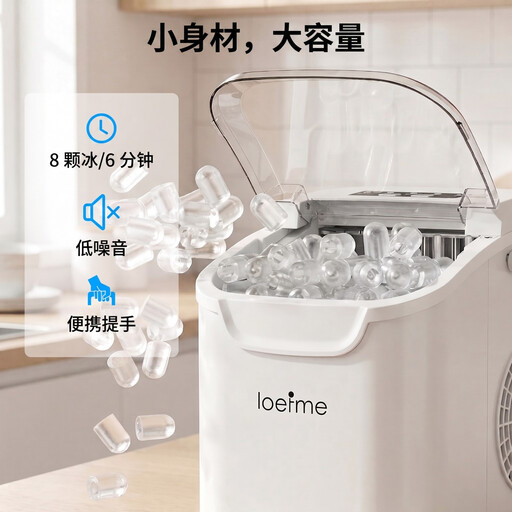 Image unavailable
This model may suit your comparison if choosing between two ice sizes and the stated reservoir capacity are important to you.
The product title lists 9 ice cubes every 6–13 minutes, a 0,8-litre reservoir, two ice sizes (S/L) and automatic cleaning.
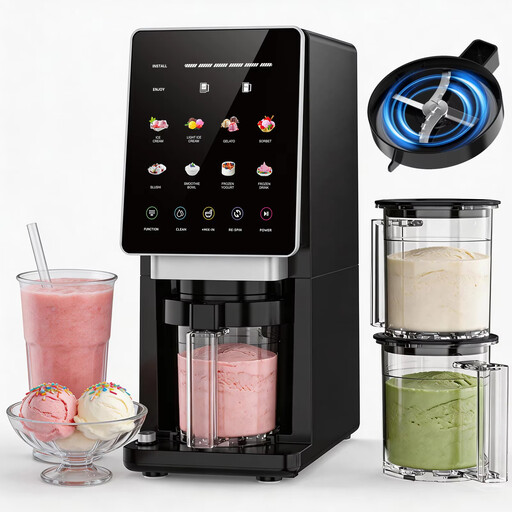 Image unavailable
Compare this model if you’ll make use of the listed programmes and controls.
The product title lists 8 preset programmes, a self-cleaning function, and mixing and restart functions.
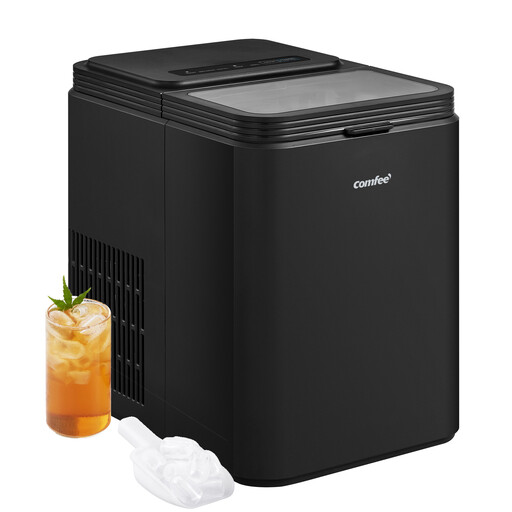 Image unavailable
A model to compare if you want to see how the stated first cycle, reservoir capacity and basket suit your plans for having guests.
The product title lists 8 ice cubes in 6 minutes, a 1,3-litre water tank and self-cleaning. The product information also lists a removable 0,4 kg basket and an ice scoop.
No. Daily output and the amount in the ice basket describe different things. Salora lists 12 kg per 24 hours and a basket capacity of 0,45 kg for the ICE12B; these are the manufacturer’s stated figures.
For the DO9200IB, DOMO recommends transferring the ice cubes from the basket to a freezer bag. Follow the individual instructions for other models.
According to the Dutch government, tap water in the Netherlands is safe to drink, but you should also follow your appliance’s instructions. For example, DOMO specifies spring water for the DO9220IB. Don’t use water that is subject to a local advisory.
Check the manual for instructions on emptying and cleaning your chosen model. DOMO lists a drain opening for the DO9220IB; don’t assume that every model has one.
CE marking is compulsory for electrical consumer products, according to the Netherlands Food and Consumer Product Safety Authority (NVWA). The NVWA also states that testing is not compulsory for this product group. Check the marking and the identity of the model being offered; a product specification alone doesn’t confirm this.
Not necessarily. ACM ConsuWijzer explains that statutory guarantees exist alongside a manufacturer’s or seller’s warranty. What you can expect from a product and the circumstances of the fault both matter; if there’s a problem, contact the seller.