
Host serving lots of drinks at once
Wants a usable supply of ice ready before pouring drinks, rather than waiting for successive cycles during the meal. DOMO says you can make ice cubes in advance and freeze them with the DO9253IB.


For a dinner party where lots of fruit drinks are being poured at once, it’s more practical to make ice in advance and store it in the freezer than to rely on successive fresh batches. If you’re pouring drinks throughout the meal, compare the time and quantity per cycle, as well as the water and ice reservoirs. A stated output per 24 hours is not the same as having a supply ready for the first round.
Wants a usable supply of ice ready before pouring drinks, rather than waiting for successive cycles during the meal. DOMO says you can make ice cubes in advance and freeze them with the DO9253IB.
Wants to keep making ice while pouring drinks, so compares the cycle time, water reservoir and ice basket separately. For example, Princess lists the water capacity and ice basket capacity separately for the 283069.
Needs to leave room for serving dishes and other kitchen appliances. Check the exact model’s external dimensions before clearing a space; DOMO lists the dimensions for the DO9253IB.
First decide whether you mainly need ice all at once or in successive batches. Then assess the reservoirs and available worktop space as separate features.
| What to consider | What to look for when buying | Who it’s for |
|---|---|---|
| Having ice ready all at once | Compare the stated quantity and time per cycle with when you’ll be serving. Also check whether you can freeze cubes made in advance. | If I want to fill lots of glasses at around the same time, I don’t want to rely on new batches while serving. Around 36% of consumers prioritise having ice ready all at once. |
| Continuous supply | Check the water reservoir and ice basket capacities separately, as well as the output per cycle. | When pouring drinks throughout the meal, I want to avoid stopping to refill the water or empty a full basket. Around 29% of consumers prioritise a continuous supply with as few interruptions as possible. |
| Worktop space | Check the external dimensions and make sure there’s room to use the lid and basket. | If the worktop is already covered with dishes and appliances while you’re cooking, the machine needs to fit into the space available. Around 21% of consumers focus mainly on the worktop space required. |
| Cleaning and maintenance | Read the cleaning instructions for the exact model and check that the basket and water outlet are accessible. | After the party, I want to be able to clean the parts that come into contact with water and ice properly. Around 14% of consumers prioritise ease of maintenance. |
A daily total doesn’t tell you how much ice is ready after the first cycle. This matters most when several guests are getting a drink at the same time.
Compare the stated quantity per cycle with when you’ll be serving. If needed, make several batches in advance and store them in the freezer; DOMO lists this as an option for the DO9253IB.
Making ice in advance takes extra preparation time and freezer space.
The water reservoir holds the water used to make ice; the ice basket collects the cubes. For the Princess 283069, the manufacturer lists these capacities separately.
Compare both figures and check how the machine indicates that it’s out of water or the basket is full.
Cleaning instructions vary by model. PRIMO states that the PR403IB is not dishwasher-safe.
Read the instructions for the exact model and check that you can reach the basket and water outlet easily.
The DO9253IB is worth considering if you want to make ice in advance and store it.
The 283069 is worth comparing if reservoir capacity and a choice of ice sizes matter to you.
The IceMaster Pro, article 3301, is worth comparing if you’re looking for two ice sizes and a 2.2-litre reservoir.
The PR403IB is worth including in your comparison if access to the parts you use and cleaning are important.
The silver KB1000692 is worth comparing with machines that have a smaller water reservoir.
These Joybuy products are ice makers for home use. Compare the stated quantity per cycle, water tank and the amount of worktop space each appliance needs.
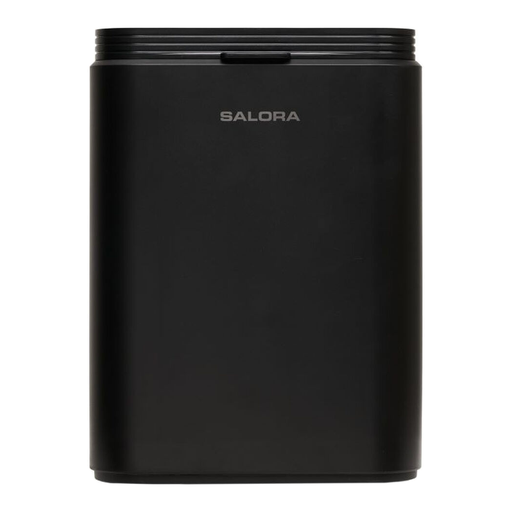 No image available
An option to compare if you want to make ice in successive batches and choose from two ice sizes.
The product title states that it makes eight ice cubes every six to nine minutes, with a maximum output of 12 kg per 24 hours and a 1.3-litre water reservoir.
The stated daily output doesn’t indicate how much ice is ready to use straight away.
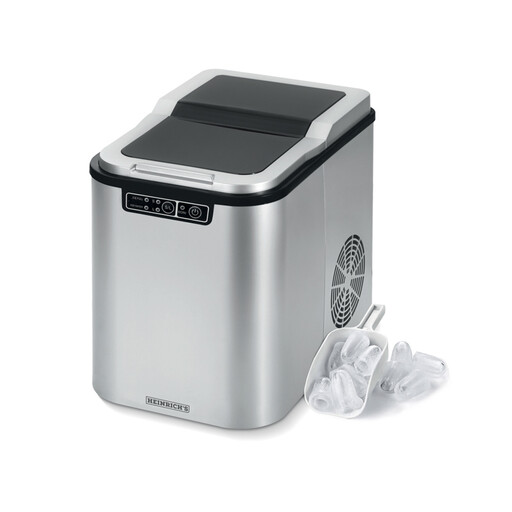 No image available
An option to compare if you want to make ice repeatedly and a larger water reservoir is important to you.
The product title states that it has a 2.2-litre reservoir, makes nine ice cubes every nine minutes and has a maximum output of 12 kg per 24 hours.
The product information specifies an earthed 220–240 V socket and at least 15 cm of clear space around the appliance for ventilation.
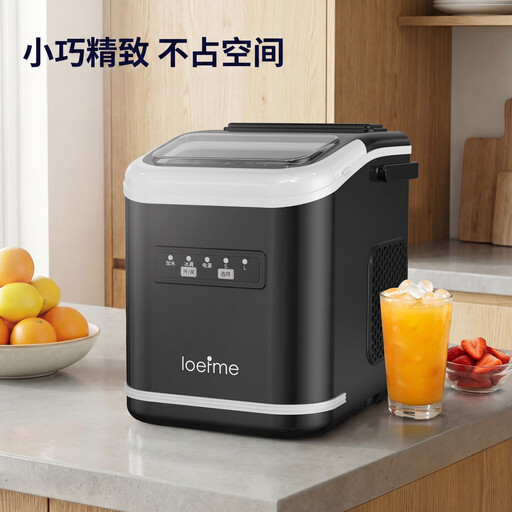 No image available
An option for anyone who wants to make several batches while serving drinks and choose from two ice sizes.
The product title states that it makes nine ice cubes every six to thirteen minutes, with a maximum output of 12 kg per 24 hours, a 1.4-litre reservoir and automatic cleaning.
The stated output per 24 hours is separate from the amount ready after the first cycle.
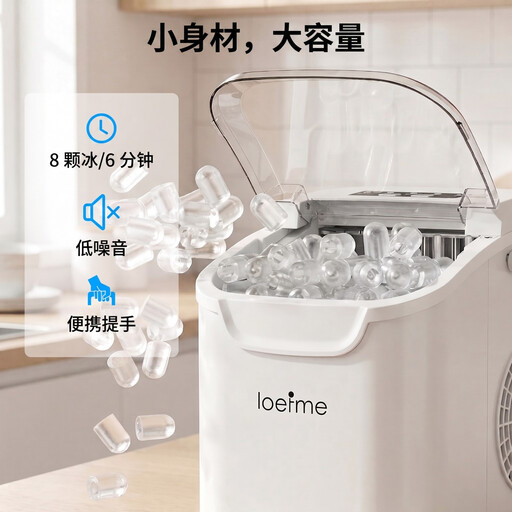 No image available
An option to compare if a smaller water tank suits your needs and you want two ice sizes.
The product title states that it makes nine ice cubes every six to thirteen minutes, with a maximum output of 12 kg per 24 hours, a 0.8-litre reservoir and automatic cleaning.
The stated capacity per 24 hours doesn’t mean that this quantity will be ready straight away.
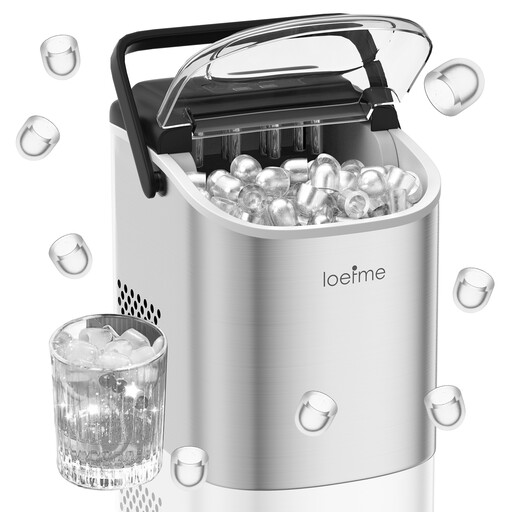 No image available
An option to compare if you’re looking for a 1.2-litre reservoir and a choice of two ice sizes.
The product title states that it makes nine ice cubes every six to thirteen minutes, with a maximum output of 12 kg per 24 hours, a 1.2-litre reservoir and automatic cleaning.
A stated daily capacity doesn’t tell you how much ice will be ready for the first drinks.
Not necessarily: this figure describes output over 24 hours, not the first batch ready to use. Work out how much ice you’ll need when serving and, if necessary, make cubes in advance and freeze them; DOMO recommends this approach for the DO9253IB.
Use drinking water, keep the scoop and other kitchen utensils clean, and follow the cleaning instructions for the exact model. Don’t assume the parts are dishwasher-safe: PRIMO specifically states that the PR403IB is not dishwasher-safe.
If a product is faulty, the seller must provide a solution under the rules set out by the Dutch government; this is separate from the manufacturer’s warranty. For online consumer purchases, you generally have 14 days from delivery to change your mind. Check the applicable exceptions and returns policy; the statutory cooling-off period is not the same as a remedy for a faulty product.
Materials that come into contact with food during normal or reasonably foreseeable use are covered by the relevant European rules on food contact materials, including Regulation (EC) No 1935/2004. Electrical equipment within the applicable voltage range must meet the requirements of the Low Voltage Directive. According to Your Europe, CE marking is only compulsory when the harmonised EU rules require it for that product. Check the documentation for the exact model: these general rules do not, by themselves, confirm that a specific model complies.