
Host serving lots of drinks at once
You want to be able to serve ice when guests arrive and throughout dinner. So, check how much ice the machine makes per cycle, the time between batches and when you can start it.


If you want to keep making ice during your dinner, compare the number of cubes per cycle and the cycle time: the stated output per 24 hours won’t tell you how much ice will be ready when your guests arrive. If you have time beforehand and space in your freezer, you can build up a supply. Also consider the water tank and ice collection capacity, the space on your worktop and how easy the machine is to clean.
You want to be able to serve ice when guests arrive and throughout dinner. So, check how much ice the machine makes per cycle, the time between batches and when you can start it.
You make ice earlier in the day and freeze separate portions, so the machine doesn’t have to meet all the demand while your guests are there.
You’ll need to consider the worktop space available, as well as refilling, emptying and cleaning the machine while the kitchen is in use.
A good fit if: you have little freezer space and need small batches while your guests are there.
Bear in mind: the first batch won’t be ready until a full cycle has finished; a full ice basket or empty water tank may need your attention.
A good fit if: you have time and freezer space before your guests arrive to prepare batches.
Bear in mind: you’ll need suitable freezer space and must store the ice separately in advance.
First compare how long it takes to make the first batch, then decide whether you want to keep making ice while your guests are there or freeze a supply in advance.
| Concern | What should you look for? | Who is this important to? |
|---|---|---|
| Enough ice when guests arrive | Compare the number of cubes per cycle and the cycle time, and plan when to start the machine. Treat stated production rates as manufacturer claims. | If I want ice ready as soon as guests arrive, I need to know how many cycles I can plan beforehand. Around 36% of consumers prioritise peak demand when guests arrive. |
| Building up a supply in advance | Check that you have freezer space, and distinguish between the water tank, the ice collection capacity and ice you freeze separately. | If I have time to make ice earlier, I want to store portions so I don’t have to wait as long while serving drinks. Around 29% of consumers prioritise making a supply in advance. |
| Fitting on the worktop | Measure the space available and compare the dimensions and tank capacity of the exact model. | In a small kitchen, I want to keep enough worktop free and avoid having to top up the water all the time. Around 21% of consumers say limited kitchen space is their main concern. |
| Cleaning after use | Check how to clean the basket, tank and drain on the model you choose; follow the instructions and use drinking water. | If the kitchen needs to be tidy again after dinner, I want to know which parts I’ll need to empty and clean myself. Around 14% of consumers prioritise easy maintenance. |
A stated amount per 24 hours is not the same as having ice ready when guests arrive. The first batch takes a full cycle.
Plan around the first cycle and, if possible, make ice in advance for peak demand.
The tank holds water for making ice; the basket holds the ice cubes. The specification for one doesn’t tell you how much the other can hold.
Check both figures separately for the exact model.
A self-cleaning programme doesn’t automatically mean you won’t need to clean other parts.
Check how to clean the tank, ice basket and drain on your chosen model, and follow its manual.
DOMO has models with published specifications and different tank capacities, including the compact DO1108IB with a 1-litre tank and the DO9247IB with a 2.8-litre tank.
According to KitchenBrothers, the silver KB1000692 has a 2-litre tank and makes two sizes of ice cubes; you fill this model by hand.
The Dutch product page for model 283069 lists three adjustable cube sizes, a 2.8-litre water tank and an ice collection capacity of 800 grams.
This selection features countertop ice makers with a range of stated cycle times, tank capacities and features.
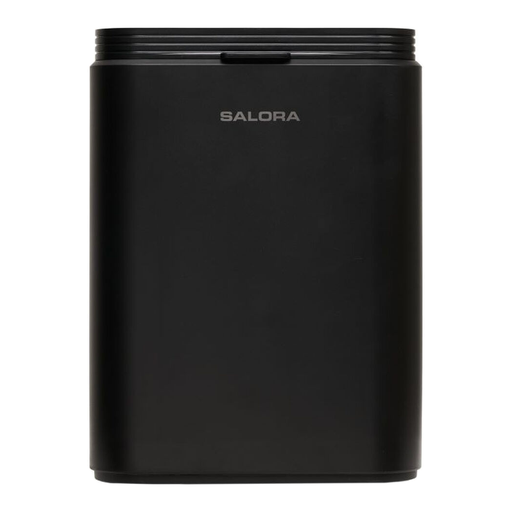 No image available
A good choice if you want to make more ice during dinner and have the option of freezing portions separately.
According to the product information, this model makes 8 ice cubes in 6–9 minutes and has a stated output of 12 kg per 24 hours. The tank holds 1.3 litres and the removable collection basket has a capacity of 0.45 kg. You can choose between two ice cube sizes.
The stated dimensions are 213,4 × 295,9 × 270 mm; the instructions recommend leaving 15 cm of clearance all around. After use, empty any remaining water and wipe the inside with a soft cloth.
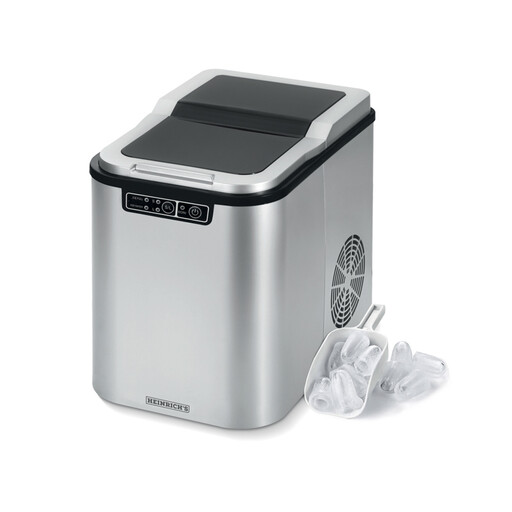 No image available
An option if you want to make more ice while your guests are there and a self-cleaning function is important to you.
The product title states that it makes 9 ice cubes in 9 minutes, with a maximum output of 12 kg per 24 hours and a 2.2-litre water tank. This model offers two ice cube sizes and a self-cleaning function.
The stated dimensions are 36,0 × 24,9 × 32,7 cm. The description mentions an alert when the ice basket is full or the water tank is empty.
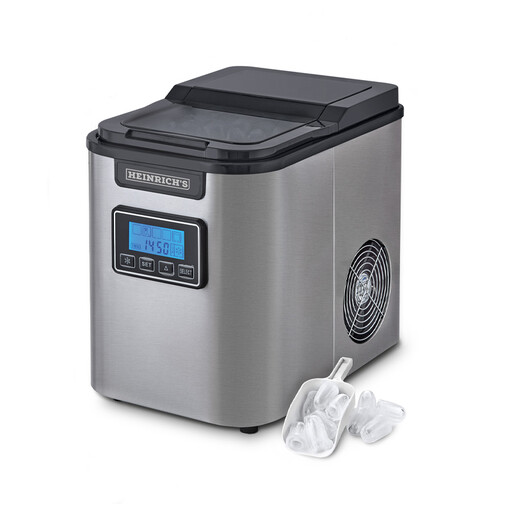 No image available
A good choice if you want to make more ice during dinner and choose from three ice cube sizes.
The product title states that it makes 9 ice cubes in 9 minutes, with a maximum output of 12 kg per 24 hours and a 2.2-litre water tank. The description says the small size makes 9 cubes in 9 minutes and the large size makes 9 cubes in 11 minutes. This model has a self-cleaning function.
The stated dimensions are 36,0 × 24,9 × 32,7 cm. The description mentions alerts for a full ice basket or an empty water tank.
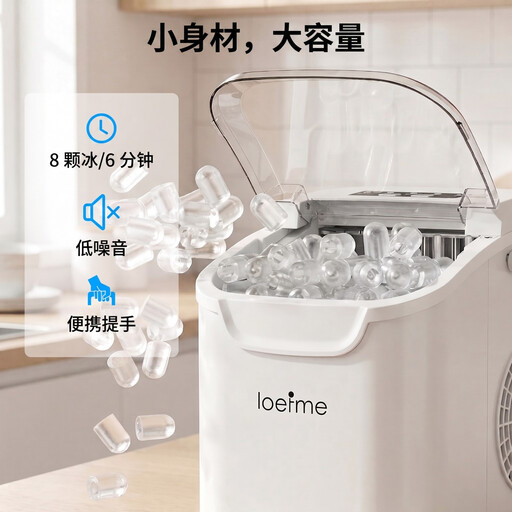 No image available
An option for making small batches while your guests are there; the stated cycle time varies.
The product title states that it makes 9 ice cubes in 6–13 minutes, with a stated output of 12 kg per 24 hours, two ice cube sizes and a 0.8-litre tank. Automatic cleaning is also mentioned.
 No image available
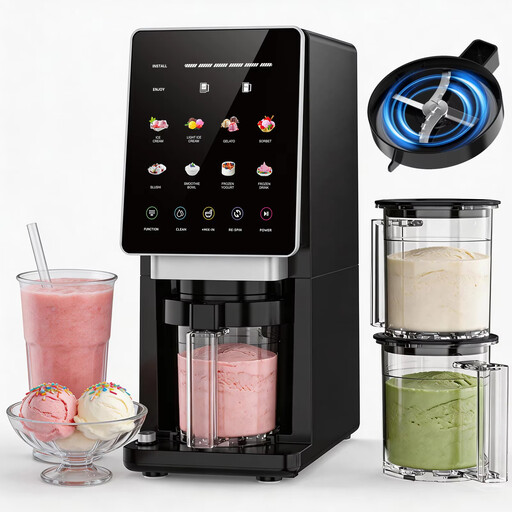
A countertop model for comparing the stated programme and control features.
The product title lists 8 pre-set programmes, a self-cleaning function, and mixing and restart functions.
That daily figure alone doesn’t tell you how much ice will be ready when your guests arrive. Check the number of cubes per cycle and the cycle time for the exact model, and think about how much ice you can freeze separately in advance. Stated speeds are manufacturer figures.
Not for the models described here that have a tank you fill by hand. KitchenBrothers explicitly states that the KB1000692 doesn’t need a water supply; for other models, check the product information and manual.
Use drinking water and clean the machine according to the instructions for your chosen model. The Dutch government describes drinking water in the Netherlands as safe to drink; a self-cleaning function alone doesn’t prove that no other cleaning is needed.
According to ACM ConsuWijzer, you have a legal guarantee as well as any manufacturer’s or seller’s warranty. If a product breaks sooner than you could reasonably expect during normal use, the seller must put it right free of charge. What you can reasonably expect depends on the product and how it’s used.
Relevant EU product rules apply to electrical and electronic products. Dutch government information includes rules on low voltage, electromagnetic compatibility and RoHS; the manufacturer is responsible for meeting the relevant requirements and applying the CE marking. Parts that come into contact with food must also meet the relevant requirements for food contact materials. A CE marking is not an independent quality test of ice production.