
One person with limited worktop space
Wants to make small batches of ice for their own drinks and is mainly comparing dimensions, water capacity and ease of use. CASO and DOMO list compact models with a 1-litre water tank.


Choose an ice maker based on when you need ice and how much worktop space you have. A compact model may suit smaller batches for one person, while a larger water tank or timer can be useful if you want to spend less time refilling during a get-together. Also check the amount of ice made per cycle and the collection capacity: a 24-hour production figure doesn’t tell you how much ice will be ready at once. If you need a larger supply, you can make ice in advance, as long as you have room in the freezer.
Wants to make small batches of ice for their own drinks and is mainly comparing dimensions, water capacity and ease of use. CASO and DOMO list compact models with a 1-litre water tank.
Wants to keep making ice during the event or prepare a supply in advance. Check the collection capacity, how often you’ll need to refill it and whether it has a timer. DOMO says you can make ice in advance and freeze it for the DO9253IB.
Wants to know whether the basket can be removed, whether there’s a drain and what cleaning function the model offers. CASO, Solis and DOMO list these features for specific models; always follow the care instructions for your chosen appliance.
First, work out when you’ll need the ice and how much space you have; then compare the collection capacity and maintenance requirements. If you want to have more ice ready in advance than the basket can hold, factor in preparation time and freezer space.
| What to consider | What to look for | Who is this important for? |
|---|---|---|
| Having ice ready in time | Compare the stated time and output per cycle with the collection capacity. Solis says the Ice Cube Express makes around 8 ice cubes per cycle of approximately 8 minutes; Princess lists an 800-gram ice collection capacity for the 283069. DOMO describes making ice in advance and freezing it as an option for the DO9253IB. | If I want to be able to grab ice during a get-together without relying solely on the daily output figure, I check the cycle time and how much ice the machine collects at once. Around 36% of consumers say having ice ready straight away is their main priority. |
| Space and refilling | Measure the available space and compare the dimensions and tank capacity of the exact model. CASO lists the IceChef Compact as measuring 220 × 265 × 280 mm, with a 1-litre tank; DOMO gives the DO1132IB’s dimensions as 28,20 × 20,50 × 26,90 cm, also with a 1-litre tank. | If I’m mainly using the machine for my own drinks, I want to know whether it will fit on my worktop and how often I’ll need to refill it for the way I use it. Around 29% of consumers say limited space is their main priority. |
| Cleaning and draining | Check whether the basket can be removed, whether the water can be drained and what the manual recommends. DOMO lists a removable basket and drainage opening for the DO9220IB; CASO and Solis list self-cleaning functions for specific models. | If I want to look after the appliance easily after use, I check which parts are accessible and what steps the manual recommends. Around 21% of consumers say easy maintenance is their main priority. |
| Ice size and controls | Check how many ice sizes the exact model offers. Princess lists three sizes for the 283069; CASO lists two sizes for the IceChef Compact, and Solis lists two for the Ice Cube Express. | If I want a particular size of ice for my drinks, I compare the settings rather than looking only at the daily output. Around 14% of consumers say a choice of ice sizes is their main priority. |
A 24-hour output figure doesn’t tell you how much ice will be available after one cycle or fit in the basket. Manufacturers may list these figures separately.
For the time you have in mind, compare the time and output per cycle with the collection capacity. If needed, make ice in advance and freeze it.
Water capacity and the space available for collected ice are two different specifications. For the Princess 283069, Princess lists a 2,8-litre water tank and an 800-gram ice collection capacity.
Check both figures separately and think about how much ice you want to be able to grab at once.
A cleaning programme is a feature of a specific model and doesn’t automatically cover every maintenance step.
Read the manual for the exact model and check that the basket and water drain are easy to access.
The IceChef Compact may be a good fit if its stated dimensions of 220 × 265 × 280 mm and 1-litre tank suit the space you have available.
The models mentioned range from the DO1132IB, with a 1-litre tank, to the DO9253IB, with a 1,8-litre tank.
The 283069 is worth comparing if you’re looking for a larger water capacity, a stated ice collection capacity of 800 grams and a timer.
The Ice Cube Express is worth comparing if you want to make small batches using a 1-litre tank.
These Joybuy products are ice makers designed for use on a worktop. Compare the listed cycle details, tank capacity and features with the way you plan to use yours.
 No image available
The stated tank capacity and ice sizes can help you decide whether this model suits making small batches one after another.
The product name lists a 1,3-litre tank, two ice sizes and 9 ice cubes in a stated time of 6–9 minutes.
The stated output is 12 kg per 24 hours; this isn’t the same as the amount of ice ready at once.
 No image available
The product name lists a larger water tank than the 1,3-litre models on this page; also consider how often you want to refill it.
The listed features are 120 W, two ice sizes and 9 ice cubes in 9 minutes.
The product name lists an output of 12 kg per 24 hours and a self-cleaning function.
 No image available
The tank capacity may be worth considering if you’re looking for a machine to make smaller batches; check whether the listed features suit the way you’ll use it.
The product name lists 9 ice cubes every 6–13 minutes, two sizes (S/L) and a 0,8-litre tank.
It also lists an output of 12 kg per 24 hours and automatic cleaning.
 No image available
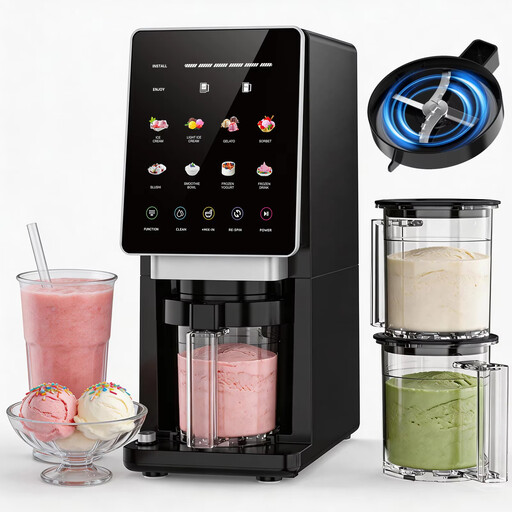
This worktop model is worth comparing if you’re particularly interested in its operating programmes and cleaning function.
The product name lists 8 pre-programmed settings, a self-cleaning function, a mixing function and a restart function.
The product name describes it as suitable for worktop use, at home and on the go.
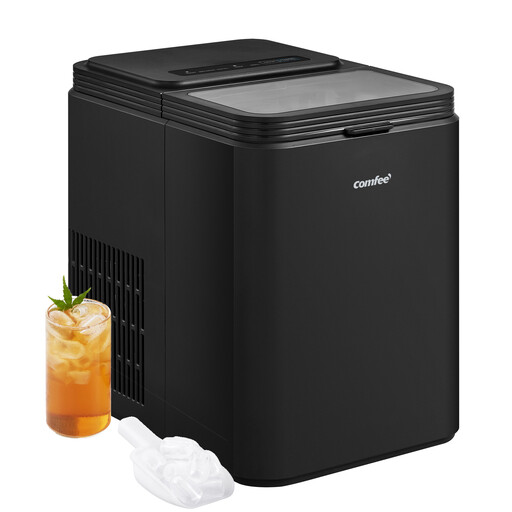 No image available
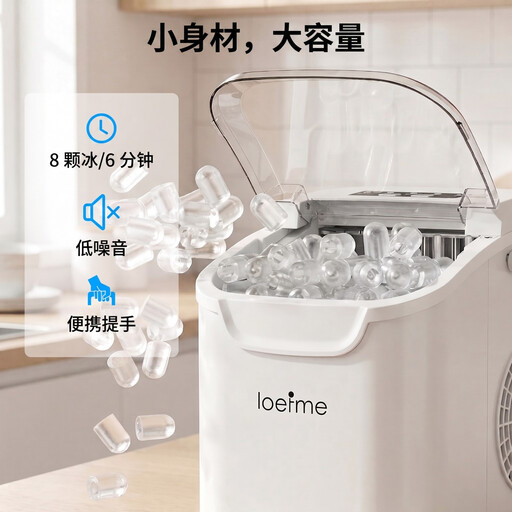
The stated output per cycle and tank capacity are worth considering if you want to make ice for drinks during an event.
The product name lists 8 ice cubes in 6 minutes, a 1,3-litre tank and two ice sizes.
It also lists an output of 12 kg per 24 hours, a self-cleaning function, an ice scoop and a basket.
Not necessarily: this is an output figure over 24 hours, not an amount that’s ready straight away. Also compare the output per cycle and the collection capacity. If you need a larger supply, you can make ice in advance and freeze it.
Measure the available space and follow the manual for the exact model when using and cleaning it. A removable basket, drainage opening or cleaning programme can make maintenance easier, but the recommended steps vary by model.
Not automatically. According to the Dutch government, there’s no fixed statutory guarantee period in the Netherlands; your legal rights depend in part on what you can reasonably expect from the product. Compare the terms of any extra cover with your existing rights, and contact the seller if there’s a problem.
According to Ondernemersplein, electrical appliances placed on the market must comply with the applicable European rules. After the conformity assessment, the manufacturer must affix the CE marking and draw up an EU declaration of conformity. A CE mark on its own isn’t an independent test result.