
Host preparing a full first round
Wants to serve a range of fruity drinks as soon as guests arrive, so benefits most from having ice ready before lunch.


If you want to serve several drinks as soon as your guests arrive, make ice in advance and keep it in the freezer. If you mainly want to top up during lunch, compare the first batch time and the collection capacity. Also consider how much worktop space you have and how easy the water reservoir and basket are to clean. A stated output per 24 hours doesn’t tell you how much ice is ready at any one time; the performance figures quoted are manufacturer specifications, not the results of independent testing.
Wants to serve a range of fruity drinks as soon as guests arrive, so benefits most from having ice ready before lunch.
Serves drinks throughout lunch and pays attention to the first batch time, refilling the water and emptying the basket.
Has little workspace left after setting out fruit, glasses and lunch dishes, so weighs the machine’s dimensions against its tank capacity and ease of use.
First decide whether you want to have ice ready in advance or make batches during lunch. Then compare the collection capacity and the space the machine takes up.
| Buying concern | What should you check? | Who is this important to? |
|---|---|---|
| Enough ice for the first pour | Compare the time until the first batch is ready with the number of cubes per cycle. You could also prepare a supply and store it in the freezer. | If I want to serve several drinks as soon as guests arrive, I don’t want to have to wait for the first batch. Around 36% of consumers are mainly concerned with having a full first round ready. |
| Making more ice during lunch | Check the water capacity, collection capacity and time per cycle separately. | If I’m topping up drinks regularly during lunch, I want to know when I’ll need to refill the water or scoop out the ice. An estimated 29% of consumers mainly want a continuous supply. |
| Worktop space | Measure the available space and compare it with the dimensions of the exact model. | If I’m preparing fruit and lunch dishes alongside the machine, it needs to fit in the available workspace. Around 21% of consumers put worktop space first. |
| Cleaning after use | Check whether you can remove the basket and drain the water, and follow the cleaning instructions for the model. | If I’m making ice for people to consume, I want to be able to clean the parts that come into contact with water and ice thoroughly. An estimated 14% of consumers mainly value easy, hygienic cleaning after use. |
A figure in kilograms per 24 hours describes the output over that period, not how much ice the collection basket can hold at once.
Plan for the first batch separately, then compare how long it takes to make another batch.
If you want a full supply ready when guests arrive, you may need to prepare in advance and make room in the freezer.
A water tank and an ice reservoir measure different things. For example, Princess lists a capacity of 2,8 l and an ice reservoir of up to 800 g for article 01.283069.01.001.
For each model, note the tank capacity, collection capacity and time per cycle separately.
A removable basket or drain plug gives you access to certain parts, but doesn’t replace the model’s cleaning instructions.
Read the manual for the exact version and check that you can reach the parts that come into contact with ice and water.
Allow time after lunch to empty the basket and clean the machine according to the manual.
The DO9220IB is worth considering if you want to top up batches during lunch; the DO9253IB is mentioned for those who make ice in advance and freeze it.
Model 283069, article 01.283069.01.001, is worth considering if adjustable cube size and the stated collection capacity are important to you.
The IceMaster Pro 3301 is worth considering if you want to take the stated tank capacity and dimensions into account.
The KB692, article KB1000692, is worth considering if you want a manually filled tank and a removable ice basket.
This selection includes worktop ice makers, with models for making a first batch and topping up during lunch.
 No image available
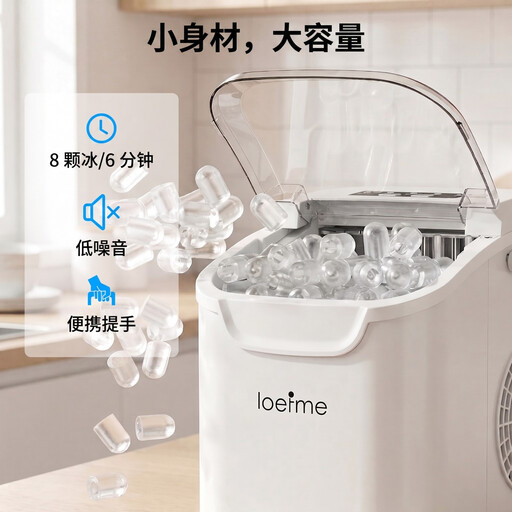
An option if you want to make a small batch for the first drinks and choose between two ice sizes.
The product name specifies 8 cubes in 6–9 minutes and an output capacity of 12 kg per 24 hours. The reservoir holds 1,3 l; the collection basket has a capacity of 0,45 kg.
 No image available
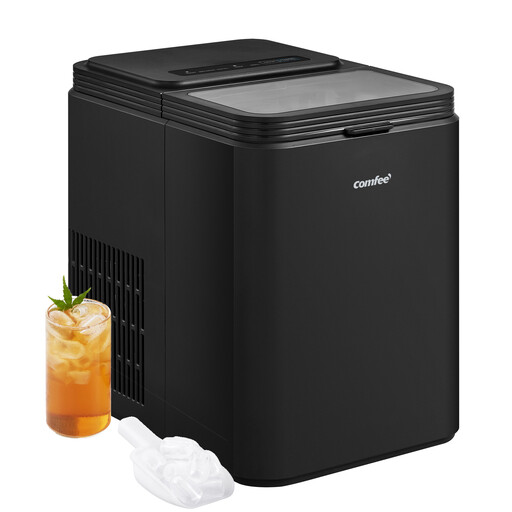
An option if you want to keep making batches during lunch and choose between two cube sizes.
The product name specifies 9 cubes every 6–13 minutes, two sizes (S/L) and a 0,8 l water tank. It also lists an output capacity of 12 kg per 24 hours.
 No image available
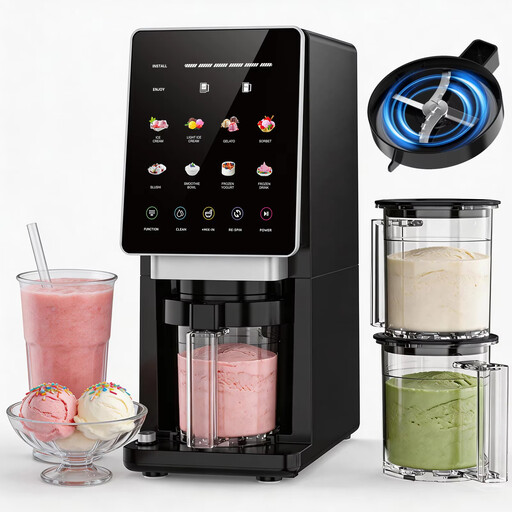
An option if you’re looking for a worktop ice maker with several preset programmes.
The product name lists 8 programmes and self-cleaning, mixing and resume functions. It doesn’t specify the time per batch or tank capacity.
 No image available
An option if you want to make a first batch quickly and switch between two ice sizes.
The product name specifies 8 cubes in 6 minutes, 12 kg per 24 hours and a 1,3 l water tank. The product description lists a removable 0,4 kg basket and dimensions of 295,7 × 213 × 295 mm.
 No image available
An option if you want to make a first batch quickly and having two sizes to choose from is important to you.
The product name specifies 9 cubes in 6 minutes, two sizes and an output capacity of 26,5 lb per day. It also lists a self-cleaning function.
No. A figure of 12 kg per 24 hours describes output over a 24-hour period, not the capacity of the collection basket. DOMO says that you can freeze the cubes made by the DO9253IB in advance.
Use drinking water and follow the cleaning instructions for your chosen model. The Netherlands Nutrition Centre advises washing your hands, fruit and kitchen utensils thoroughly. A removable basket or drain plug gives you access to parts of the machine, but doesn’t in itself mean the appliance cleans itself completely.
Contact the seller if there’s a problem. According to the Government of the Netherlands, you’re entitled to a product that works as it should. The Netherlands has no fixed statutory warranty period, and a manufacturer’s warranty is in addition to your legal rights.
For online purchases, you generally have a statutory cooling-off period of up to 14 days after delivery, according to ACM ConsuWijzer. Check the terms and any applicable exceptions before returning an appliance.
The European Commission states that the Low Voltage Directive applies, among other things, to a wide range of electrical appliances for household use. According to the Government of the Netherlands, a product may only carry a CE marking if it is required to do so and the product meets the legal requirements. Check the electrical specifications, documentation and marking for the exact version; a general product description doesn’t confirm that an individual item meets the applicable requirements.